Applications

Refractory shapes and ceramic parts
by process

Find the Blasch component for your process, grouped by industry, from reformers to melt shops.

67 processes, grouped by industry.
Find yours and see which component Blasch makes for it.

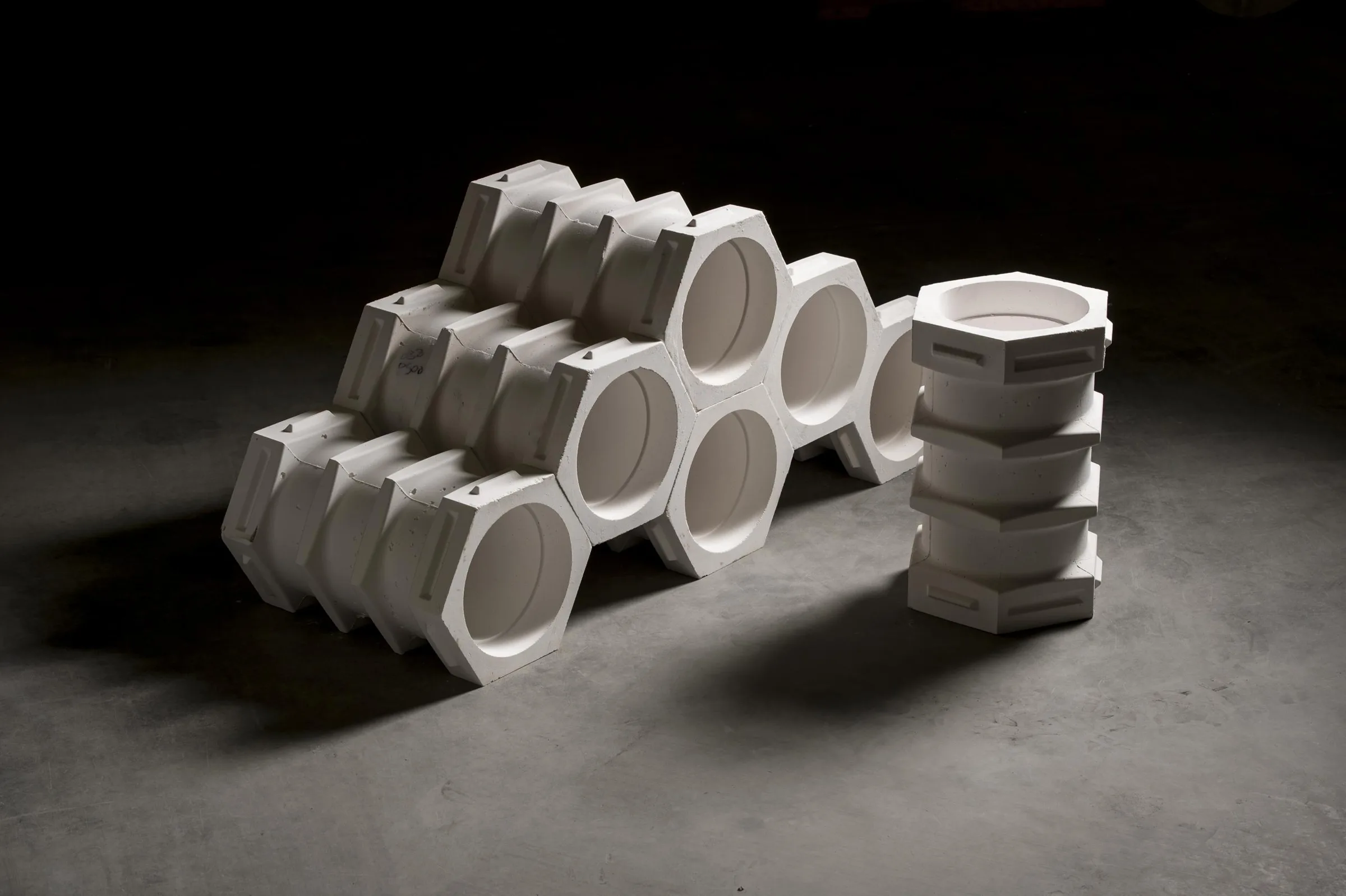
Interlocking hexagonal ceramic checkerwall blocks
In short

The Blasch component that fits your process depends on where the current part fails and what attacks it: flue gas tunnels and checkerwalls for reformers and Claus furnaces, ferrules for waste heat boilers, lined pipe and cyclone liners for abrasive solids, crucibles and non-wetting parts for molten metal, and kiln furniture for firing. Find your process below, grouped by industry, with the engineered refractory shapes and ceramic parts used there. If your process is not listed, a Blasch engineer can design a part from its dimensions and operating conditions.

Interlocking hexagonal ceramic checkerwall blocks

From process to part

Most inquiries start with a process and a failure: a tunnel that leans, an elbow that wears through, a crucible that cracks. The list below takes you from the process to the part that solves it.

Each group links to its industry page, with results from operating plants and the questions engineers in that industry ask first.

Refractory shapes from Blasch are cast near net shape from more than 15 ceramic grades, from small nozzles to blocks of more than a ton.

One process, one failure

The right component is rarely the one in the catalogue that looks closest, but the one designed for the way your part fails in your process.

Hydrogen, ammonia and syngas

Hydrogen and ammonia production

Refining and chemical processing

Refining and chemical processing

Power generation

Power generation

Mining and mineral processing

Mining

Heavy industrial processing

Heavy industrial processing

Battery materials

Battery materials manufacturing

Molten metals

Molten metals

Industrial process heating

Industrial process heating

Frequently asked

Questions about choosing a part

My process is not on the list. What now?

Describe the part that fails, where it sits and what it is exposed to. Blasch designs custom refractory shapes from dimensions and operating conditions, and a drawing is not needed.

What is the difference between a refractory shape and a castable?

A refractory shape is formed and fired before it reaches the plant, so it arrives with its final properties. A castable is mixed, placed, cured and dried on site during the outage.

Can one part serve several processes?

Yes. Ferrules protect boilers in sulfur recovery, sulfuric acid, reforming and ethylene plants, and lined elbows serve ash, coal, coke, cement and battery material lines.

Close view of angled tiles set into a ceramic checkerwall

Not sure which part
fits your process?

Send the process, the position and how the current part fails. A Blasch engineer tells you which component fits, or designs a new one.

Talk to an engineer Call