Crucible and melt products

InterLok segmented crucible lining:
room to expand, heat after heat

Tongue and groove ceramic segments without mortar for coreless induction furnaces from 650 to 15,000 lb, in air or vacuum.

Large linings crack because they cannot move.
InterLok gives every segment its own room to grow.

Sections of a segmented crucible lining
In short

A segmented crucible lining reduces thermal stress by splitting the lining into interlocking segments with designed expansion gaps, so the lining can grow and shrink with each heat instead of building up stress in one rigid shell. InterLok uses precast tongue and groove ceramic segments, set without mortar and held by a spring loaded hold down system, for coreless induction furnaces from 650 to 15,000 lb steel capacity in air or vacuum. In finite element comparisons of rammed, mortared and segmented linings, the segmented design showed clearly lower stresses.

Why large induction furnace linings crack

In furnaces above roughly 500 kg, thermal stress rather than chemical attack decides how long the lining lasts. Every heat expands the lining, every cool down shrinks it again.

The movement is not small. In a 3 ton lining of alumina or magnesia, the height grows by up to 7 mm at temperature. A rammed lining or a monolithic crucible has nowhere to put that growth, so it turns into stress, and stress turns into cracks, spalling and metal penetration.

Magnesia brick has a second problem under vacuum: it releases magnesium into the melt.

Rigid shell or
segments that move

The same furnace, two ways of lining it. The difference is where the expansion goes.

Rammed or monolithic lining

  • Expansion has no gaps to go into and builds up as stress
  • Cracks and spalling put refractory inclusions into the metal
  • Ramming and sintering take time at every reline
  • Each reline depends on the crew and the ramming practice

InterLok segmented lining

  • Designed gaps and joints take up growth and shrinkage
  • Segments are fired before installation, without wash heats
  • Coded segments go together in a fixed order
  • Every lining has the same segments, so performance is repeatable

Built to move

A lining that is allowed to move does not have to crack to make room for itself.

Sizes and custom features

InterLok comes in eleven standard sizes. Side brick height and the number of courses are adjusted to the furnace, so the standard sizes cover most coreless furnaces in this range.

Steel capacity Outside diameter Inside diameter Bottom Wall Height
650 lb (295 kg) 16 in (406 mm) 13.5 in (343 mm) 1.75 in 1.25 in 27.25 in (692 mm)
15,000 lb (6,804 kg) 44 in (1,118 mm) 39.5 in (1,003 mm) 4.5 in 2.25 in 73.75 in (1,873 mm)

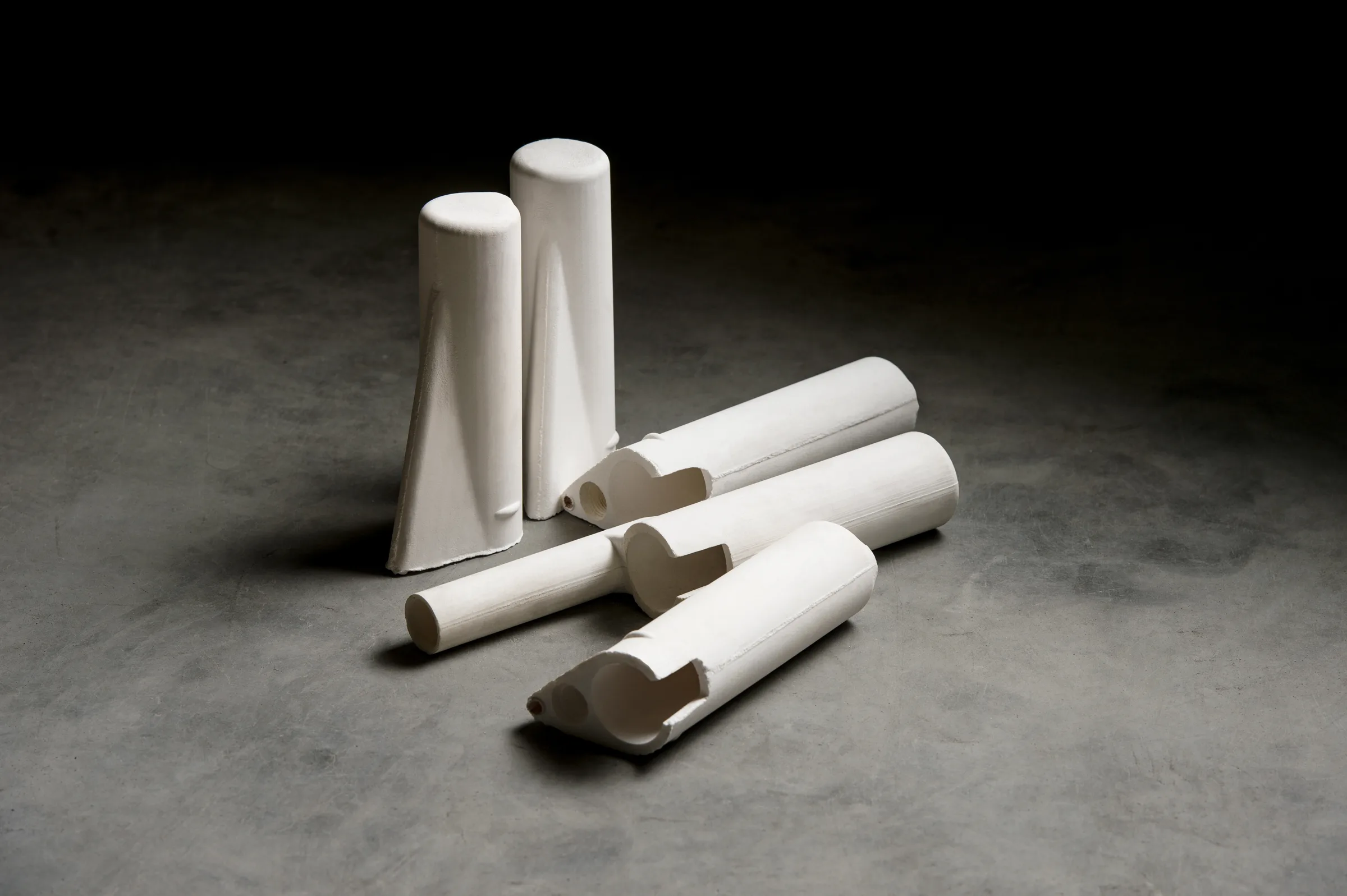
Spouts and spout extensions are cast into the lining. For bottom pour furnaces, the segments carry the through holes for nozzle and stopper rod.

The backup ram behind the segments matters as much as the segments. ALRAM 4041 backup ram was designed for linings of this class.

Case histories with segmented Blasch linings

Four furnaces from earlier Blasch installations, each compared with the lining it replaced.

12,000 lb furnace

18 to 20 heats became 25 to 30

Alloys 625, 713 and 718 at 1,590 to 1,700 °C, against a rammed lining. Rework from inclusions fell by half, capacity rose by 5%, and the lining paid back after about 15 heats.

6,000 lb furnace

18 to 20 heats became 30 to 35

Nickel and cobalt alloys under vacuum, against magnesia brick that released magnesium into the melt. The lining also tolerated weekend shutdowns.

2,000 lb furnace

3 to 5 heats became 20 to 25

Ni, Co, Cr, Al and Y alloys at 1,670 to 1,780 °C, against a monolithic crucible. Installation took 30 to 40% longer, payback came at about 10 heats.

1,500 lb furnace

75 heats became 150

Aluminum metal matrix composites with up to 20% SiC or alumina at 770 °C, against a rammed lining. The material cost about twice as much and broke even at 75 to 100 heats.

Related crucible products

InterLok is part of the crucible and melt products range.

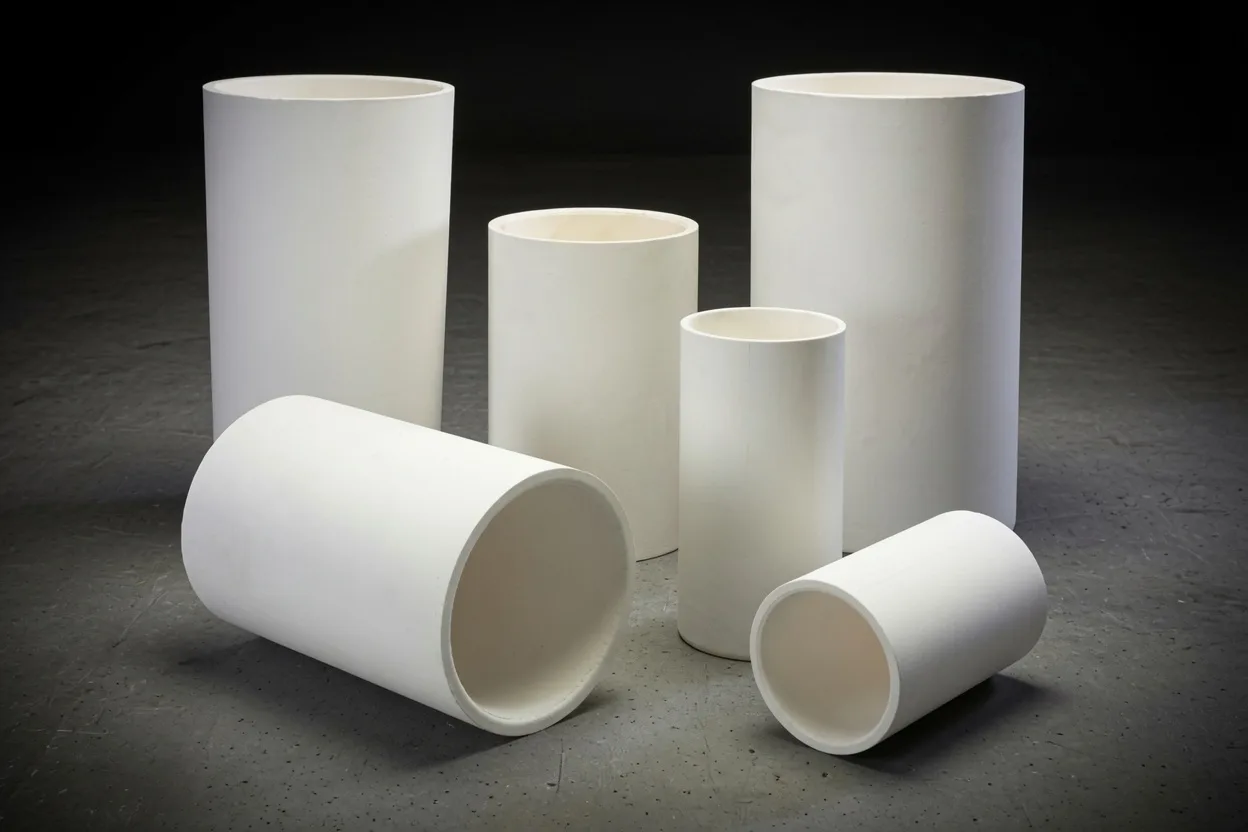
White high alumina crucibles

Monolithic crucibles

High alumina crucibles in four grades for furnaces up to 4,500 lb.

ProCaster crucibles
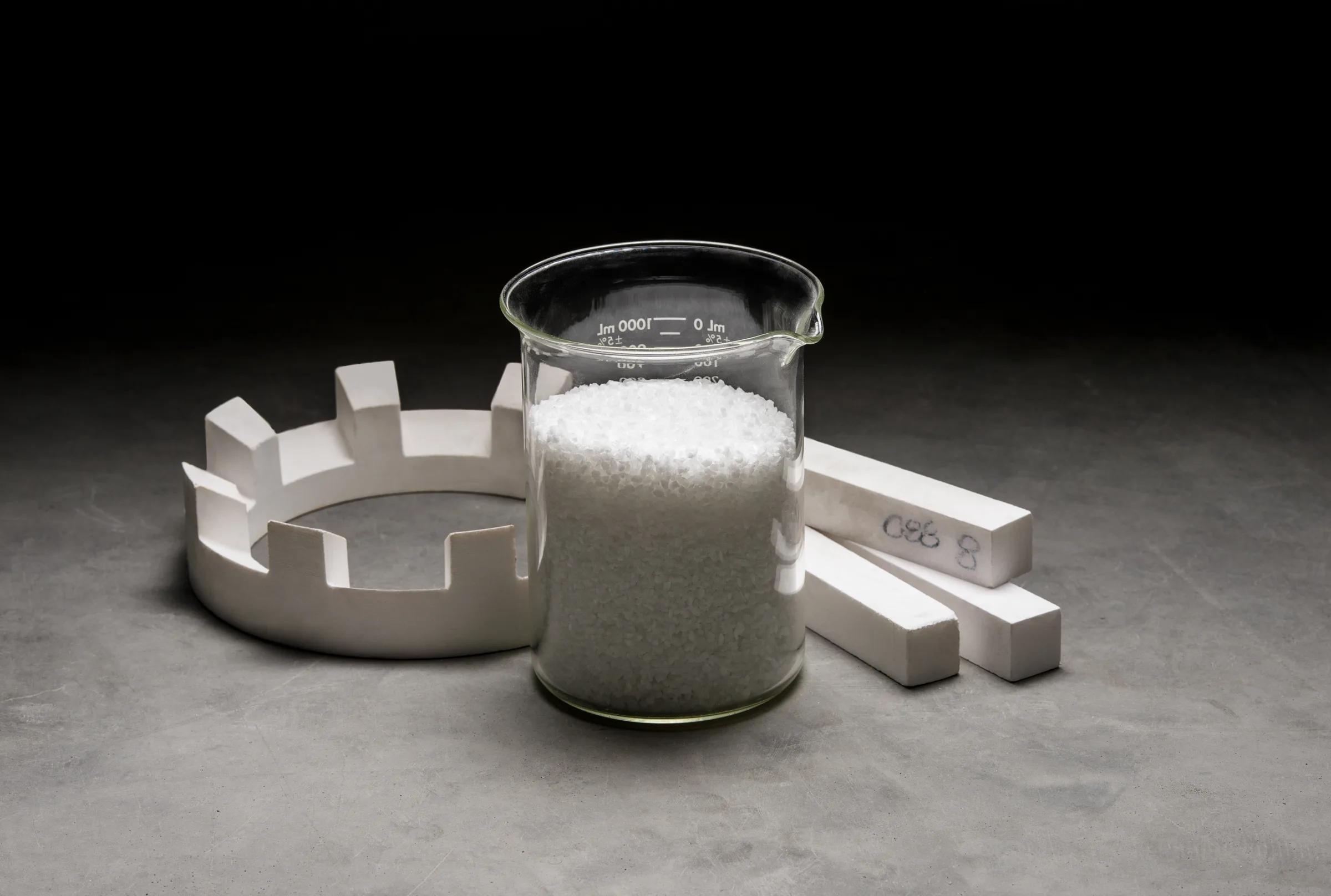
Ceramic argon rings with raw material in a beaker

Argon rings

Ceramic rings that spread argon over the melt in roll-over furnaces.

Argon rings
Ceramic sample cups for molten metal

Sampling the melt

Threaded cups for master and pin samples taken from the furnace.

Sample cups
Frequently asked

Questions about segmented crucible linings

Does InterLok need mortar or a wash heat?

No. The segments interlock without mortar and are fired before installation, so no wash heats are needed.

Can InterLok be used in vacuum induction furnaces?

Yes. It is used in air and vacuum coreless induction furnaces, including bottom pour configurations.

Which furnace sizes does InterLok cover?

Standard sizes run from 650 lb to 15,000 lb steel capacity. Height and course count are adapted to each furnace.

How is the lining held in place?

A spring loaded hold down system keeps the segments together while it lets the lining grow and contract through each heat.

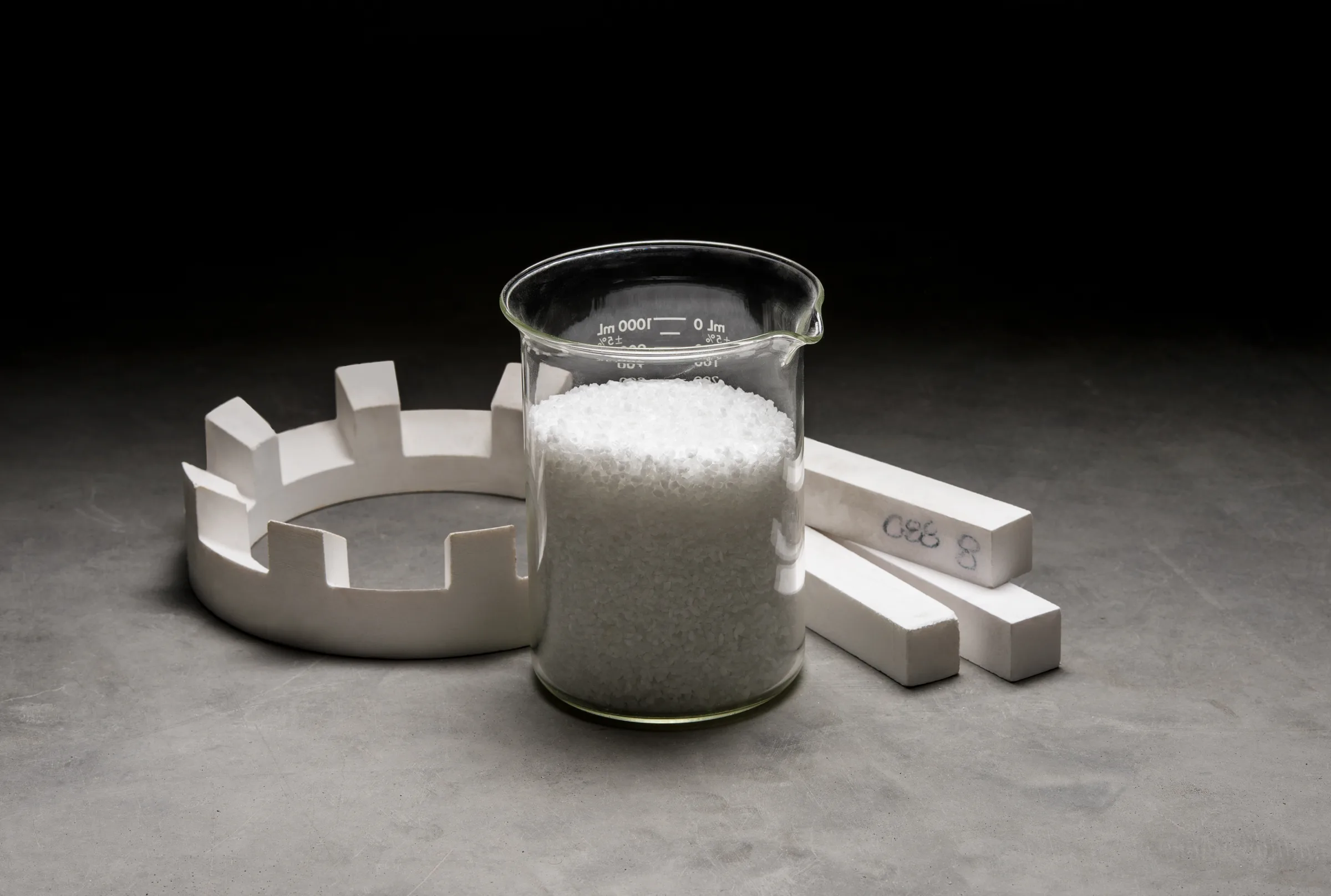
Backup ram mix next to a crucible ring

Linings that crack
before the campaign is done?

Send the furnace capacity, the coil dimensions and the alloys you melt. A Blasch engineer sizes an InterLok lining for your furnace.

Talk to an engineer Call