Crucible and melt products

ProCaster induction melting crucibles
for superalloys and specialty steel

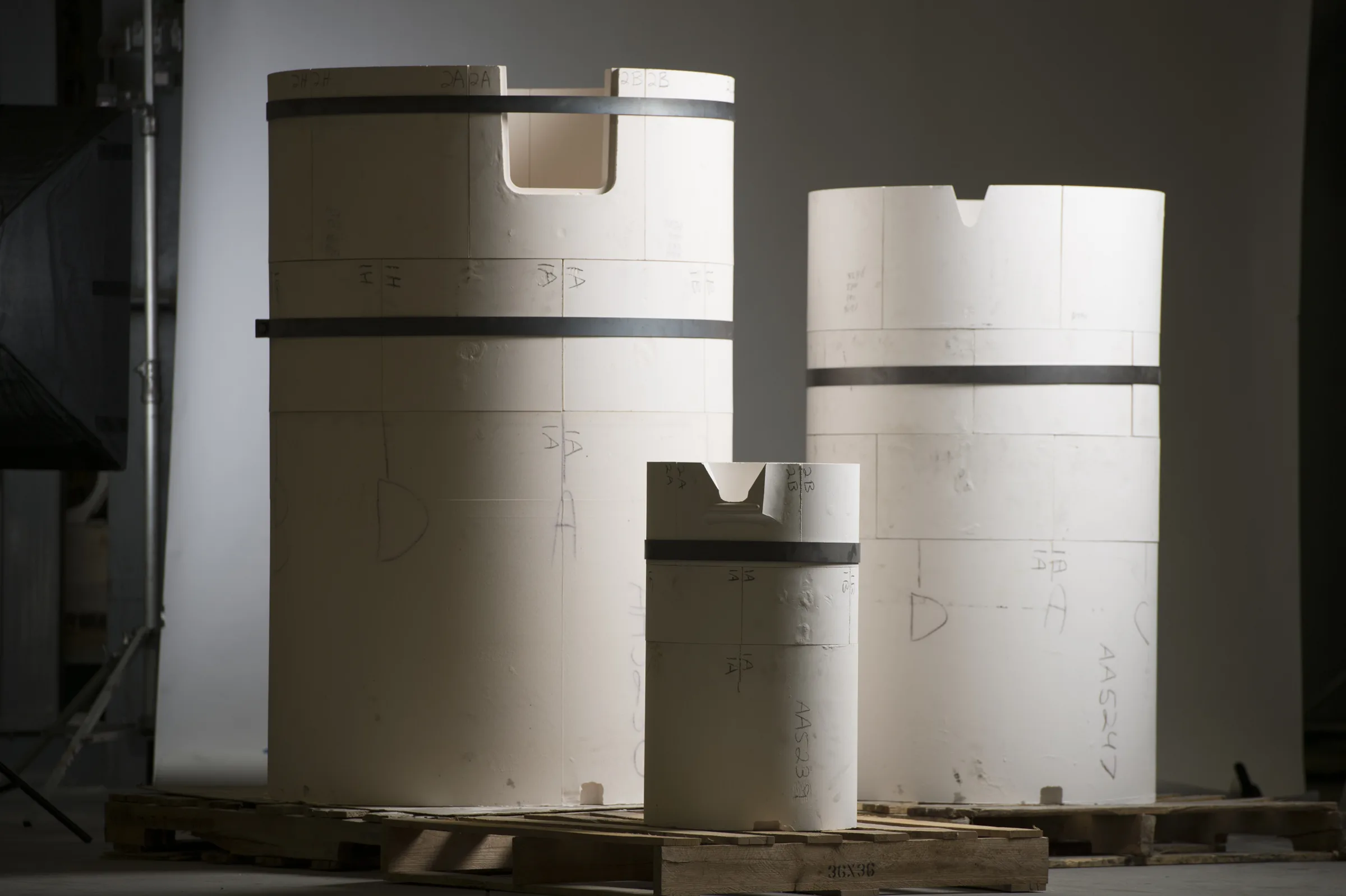
Monolithic high alumina crucibles for coreless induction furnaces, from 5 to 4,500 lb steel capacity.

Four high alumina grades, each built for a different way a crucible ends its campaign.

White high alumina crucibles
In short

For induction melting of nickel and cobalt superalloys, the longest campaign comes from a crucible grade that matches the alloy and the furnace power: ProCaster 087, an alumina zirconia composite, where corrosion limits the life, ProCaster 086 where high power causes cracking, and ProCaster 074 where purity is the limit. ProCaster induction melting crucibles are monolithic high alumina crucibles for coreless furnaces from 5 to 4,500 lb steel capacity, rated to 3,200 °F and used in air and vacuum. In furnaces above 650 lb, a segmented lining is the other option to compare.

What the crucible does in an induction furnace

In a coreless induction furnace, the coil heats the metal directly. A ceramic crucible is the container between the melt and the coil: it has to hold the metal, survive the heat up and cool down of every heat, and give as little of itself to the alloy as possible.

Graphite and silicon carbide crucibles are common for precious metals and smaller non-ferrous melts. For nickel, cobalt and stainless alloys, an oxide ceramic such as high alumina adds no carbon to the melt, and its grade can be tuned for corrosion or thermal shock.

ProCaster crucibles are cast in one piece by the Blasch process, with spouts, nozzle holes for bottom pouring, leak detector holes and lifting features cast in rather than added later.

Ceramics for molten metal processing

Four grades,
four reasons a crucible is replaced

ProCaster crucibles were developed as an alternative to zirconia crucibles. Pick the grade by what ends your current campaign.

01

ProCaster 043

The general high performance alumina crucible for most air and vacuum melts.

02

ProCaster 074

For alloys with high purity requirements, such as sputtering target alloys.

03

ProCaster 086

Optimized for crack-free melting at high power levels.

04

ProCaster 087

Alumina zirconia composite with the highest corrosion resistance of the four.

The grade that lasts

A crucible lasts longest when its grade is chosen for the way the last one failed, by corrosion, by cracking or by contamination, not by the highest number on a data sheet.

ProCaster 087 for nickel and cobalt alloys

ProCaster 087, also called Procaster-Z, is a mullite bonded alumina zirconia ceramic developed for molten nickel, cobalt and stainless alloys in aerospace, medical and industrial casting.

Property Value
ZrO2 content 5% minimum
Bulk density 2.87 to 2.95 g/cm³ (179 to 184 lb/ft³)
Apparent porosity 20 to 23%
Modulus of rupture at room temperature 1,700 psi (11.7 MPa)
Service temperature 1,650 °C (3,000 °F) continuous, 1,760 °C (3,200 °F) intermittent

Values from the Procaster-Z material data sheet.

Sizes, systems and the lining behind the crucible

The size list runs from a 5 lb crucible, 2.87 in outside diameter and 3.80 in high, to a 4,500 lb crucible, 27.75 in outside diameter and 45.75 in high, which itself weighs about 1,020 lb. In between are about 50 straight wall sizes and 13 tapered wall sizes from 30 to 400 lb.

Host crucible system: a liner crucible cast to fit a host crucible, so an alloy change means swapping the liner instead of reramming the furnace.

Bottom pour system: crucible, nozzle and actuated stopper rod made as one mated set for slag reduced pouring. Stopper rods and metering pins for this system are cast to the nozzle seat geometry.

Lining package: the crucible works with an ultra high alumina backup ram, a phosphate bonded high alumina plastic as top cap and a slip plane of mica sheet or woven cloth that protects the coil grout. ALRAM backup ram expands with the crucible instead of against it.

Other options for the same furnace

ProCaster crucibles are one part of the crucible and melt products group.

Sections of a segmented crucible lining

Segmented lining for large furnaces

Tongue and groove segments that take up thermal expansion in furnaces from 650 to 15,000 lb.

InterLok lining
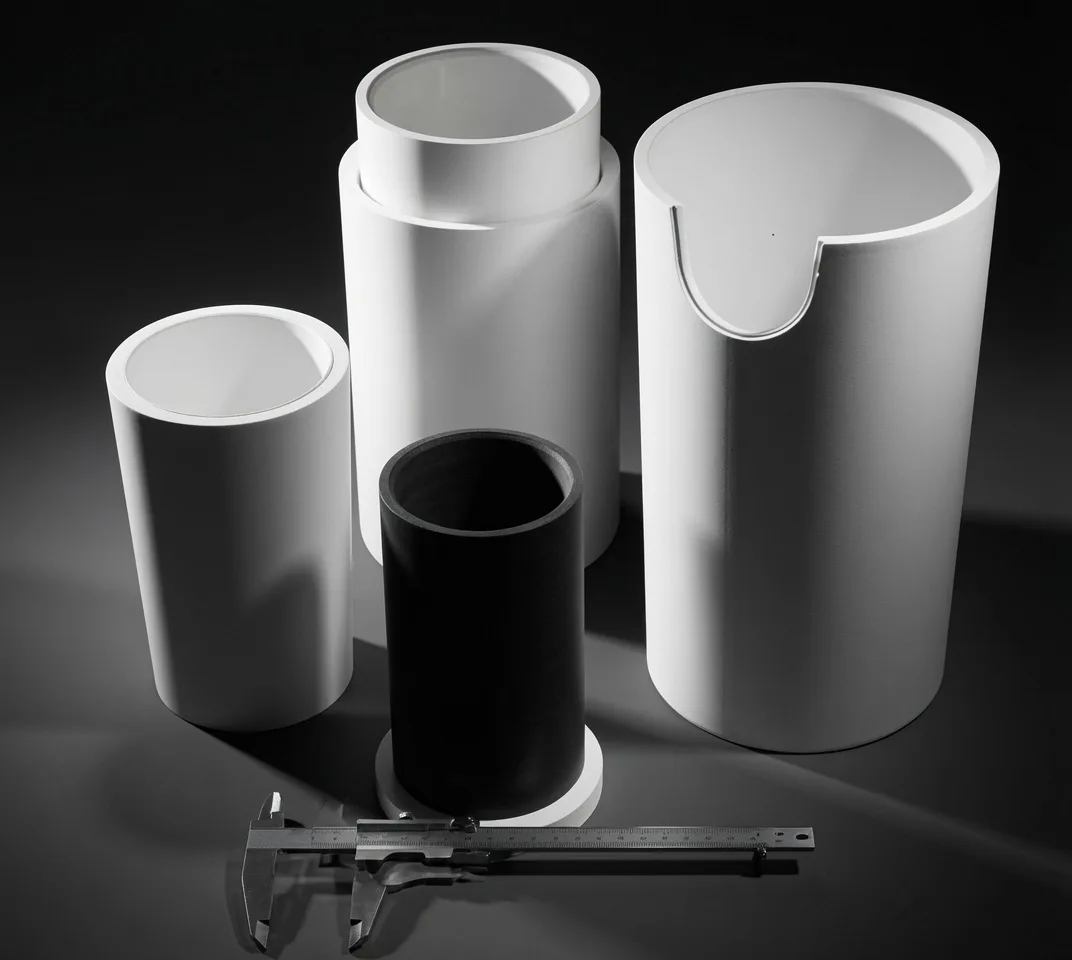
One-shot crucibles in white and black

One crucible per melt

For single crystal and critical castings where residue from a previous heat is not acceptable.

One-shot crucibles
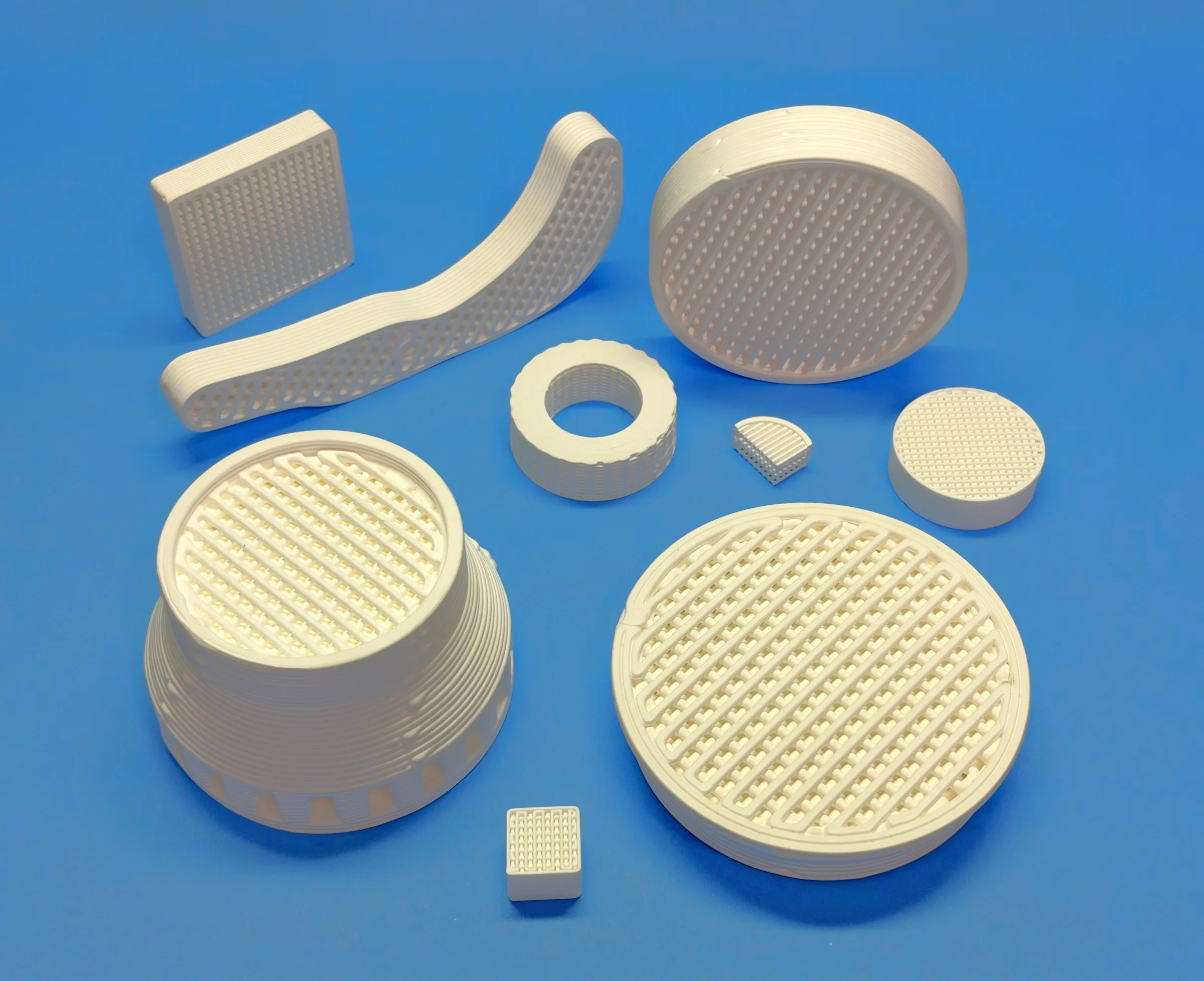
3D printed ceramic filters with a honeycomb pattern

Filtering the pour

Printed ceramic filters that hold back inclusions between crucible and mold.

3D printed filters
Frequently asked

Questions about ProCaster crucibles

Can ProCaster crucibles be used in vacuum induction melting?

Yes. They are used in air and vacuum induction furnaces, including the host crucible system for fast alloy changes.

What is the maximum temperature of a ProCaster crucible?

ProCaster crucibles are rated to 3,200 °F (1,760 °C). For the 087 grade, the data sheet gives 3,000 °F for continuous service.

Which grade should I start with?

ProCaster 043 for general melting. Move to 087 when the wall corrodes, to 086 when crucibles crack at high power, and to 074 when trace contamination is the problem.

When should a crucible be replaced?

When cracks reach through the wall, when erosion has thinned it near the melt line, or when buildup changes the capacity. A Blasch engineer can look at a used crucible and tell you which grade would have lasted longer.

Ceramic crucibles for investment casting

Which crucible
ended your last campaign?

Send the furnace size, the alloy and a photo of the used crucible. A Blasch engineer recommends the grade and the size from the list.

Talk to an engineer Call