Technical Library

Ceramics win the war on erosion
material selection in a coal fired plant

Where erosion attacks a coal fired power plant and how to match a ceramic material to each wear point.

Coal and ash wear a power plant from the mill to the stack.
Each point needs its own material.

Ceramic coal nozzle with flanged frame
In short

In this article, Tim Connors, Senior Market Manager Energy and Chemicals at Blasch, discusses the challenges of material selection in a typical coal fired power plant. Erosion attacks the plant along the whole path of coal, air and ash, and no single material is right everywhere. The useful question at each wear point is which combination of abrasion resistance, temperature and thermal cycling the part has to survive.

About this paper

  • Author: Tim Connors, Senior Market Manager Energy and Chemicals, Blasch Precision Ceramics
  • Topic: material selection against erosion in coal fired power plants
  • Full text: available on request; the full article was not available to us, so this page draws on the published summary and Blasch power generation product information

One plant, many kinds of wear

The same coal that wears a burner nozzle at flame temperature wears an ash line cold, and the material that wins in one place can lose in the other.

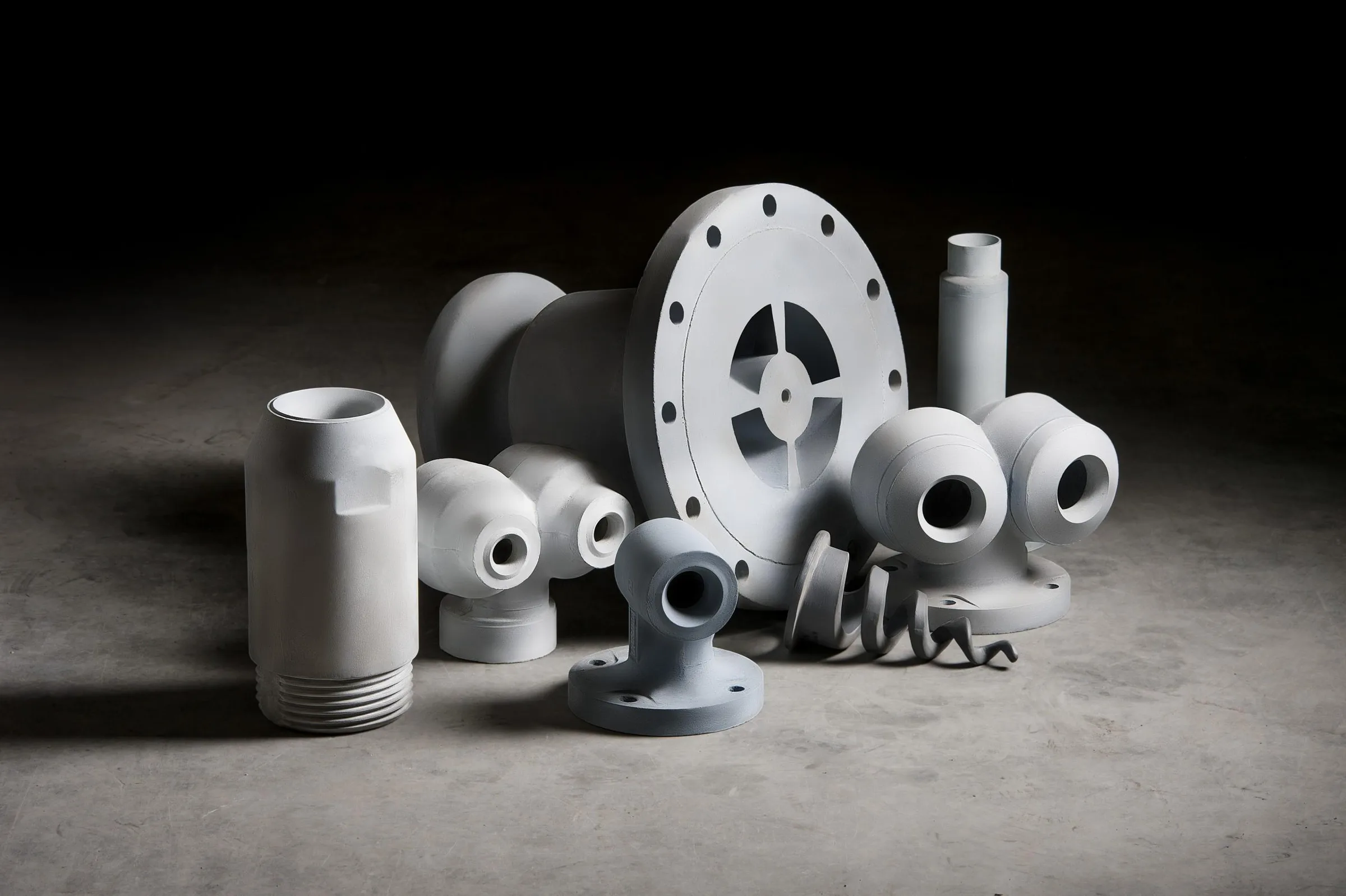
Cast ceramic spray nozzles, a spiral nozzle and a flanged fitting on a concrete floor

Where erosion hits

Following the coal through the plant, Blasch names these wear points:

Coal and firing: pulverizer, exhauster and crusher parts, coal transfer linings, coal nozzle tips and linings, burner parts.

Air and flue gas: tube inlets of tubular air heaters, fan linings, mechanical dust collectors.

Ash and flue gas cleaning: ash valves and conveying lines, FGD spray nozzles, fluidized bed nozzles.

Matching material to the point

Blasch casts these parts in alumina and in several bonded silicon carbides. The families differ in the bond, and that sets their behavior:

Oxide bonded silicon carbide (OXYTRON): for hot abrasive gas, for example air heater inserts.

Nitride bonded and alumina bonded silicon carbide (NITRON, ALTRON): for abrasion combined with heat and thermal cycling.

Reaction bonded silicon carbide (InVinCer RB): dense, for the heaviest abrasion in conveying and slurry.

The silicon carbide page compares the families.

A common case: the air heater

Fly ash turns into the tubes of a tubular air heater at the tubesheet. If it erodes through the tube to tubesheet weld, dirty gas leaks into the clean air, fan power rises with the leakage, and tubes must be cut out. Thin walled ceramic air heater inserts take the wear at the inlet.

What this means for your plant

List the wear points by how often they force a repair, then pick the material for each. More on the parts on coal nozzles, and a related article on Partners in Protection.

Frequently asked

Questions about this paper

Is silicon carbide always the best choice against erosion?

No. The bond decides how a silicon carbide handles heat and thermal cycling, and dense alumina is used at some wear points as well.

Can ceramic parts replace metal parts one for one?

Many are cast as direct replacements for the existing metal part, to the same dimensions.

Does Blasch coat metal parts?

No. Blasch makes solid cast ceramic parts and liners.

Ceramic air heater inserts in different lengths

Erosion forcing
an unplanned outage?

Tell us the part, the medium and how long it lasts today. A Blasch engineer suggests the material and the design.

Talk to an engineer Call