Degassing and die casting

Aluminum die casting ceramics
from degassing to the shot

Non-wetting ceramic parts for every point where molten aluminum touches your equipment before it reaches the die.

Molten aluminum touches a dozen parts before it fills the die.
Each one can add dross, oxides or downtime.

Rotary degasser parts, porous plugs and lances
In short

The ceramic parts that improve aluminum degassing and die casting are the ones in constant contact with the melt: porous plugs, lances and rotary degassers that remove hydrogen, immersion heater and thermocouple protection tubes in the holding furnace, riser tubes for low pressure die casting, auto ladles for high pressure die casting, and the launders, spouts and stopper rods in between. Blasch makes these aluminum die casting ceramics from non-wetting materials such as OXYTRON oxide bonded silicon carbide, NITRON nitride bonded silicon carbide and aluminum titanate, so aluminum does not stick, dross builds up more slowly and the parts run longer between changes.

What molten aluminum does to ceramic parts

Die casting is one of the hardest jobs for a ceramic part. It sits in molten aluminum for hours or days, and every dip, ladle cycle or furnace charge adds a thermal shock.

Aluminum that wets a surface sticks to it. Oxide and dross grow on the part, the bore of a tube narrows, a heater tube passes less heat, and a ladle that collects metal has to be cleaned or coated.

Where aluminum penetrates the pores, the part swells and cracks from the inside.

The answer in most of these places is a material that molten aluminum does not wet, combined with the thermal shock resistance to survive the cycling.

Melt treatment and the holding furnace

Parts that clean, heat and measure the metal before it is cast.

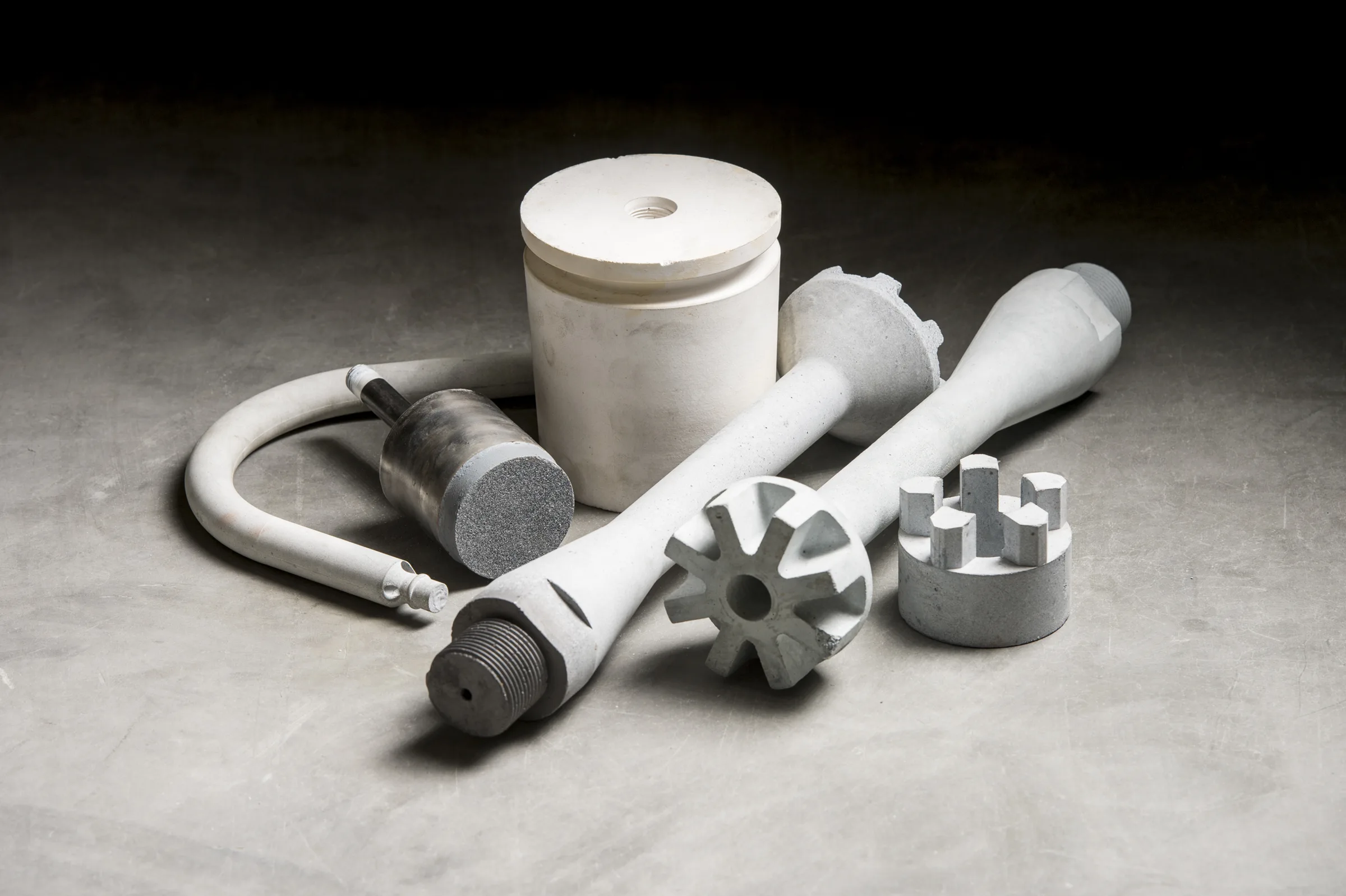
Rotary degasser parts, porous plugs and lances

Rotary degassers and porous plugs

Porous ceramics with pores around 5 microns for fine bubbles and little metal penetration.

Rotary degassers, porous plugs and lances
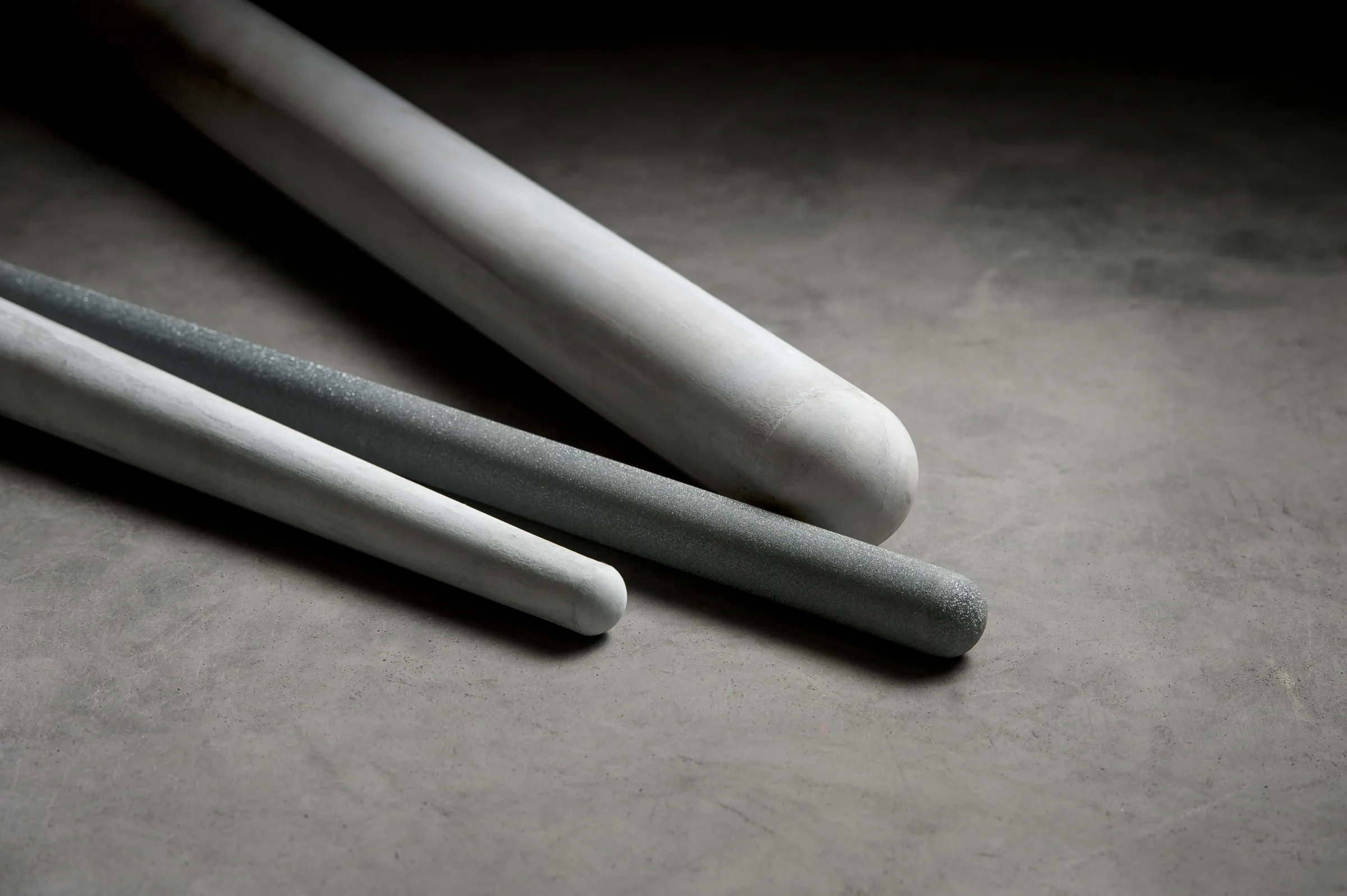
Ceramic immersion heater tubes

Immersion heater tubes

Silicon carbide and silicon nitride tubes that carry heat from the element into the melt.

Immersion heater tubes
Ceramic thermocouple protection tubes

Thermocouple protection tubes

Non-wetting tubes with reusable couplings, in standard lengths from 9 to 48 in.

Ceramic thermocouple protection tubes
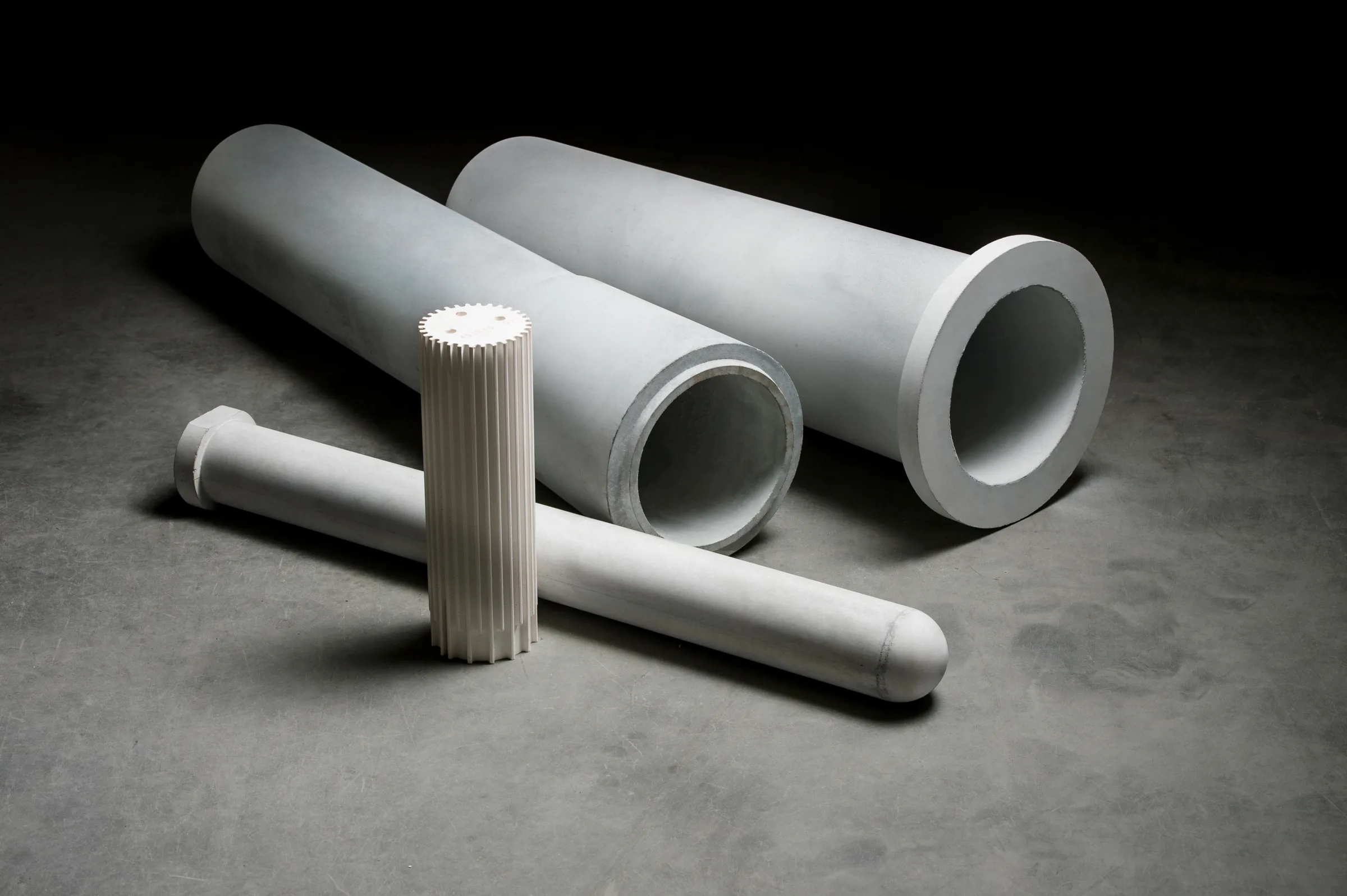
Ceramic riser tubes for low pressure die casting

Riser tubes

Aluminum titanate tubes for low pressure die casting, each leak-down tested.

Riser tubes for low pressure die casting

Wetting comes first

In molten aluminum, a ceramic part is rarely worn out; it is replaced because of what sticks to it, so the first question for every part is whether aluminum wets it.

Non-wetting materials and where they go

Material Typical parts
OXYTRON oxide bonded SiC Auto ladles, immersion heater tubes, thermocouple tubes, launders
NITRON nitride bonded SiC Immersion heater tubes, thermocouple tubes, spouts, stopper rods
SINTRON silicon nitride Immersion heater tubes
Aluminum titanate Riser and stalk tubes, sprue bushings, fill and dosing tubes
Fused silica Riser tubes, stopper rods, nozzles
SiC alumina composite Porous plugs, lances, rotary degassers

The OXYTRON oxide bonded silicon carbide family has been used in molten aluminum for decades, and the newest grade is OXYTRON 015XDII.

The same materials also work in copper, zinc and galvalume. For channel furnace linings and backup ram, see non-ferrous and aluminum products.

Metal transfer and pouring

Parts that move the metal from furnace to die and control how much arrives.

Ceramic auto ladle cups

DuraLadle auto ladle

A non-wetting auto ladle for high pressure die casting that needs no ladle coating.

DuraLadle ceramic auto ladle
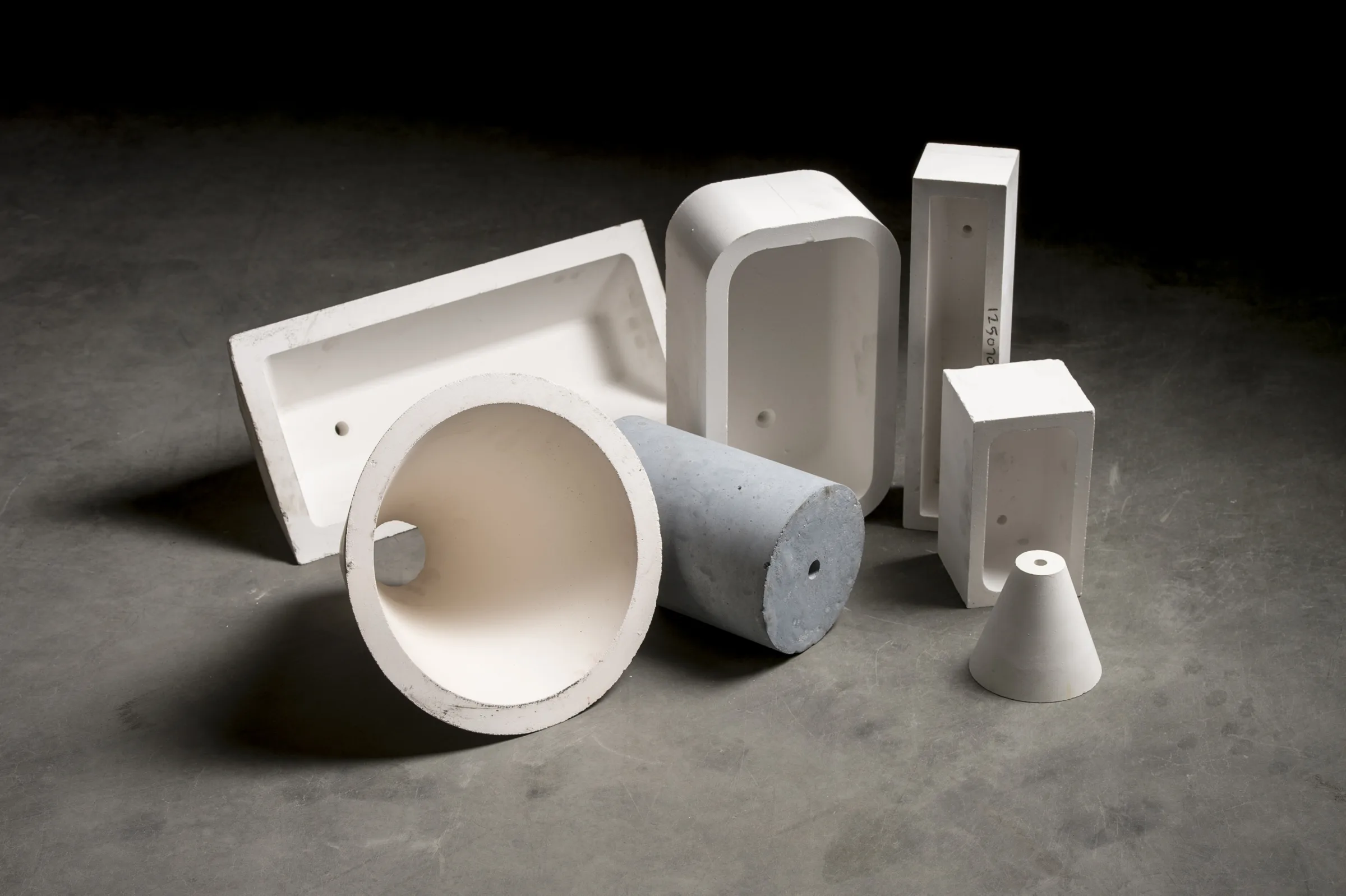
Ceramic launders, snouts and tundishes

Launders and tundishes

Smooth cast channel linings with grooves for filters and pockets for nozzles.

Launders, snouts and tundishes
Ceramic nozzles, down spouts and pour spouts

Spouts and nozzles

Down spouts, pour spouts and metering nozzles with close as-cast bores.

Nozzles and pour spouts
Ceramic stopper rods and metering pins

Stopper rods and metering pins

Rods with nose geometry for on and off or throttling control.

Stopper rods
Frequently asked

Questions about die casting ceramics

Why use ceramic instead of cast iron or steel in molten aluminum?

Iron parts dissolve in aluminum, need coatings and cause freeze-offs. Non-wetting ceramics stay clean longer and add no iron to the melt.

Do non-wetting ceramic parts need a coating or wash?

No. OXYTRON parts such as the DuraLadle are non-wetting in molten aluminum without any coating.

Can Blasch make parts for my specific furnace or machine?

Yes. Most parts are cast to the customer's dimensions, with threads, flanges and O-ring grooves cast in. A drawing helps but is not needed.

Where can I read more about ceramic degassing?

In the article Improved ceramic material for aluminum degassing, which compares pore size and strength.

Ceramic auto ladle cups

Which part in your cell
is replaced most often?

Tell us the part, the alloy and how long it lasts today. A Blasch engineer proposes a material and a design.

Talk to an engineer Call