Industries

Cement plant wear parts
and linings for heavy industry

Silicon carbide inserts, liners and shapes for cement, TiO2, pelletizing, pet coke and glass plants.

Clinker, pellets, pigment and coke wear out metal parts every campaign.
Precast silicon carbide shapes that take their place.
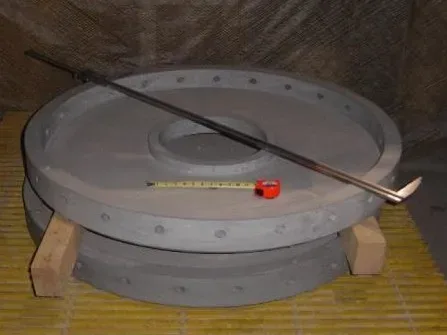
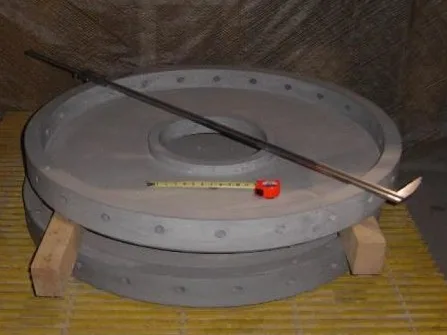
Large ceramic micronizer ring with bolt holes on a pallet
In short

The ceramic linings that protect cement, pelletizing and glass plants are precast silicon carbide and alumina shapes that replace metal parts in hot, abrasive or alkaline service: clinker cooler wear inserts, multicyclone dust collector parts, lined elbows and pipe, valves and dip tubes. Blasch casts them in OXYTRON, NITRON and ALTRON silicon carbide, grades developed for abrasion at high temperature and for alkali attack. The same approach covers micronizer linings in titanium dioxide plants, reactor linings for pet coke and silicon production, and burner parts for glass furnaces.

Metal parts that wear,
or ceramic that stays

Heavy industry has long relied on cast iron, alloy steel and thick monolithic refractory. They are easy to buy and quick to wear out.

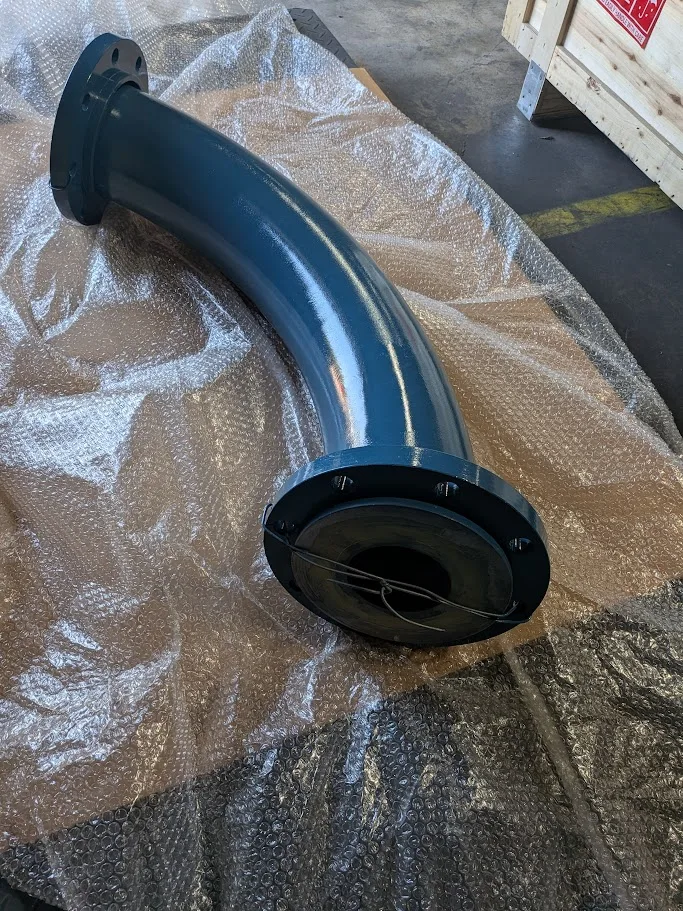
Long radius ceramic lined bend wrapped for shipping

Typical today

  • Cast iron or alloy cooler parts replaced at every kiln stop
  • Mortar backed box elbows in coke and dust lines
  • Thick castable sections that take days to form and cure
  • Machined ceramic limited to small, simple shapes

Engineered with Blasch

  • Precast silicon carbide shapes in place of the metal part
  • One piece lined elbows and spools with a smooth bore
  • Grades selected for alkali, abrasion and temperature
  • Large, complex shapes cast near net, without machining
Clinker cooler wear inserts packed in a crate

Cement and iron ore pelletizing

The dry calcining process combines heat, alkali and abrasive dust. OXYTRON and NITRON clinker cooler wear inserts and grates are made for that combination.

Multicyclone dust collectors, pipe liners, valves, dip tubes and thimbles are available for any area of the plant that sees abrasion or heat. Lined elbows take the wear in cement and raw meal conveying.

Pelletizing kilns use the same parts: wear resistant dust collectors, piping, valves and reactor linings. SiClone in an iron ore pelletizing plant

What changes after the swap

Replacing a metal wear part with a ceramic one is only worth it if the next inspection finds nothing to replace, and that depends on choosing the grade for the plant's actual dust.

Large ceramic micronizer ring with bolt holes on a pallet

Titanium dioxide, pet coke and silicon

In the finishing section of TiO2 plants, micronizer liners, hot tickle piping, valves, reactor linings and chlorinator parts are cast in silicon carbide grades developed for that abrasion and chemistry.

Pet coke and silicon production use reactor vessel linings and impingement block linings. In pet coke conveying to a boiler, lined elbows have run 12 to 18 months where mortar backed box elbows lasted 3 months.

Glass, building materials and wire lines need burner parts, kiln furniture, weir bars, wipe stones, rollers, guides and immersion heater tubes for galvanizing baths.

Applications in heavy industrial processing

Iron ore pelletizing, pneumatic conveying, dense phase conveying, cement plant conveying, petroleum coke handling and glass production.

Titanium dioxide plants are covered with the chemical processes under refining and chemical processing. Kilns and sintering furnaces are under industrial process heating.

Results with SiClone dust collectors

SiClone mechanical dust collector components replace cast iron multicyclone parts at about one third of their weight. A chemical plant and an iron ore pelletizing plant have documented the change. SiClone in a chemical plant

Who you talk to

The previous Blasch site listed Tim Connors (Director of Business Development, Blasch Global Solutions) as market manager for heavy industrial processing.

Frequently asked

Questions about cement plant wear parts

Which parts of a cement plant can be ceramic?

Clinker cooler wear inserts and grates, multicyclone dust collectors, pipe and elbow liners, valves, dip tubes and thimbles, plus burner parts and custom shapes where the duty is hot or abrasive.

Why silicon carbide in a cement plant?

OXYTRON and NITRON silicon carbide combine abrasion resistance at high temperature with resistance to alkali attack, which wears out many metal parts.

Can Blasch replace a cast iron part with the same dimensions?

Yes. Many parts are designed as dimensional replacements for the metal part, so the equipment around them does not change.

Ceramic lined spool packed in a crate, liner visible at the flange

Which metal part
wears out first?

Send the location, the material handled and the temperature. A Blasch engineer comes back with a ceramic grade and a design for the part.

Talk to an engineer Call