Case study

Ceramic multicyclone parts
in an iron ore pelletizing plant

A steel producer with its own pelletizing plant chose silicon carbide over metal for its dust collector.

Iron ore dust is about as hard on a cyclone tube as dust gets.
This plant took the metal out of its multicyclone

Mechanical dust collector components in ceramic
In short

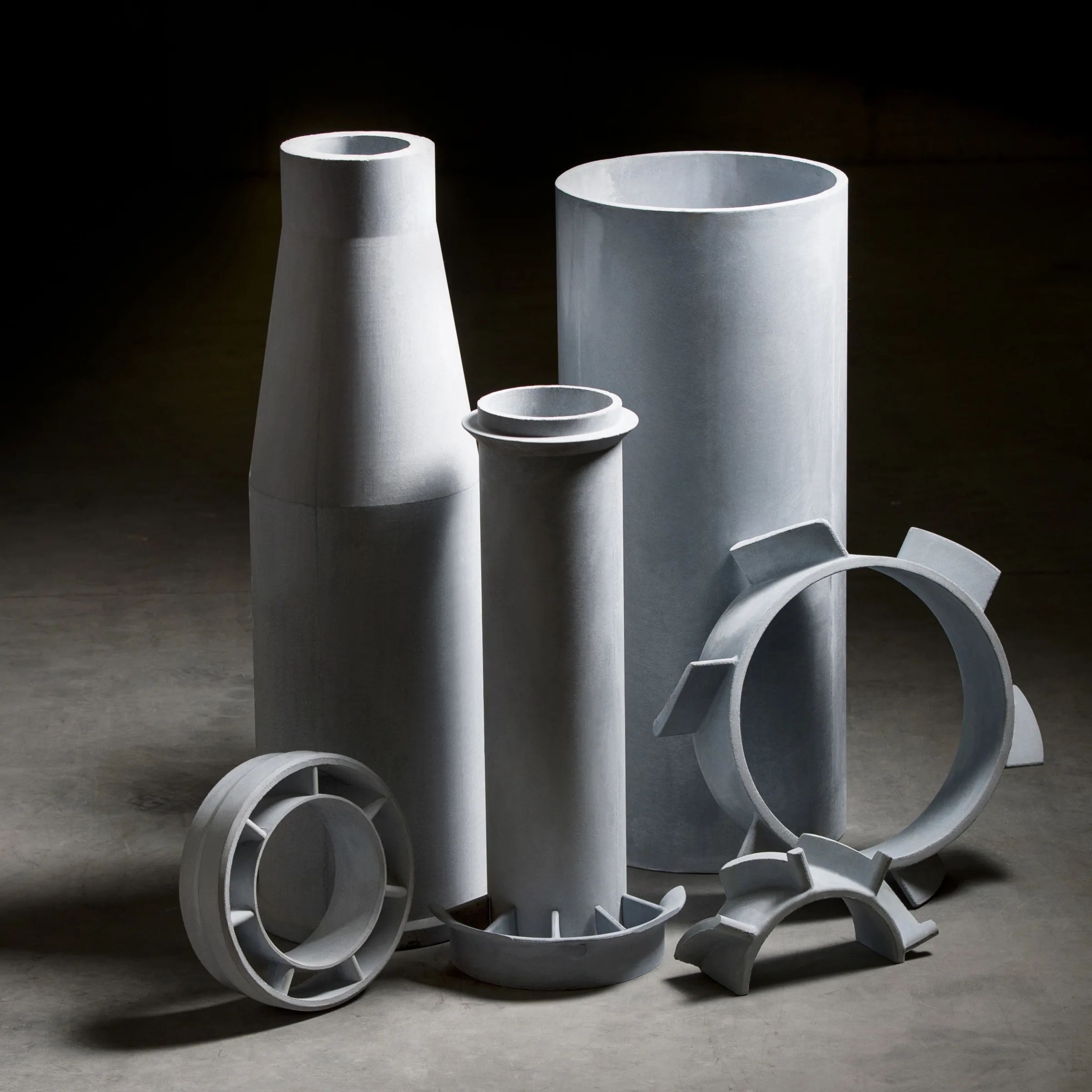
A steel producer that runs its own iron ore pelletizing plant moved its mechanical dust collector from metal to SiClone components cast in silicon carbide. The ceramic inlets, spin vanes and outlet tubes are cast to the dimensions of the collector already in place and replace metal parts that wore through in the abrasive dust stream.

Mechanical dust collector components in ceramic

Dust that wears through metal

Pelletizing turns iron ore fines into hardened pellets for the blast furnace or direct reduction. The off gas carries fine ore and pellet dust, and a multicyclone is a common first stage to take it out.

The cyclone tubes do their job by spinning the gas, so the dust slides along the tube wall at a flat angle, always in the same zones. Cast iron and hard alloy tubes thin out there until the spin breaks down and dust passes through.

The choice the plant made

When the dust is harder than the metal around it, every new set of metal tubes starts the same countdown, so the plant changed the material instead of the replacement schedule.

What was installed

SiClone components are cast silicon carbide parts for mechanical dust collectors: inlet tubes, spin vanes and outlet tubes in the sizes of the common multicyclone designs, with 6, 9, 12 and 24 inch tubes as standard. They go into the existing tube sheets.

For abrasive dust Blasch uses ALTRON, an alumina bonded silicon carbide whose abrasion resistance comes close to dense technical ceramics, or OXYTRON, an oxide bonded silicon carbide.

What the plant gets

  • Tubes with a wear surface made for the flat angle impact of dust
  • Parts that weigh about a third of their steel counterparts, easier to change in a tight collector housing
  • No change to the housing, ducts or fan

A second SiClone case

A chemical producer chose a complete SiClone collector for its process gas. SiClone in a chemical plant

Related pages

SiClone components

Silicon carbide inlets, spin vanes and outlet tubes for mechanical dust collectors.

SiClone dust collector parts

Alumina bonded silicon carbide

ALTRON, the grade for heavy abrasion from hard particles.

ALTRON material

Mining and mineral processing

Wear parts for ore, slurry and dust handling.

Ceramics for mining
Frequently asked

Questions about this case

Does the collector housing change?

No. The silicon carbide parts are cast to fit the existing collector design and tube sheets.

Which silicon carbide grade fits iron ore dust?

For hard, abrasive dust Blasch uses ALTRON alumina bonded or OXYTRON oxide bonded silicon carbide. The choice depends on particle size, velocity and temperature.

Are the ceramic tubes harder to handle than metal ones?

They are lighter, at about a third of the weight of steel parts, which helps in a cramped housing during an outage.

Multicyclone tubes
wearing through in months?

Send the collector make and size, the tube diameter and what the dust contains. A Blasch engineer suggests a grade and checks the fit with your tube sheets.

Talk to an engineer Call