Industries

Ceramics that contain, control
and refine molten metal

Crucibles, linings, degassing parts, riser tubes and nozzles for superalloys, aluminum, copper and zinc.

From vacuum induction melting of superalloys to aluminum die casting.
Ceramic parts that keep the metal clean and the campaign predictable.

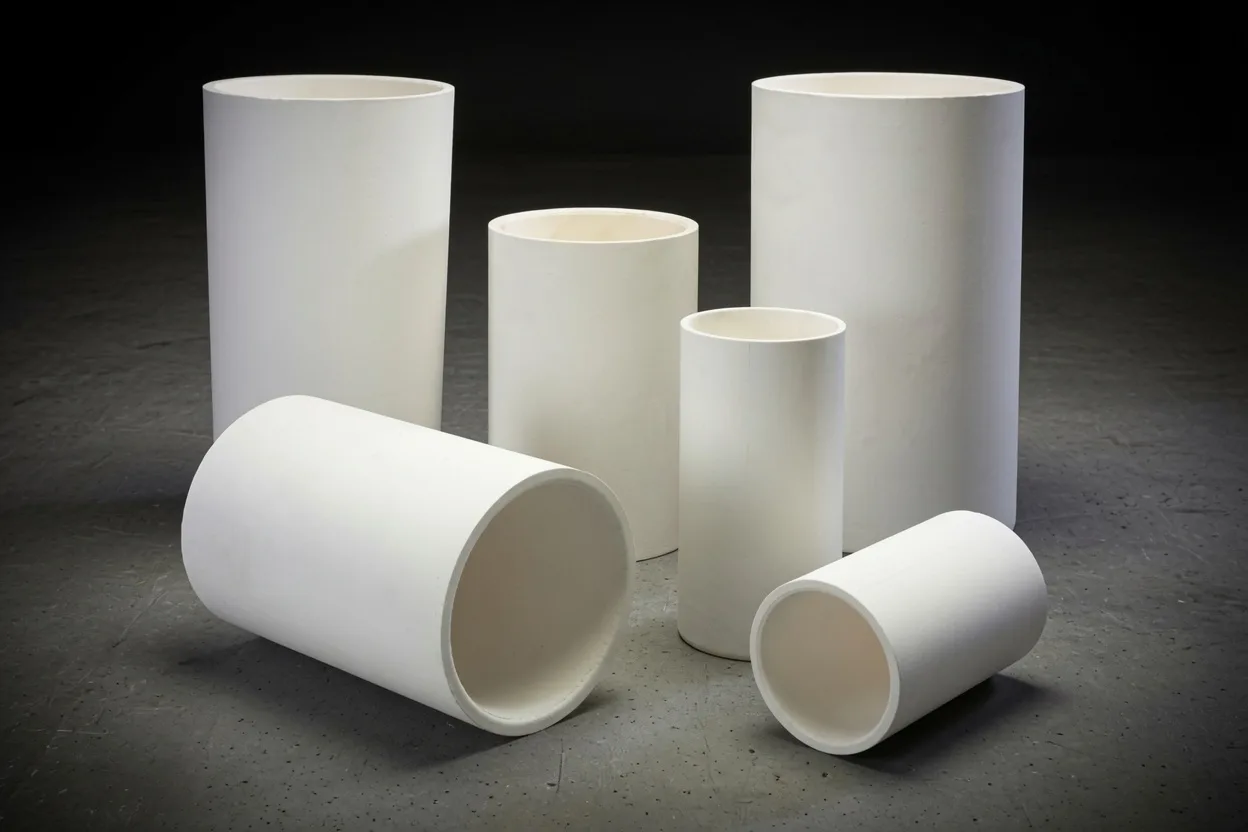
Ceramic crucibles of different sizes
In short

The ceramics that contain, control and refine molten metal are crucibles and furnace linings, launders and tundishes, nozzles and stopper rods, degassing rotors and porous plugs, and filters. For investment casting and superalloy melting, Blasch makes ProCaster high alumina and alumina zirconia crucibles and the InterLok segmented lining; for aluminum, copper, brass and zinc it makes non-wetting silicon carbide and aluminum titanate parts and CeraLoop channel furnace liners. Each grade is matched to the alloy, the temperature and the way the part is heated and cooled.

Rammed, bricked or
engineered as one system

Most melt shops line their furnaces the way they always have. The lining comes back every campaign, and so do the inclusions and the tear out.

Rammed and bricked linings

  • Rammed linings crack under thermal stress in larger furnaces and need wash heats
  • MgO brick gives off magnesium under vacuum
  • Channel inductors fill with zinc and metal until the loop fails
  • Campaign length varies from lining to lining

Engineered ceramic systems

  • Monolithic crucibles fired before delivery, sized to the coil
  • Tongue and groove segments with designed expansion gaps
  • Prefired channel liners that start with any alloy, without a wash heat
  • A grade chosen for the alloy: high alumina, alumina zirconia, silicon carbide, aluminum titanate
White high alumina crucibles

Superalloys, investment casting and atomizing

Aerospace and medical castings need metal with as few ceramic inclusions as possible. ProCaster crucibles are cast from high alumina or from ProCaster-Z, a mullite bonded alumina zirconia developed for nickel, cobalt and stainless alloys.

The size table runs from 5 lb to 4,500 lb steel capacity, with pour spouts and nozzle holes cast in. Larger vacuum and air induction furnaces use the InterLok segmented lining, with eleven standard sizes from 650 lb to 15,000 lb.

For investment casting there are core setters and 3D printed ceramic filters. Gas atomization uses atomizing nozzles and pour cups made to tight tolerances, fired before delivery so they do not outgas on the first pour.

Predictable is the point

A foundry plans around the campaign it can count on, so a crucible that performs the same every time is worth more than one that occasionally lasts longer.

Ceramic riser tubes for low pressure die casting

Aluminum, copper, brass and zinc

Die casting and continuous casting expose ceramics to thermal shock and long contact with molten aluminum. Blasch uses OXYTRON and NITRON silicon carbide and aluminum titanate, which molten aluminum does not wet.

Riser tubes for low pressure die casting, the DuraLadle auto ladle, immersion heater tubes and thermocouple protection tubes are cast from those grades.

Rotary degassers and porous plugs have a pore size around 5 microns, so they release small bubbles and resist metal penetration. Threads are cast in, which often removes the need for a metal sleeve.

Channel induction furnaces for brass, copper, zinc and galvalume use CeraLoop liners, distributed exclusively by Allied Mineral Products.

Results from melt shops

In a brass foundry with four channel furnaces of 10,000 lb, each fitted with a 500 kW twin loop inductor, zinc vapor from leaded alloys had shortened inductor life by as much as 90%. The castables and dry vibes tried before had not changed that. The first CeraLoop liner, in Procaster-C, ran about twice the tonnage and was intact when removed; the second reached 300% of the previous campaign length. CeraLoop in a brass channel furnace

Riser tubes in OXYTRON 015XDII for low pressure die casting are documented in a separate case. OXYTRON riser tubes

Applications in molten metals

Vacuum induction melting, coreless induction furnaces, channel induction furnaces, superalloy melting, investment casting, aerospace turbine blade casting and gas atomization of metal powders.

Aluminum degassing, low pressure die casting, aluminum holding furnaces, copper and brass melting, zinc and galvalume lines, continuous casting and molten metal filtration.

The full product range is grouped under degassing and die casting and non-ferrous and aluminum. Setters and kiln furniture for sintering metal parts are under industrial process heating.

Who you talk to

The market manager for molten metals on the previous Blasch site was Phil Geers, Director of Global Business Development, Molten Metals.

Blasch is a member of the American Foundry Society and the Investment Casting Institute.

Frequently asked

Questions from melt shops

Can a high alumina crucible replace a zirconia crucible?

In many investment casting applications, yes. ProCaster high alumina crucibles were developed to replace zirconia crucibles with equivalent or better performance, depending on alloy and temperature.

What size crucibles does Blasch make?

ProCaster monolithic crucibles cover the small and mid sizes up to 4,500 lb of steel; InterLok segmented linings take over for furnaces from 650 lb up to 15,000 lb.

Which materials resist molten aluminum?

Silicon carbide grades such as OXYTRON and NITRON, and aluminum titanate. They are non-wetting, so aluminum does not stick to or soak into the part.

What backup material goes behind a ProCaster crucible?

An ultra high alumina backup ram such as ALRAM, chosen to match the crucible grade.

Ceramic inductor lining for a channel furnace

Which part ends
your campaign?

Tell us the furnace, the alloy and where the lining or part fails. A Blasch engineer recommends the grade and the design.

Talk to an engineer Call