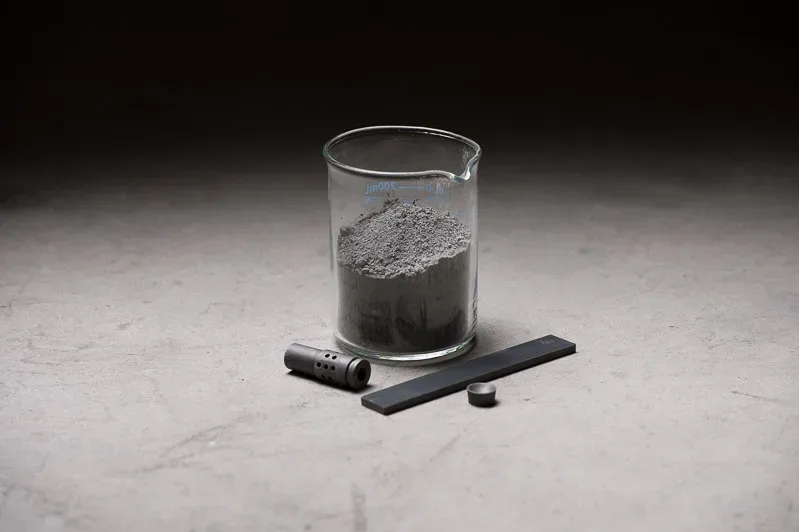
When tungsten carbide is better than ceramic for wear
Impact: coarse particles, slugs of solids or a valve that slams shut. A cemented carbide absorbs the hit where a ceramic can chip.
High velocity at a restriction: chokes, orifices and reducers where flow accelerates. Thin sections and sharp edges hold up better in carbide.
Threads, seals and tight fits: the metallic binder lets a carbide part take clamping and thread loads that a ceramic part has to be designed around.
When a ceramic is the better choice
Large parts: tungsten carbide is very dense and expensive. For a cyclone liner, a pipe spool or an elbow, a cast silicon carbide liner costs less and weighs a fraction of the carbide.
High temperature: the metal binder softens and oxidizes long before silicon carbide or alumina reach their limit. Hot service usually belongs to a ceramic.
Complex shapes: Blasch casts silicon carbide net shape in one piece, where a carbide part would have to be pressed, sintered and ground, or assembled from segments.
The detailed comparison is on silicon carbide vs tungsten carbide. For the densest silicon carbide, see reaction bonded silicon carbide.
Sources
Blasch values and uses: Blasch tungsten carbide material page. Cemented carbides, binders and their behavior: ASM Handbook, Volume 7, Powder Metal Technologies and Applications, ASM International, 1998.