Applications

Steam methane reforming:
what wears out inside the furnace

How the reformer works, where its refractory fails, and which ceramic parts keep it running.

The reaction happens in the catalyst tubes.
Whether the tubes last depends on the ceramics around them.

Two precast tunnel walls on the floor of a reformer furnace during installation
In short

Steam methane reforming is the process that turns natural gas and steam into hydrogen and carbon monoxide over a catalyst, at roughly 700 to 1,000 °C inside tubes heated in a large furnace. It is the main source of hydrogen for refineries and of syngas for ammonia and methanol. The furnace itself is lined with refractory, and its flue gas tunnels, burners and the waste heat boiler that follows decide how evenly the tubes are heated and how long the unit runs between turnarounds.

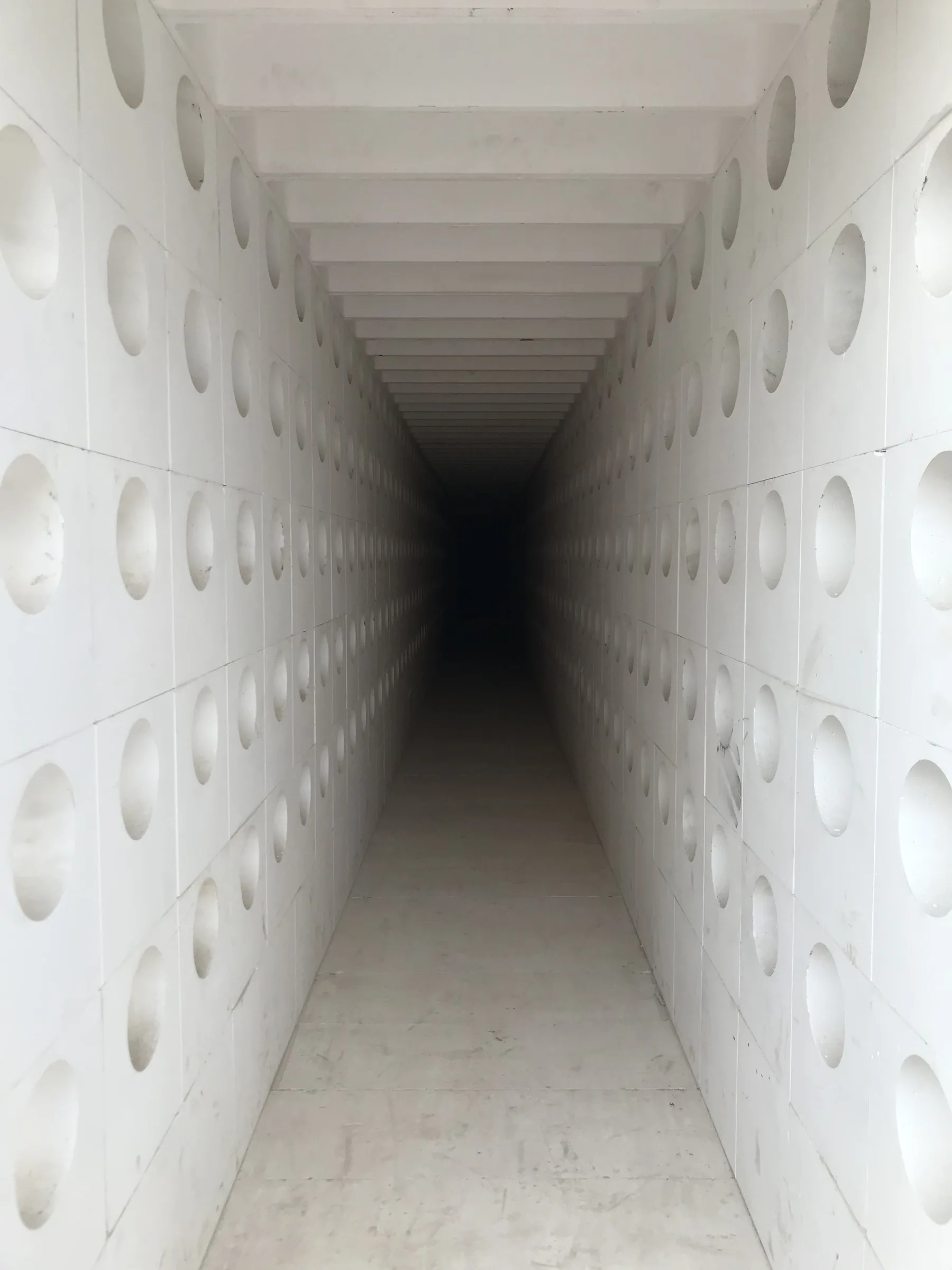
Inside a finished precast flue gas tunnel with rows of round side openings

How a steam methane reformer works

Methane and steam react in catalyst filled tubes to form hydrogen and carbon monoxide. The reaction needs heat, so the tubes hang in a furnace fired by rows of burners.

A water gas shift step then converts the carbon monoxide with more steam into additional hydrogen and carbon dioxide, and pressure swing adsorption purifies the hydrogen.

In a top-fired reformer, the burners sit in the roof between the tube rows and fire downward. The flue gas leaves at the bottom through refractory tunnels and flows on to the convection section, where its heat is recovered.

The weakest tube

A reformer is run to protect its hottest tube, so every degree of uneven heating costs throughput, methane slip or tube life somewhere in the furnace.

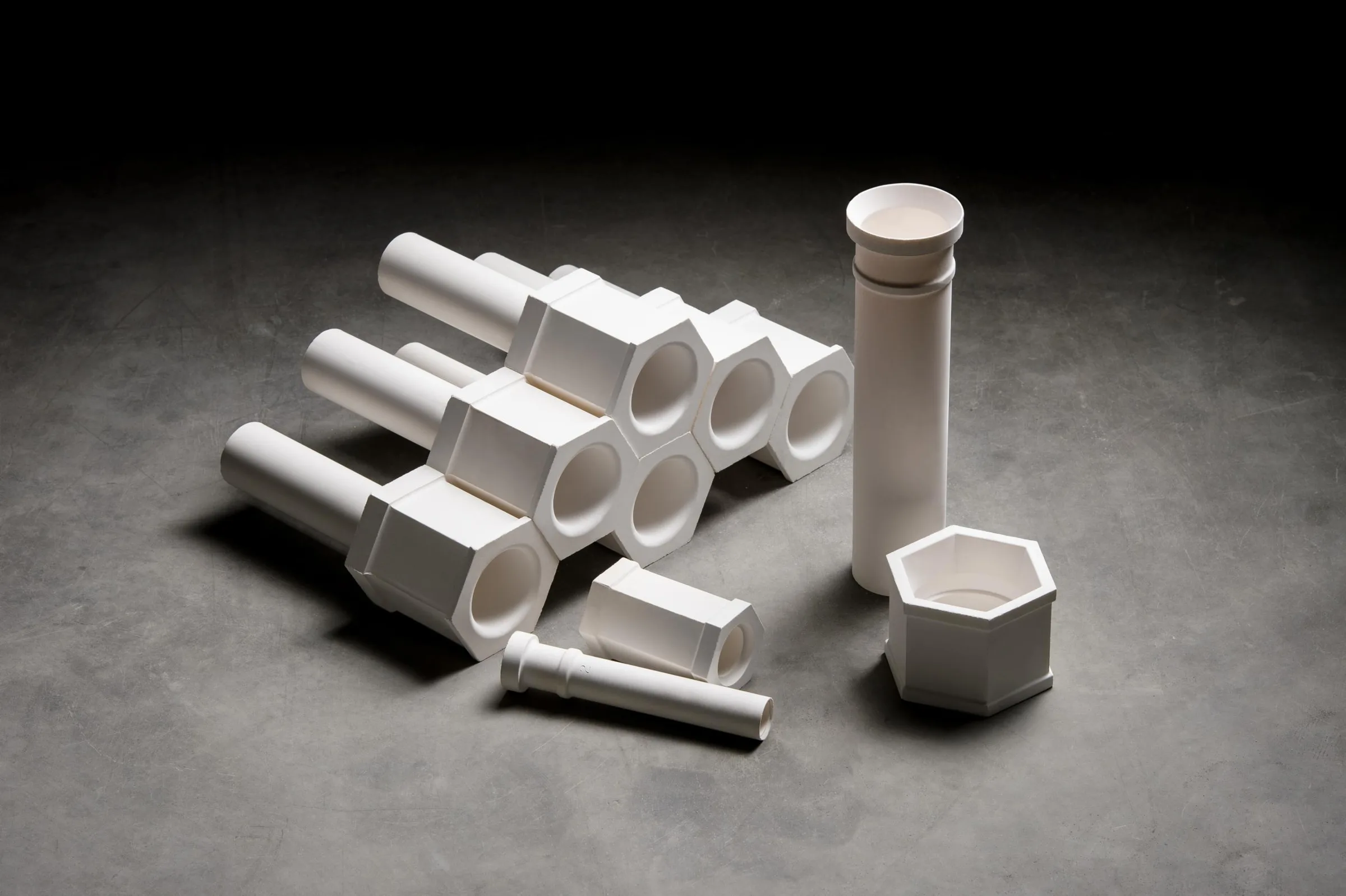
Hex head ceramic ferrules and tube shapes

Where reformer furnaces fail

Catalyst tubes are designed for about 100,000 hours. Some run for twenty years, others fail far earlier, and uneven heat is a common reason. Three refractory areas decide how even that heat is.

Flue gas tunnels: brick and mortar tunnels at the furnace floor crack, snake and can collapse. Openings of one size draw more flue gas near some tubes than near others. Why reformer tunnels collapse

Waste heat boiler tubesheets: the hot process gas leaving the reformer enters a boiler, and the tube inlets at the tubesheet need ceramic ferrules to survive the heat flux. Ceramic ferrules for tubesheets

Burners: burner tips and nozzles see flame and thermal cycling at every start and stop. Burner nozzles and flare tips

Blasch parts for steam methane reformers

Each part is designed for the furnace it goes into, from its dimensions and operating conditions.

StaBlox flue gas tunnels

Interlocking precast tunnel blocks, set without mortar, with an orifice insert sized for every opening.

StaBlox tunnel system

Compromised tunnel replacement

One collapsed brick tunnel rebuilt from stocked blocks, without waiting for a full revamp.

Tunnel replacement

Ferrules for the waste heat boiler

One and two piece ceramic ferrules that protect the tubesheet at the tube inlets.

Ceramic ferrules

What even heating is worth

In an ammonia plant with 168 catalyst tubes, replacing the brick tunnels with StaBlox halved the standard deviation of tube metal temperatures, from 42 °F to 21 °F. With the hottest tubes closer to the average, methane slip fell from 9.94% to 6.94% and production rose by 3.3%, according to the study published in World Fertilizer in 2020.

The opposite case was modeled in a published CFD study: a reformer running with one outer tunnel missing lost up to 9.7% hydrogen next to the gap and 0.95% across the whole furnace.

Reformer types and where tunnels matter

Flue gas tunnels belong to top-fired reformers, which are used in hydrogen, ammonia, methanol and syngas plants. Other furnace designs route their flue gas differently and do not use these tunnels.

Ammonia plants add a secondary reformer after the primary one. Its outlet also goes to a waste heat boiler, which is where hybrid ferrules are used.

Sources

Process description and temperature range: U.S. Department of Energy, Hydrogen Production: Natural Gas Reforming. Plant data: World Fertilizer, 2020; Nitrogen+Syngas, 2019.

Frequently asked

Questions about reformer ceramics

What temperature does steam methane reforming run at?

The reforming reaction typically runs at about 700 to 1,000 °C inside the catalyst tubes.

Why do catalyst tubes fail early?

Uneven heating is a common reason. Tubes next to a hot spot age faster, and uneven flue gas flow at the furnace floor creates such hot spots.

Can one damaged tunnel be replaced without a full revamp?

Yes. StaBlox blocks, lids and bases for common sizes are kept in stock, so a single tunnel can be rebuilt in a short outage.

Does Blasch supply the catalyst or the reformer?

No. Blasch makes the ceramic components around the process: tunnels, ferrules, burner parts and custom shapes.

Two workers setting precast tunnel blocks inside a reformer furnace

Uneven tube temperatures
in your reformer?

Send the furnace layout and the tunnel dimensions. A Blasch engineer looks at where the flue gas goes and what the tunnels can change.

Talk to an engineer Call