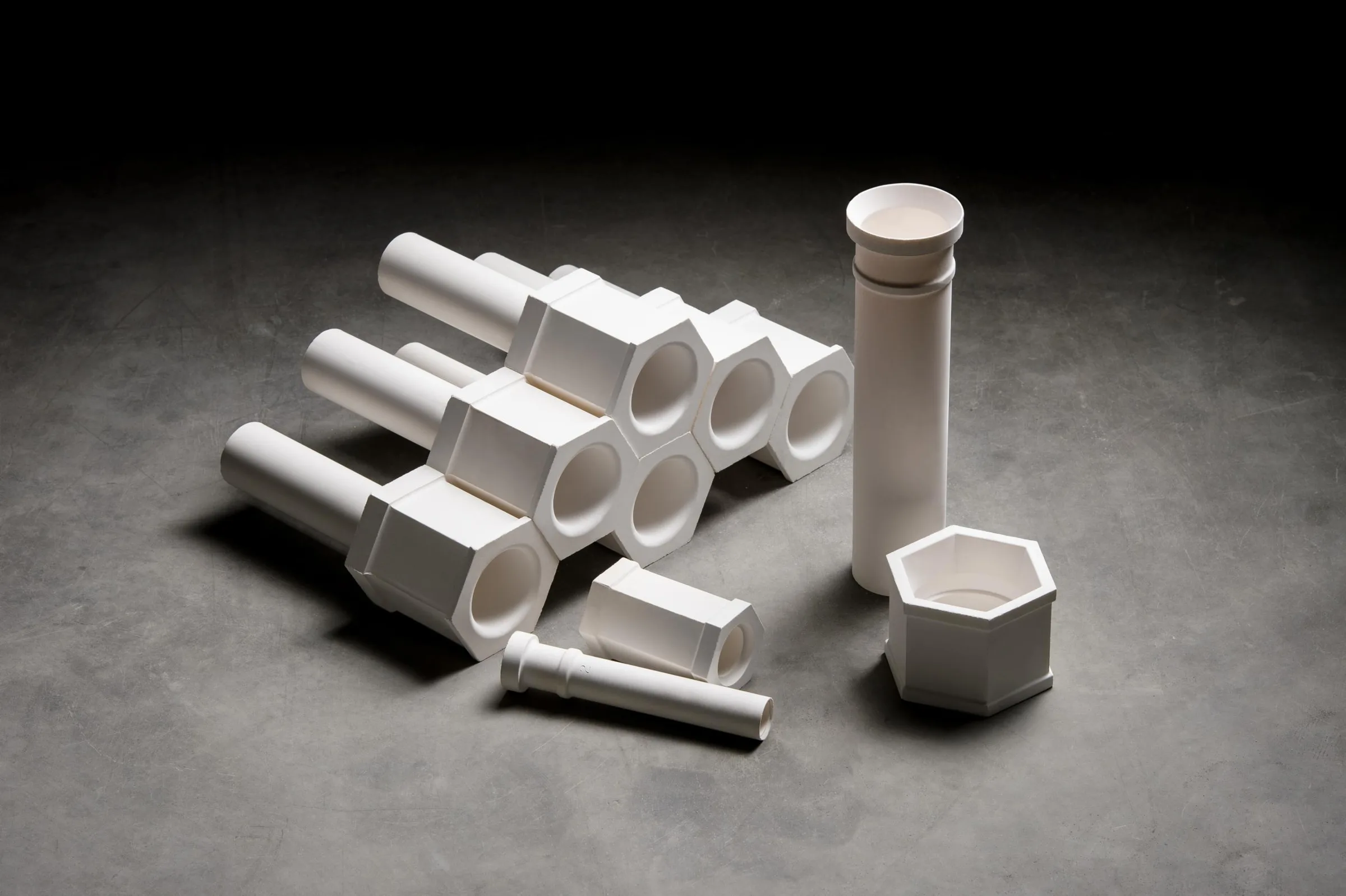
Ferrules and tube inserts

Hybrid ferrules:
a metal sleeve with a precast ceramic head

Tube inlet protection for secondary reformer waste heat boilers, without refractory cast at the tubesheet.

The alloy protects the tube end.
The ceramic head protects the tubesheet, and arrives finished.

Metal ferrules for boiler tubes
In short

A hybrid ferrule is a metal ferrule, the tube insert that lines the inlet of a boiler tube, combined with a precast ceramic head that covers the tubesheet in place of refractory cast on site. Blasch builds hybrid ferrules for secondary reformer waste heat boilers in ammonia and syngas plants, where the alloy sleeve protects the tube end and the ceramic head with fiber insulation protects the tubesheet. Because the ceramic is fired and dry when it arrives, nothing has to be formed or cured at the tubesheet.

Alloy ferrules in castable,
or a head that arrives finished

Reformer boilers have long used metal ferrules. The question is what protects the tubesheet around them.

Alloy ferrules in cast refractory

  • High-nickel alloy ferrules set in refractory cast at the tubesheet
  • Labor-intensive and dependent on field conditions and installer skill
  • Placement, curing and moisture vary from one outage to the next
  • Curing time comes out of the outage

Hybrid ferrules

  • The same kind of alloy tube insert, with a precast ceramic head
  • Heads made to match the ferrule entrance and the tube pitch
  • Dry ceramic allows ceramic fiber insulation behind the heads
  • The refractory is complete once the ferrules are set

What changes at the tubesheet

The refractory at the tubesheet stops being a job done inside the boiler and becomes a part made in a plant, so the outage no longer waits for it to cure.

How a hybrid ferrule is built

The metal part is a tube insert in an alloy chosen for the gas temperature and chemistry. It can carry a tapered inlet or outlet, flares, flanges, slots, holes or stop pins, and an optional ceramic fiber wrap.

The ceramic head sits in front of the tubesheet. Blasch casts it to the geometry of the ferrule entrance and to the tube pitch, so the heads fit together across the whole tubesheet.

Behind the heads, ceramic fiber adds insulation that a castable layer of the same depth cannot give, and it keeps heat away from the tubesheet. Fiber is only possible because the precast heads bring no moisture into the boiler.

Together, sleeve and head protect against corrosion and erosion at the tube end, stress corrosion cracking and local pitting, and they keep the tube-to-tubesheet joint intact.

Metal, hybrid
or all ceramic

Three designs for tube inlets, from a plain alloy sleeve to a ferrule without any metal.

Metal ferrules

Alloy sleeves alone, for gas below about 1,650 °F (900 °C) and mild abrasion, replaced as a sacrificial part.

Metal ferrules

Hybrid ferrules

Alloy sleeve plus precast ceramic head, for reformer boilers that need the tubesheet insulated without cast refractory.

ProLok ferrules

All ceramic, head and stem joined by a twist lock, for inlets where metal reaches its limits.

ProLok twist lock ferrules

The secondary reformer boiler

In ammonia and syngas plants, the gas leaving the secondary reformer is cooled in a waste heat boiler before it moves on through the process. The tube inlets of that boiler are traditionally protected by alloy ferrules in refractory cast during the outage, which makes the tubesheet one of the slower jobs of a turnaround. More on the parts Blasch makes for hydrogen and ammonia plants.

What Blasch needs for a design

The tube outside diameter, wall thickness and pitch, the ferrule you use today, the gas temperature at the inlet and the thickness of the tubesheet. A drawing helps if you have one, but it is not required.

Frequently asked

Questions about hybrid ferrules

Is a hybrid ferrule the same as a ceramic head on a metal stem?

It is the same idea. The ceramic head protects the tubesheet, the metal sleeve protects the tube end, and each part is made from the material that suits its job.

Why not cast the refractory on site as before?

Cast refractory depends on placement, curing and moisture in the field, and its curing time comes out of the outage. A precast head is fired and dry when it arrives.

Do hybrid ferrules work in other syngas boilers?

Ceramic heads can also be combined with metal ferrules in other boilers that use them, such as syngas coolers after autothermal reformers. A Blasch engineer checks the temperatures first.

When is an all-ceramic ferrule the better choice?

When the gas at the inlet is too hot for the alloy sleeve. Above about 2,300 °F, Blasch recommends an all-ceramic design such as ProLok.

Ceramic ferrule heads and stems on a stone floor

Planning the next
reformer boiler turnaround?

Send the tube data and the ferrules you run today. A Blasch engineer designs the ceramic heads for your tubesheet.

Talk to an engineer Call