Products

Engineered ceramic products
for the part that wears out first

Nine product groups, each cast in Albany, New York, for abrasion, heat, corrosion or molten metal.

Find the part by where it sits in your plant.
Every group below started as a component that failed in the same place every campaign.

Cast ceramic spray nozzles, a spiral nozzle and a flanged fitting on a concrete floor
In short

Blasch makes engineered ceramic components in nine product groups: self-supporting furnace structures, ferrules for waste heat boilers, wear products for pipe and cyclones, crucibles and melt products, degassing and die casting parts, non-ferrous furnace parts, nozzles, kiln furniture and custom shapes. Most are silicon carbide parts or high alumina parts, cast to near net shape in Albany, New York, and designed for one application from its dimensions and operating conditions.

Nine product groups,
one casting process

Each group page lists the parts, the grades they are cast in and the plants they run in.

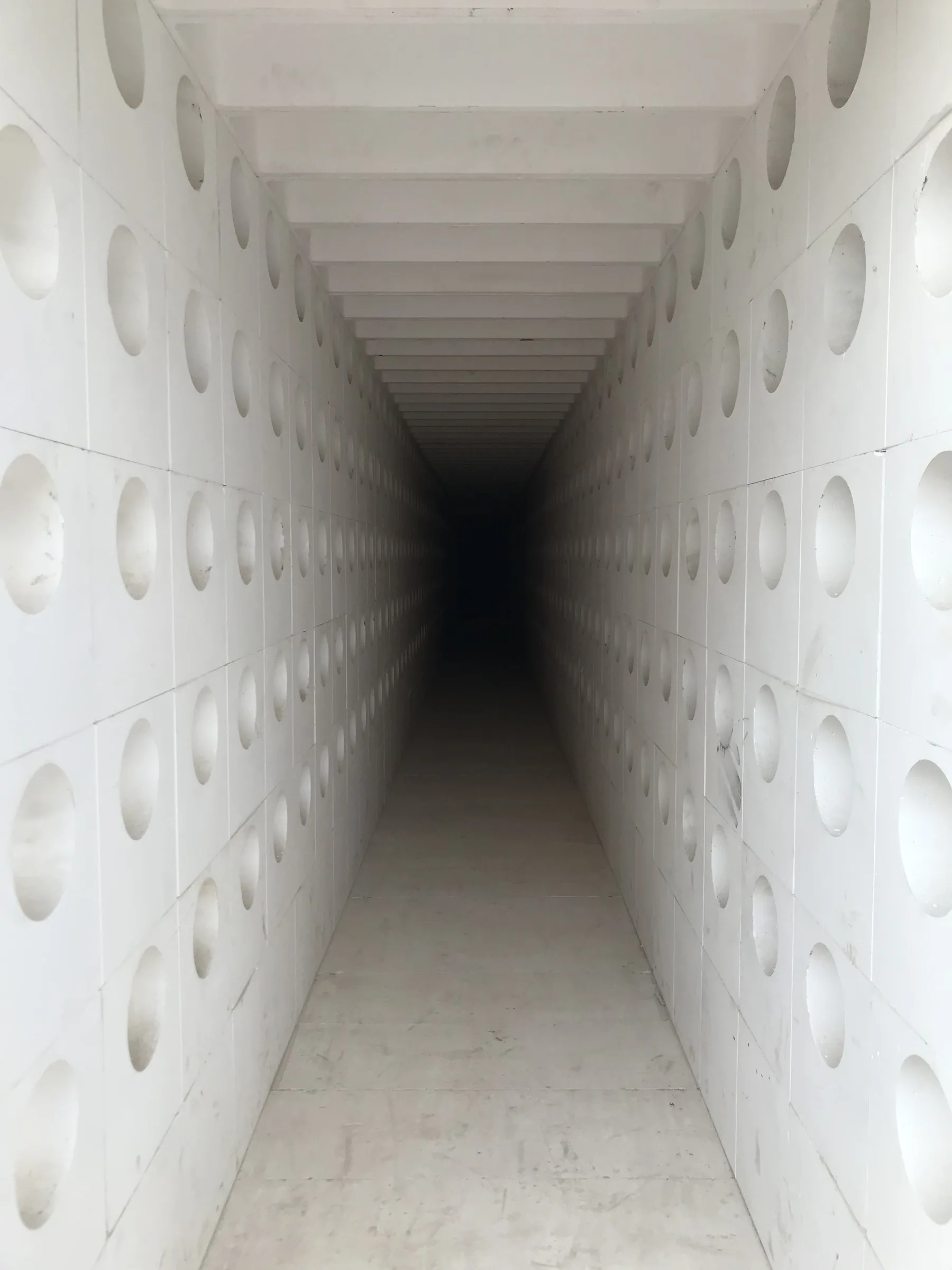
Inside a finished precast flue gas tunnel with rows of round side openings
01

Self-supporting ceramic structures

Interlocking precast tunnels and checkerwalls for reformers, Claus furnaces and acid plants, set without mortar.

Self-supporting structures
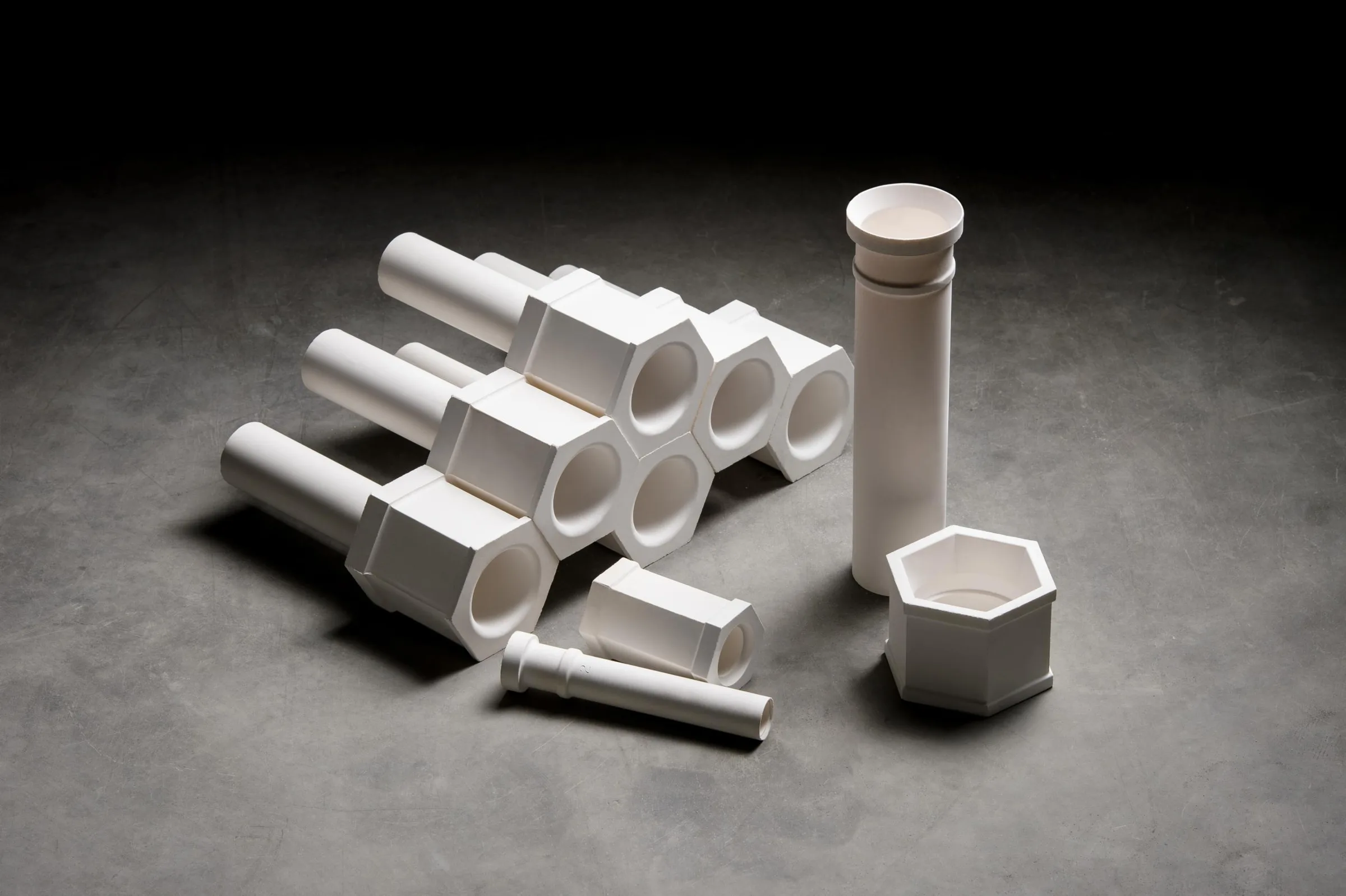
Hex head ceramic ferrules and tube shapes
02

Ferrules for waste heat boilers

Round, hex head and twist lock ferrules that protect the tubesheet where the hot gas enters the boiler tubes.

Ferrules
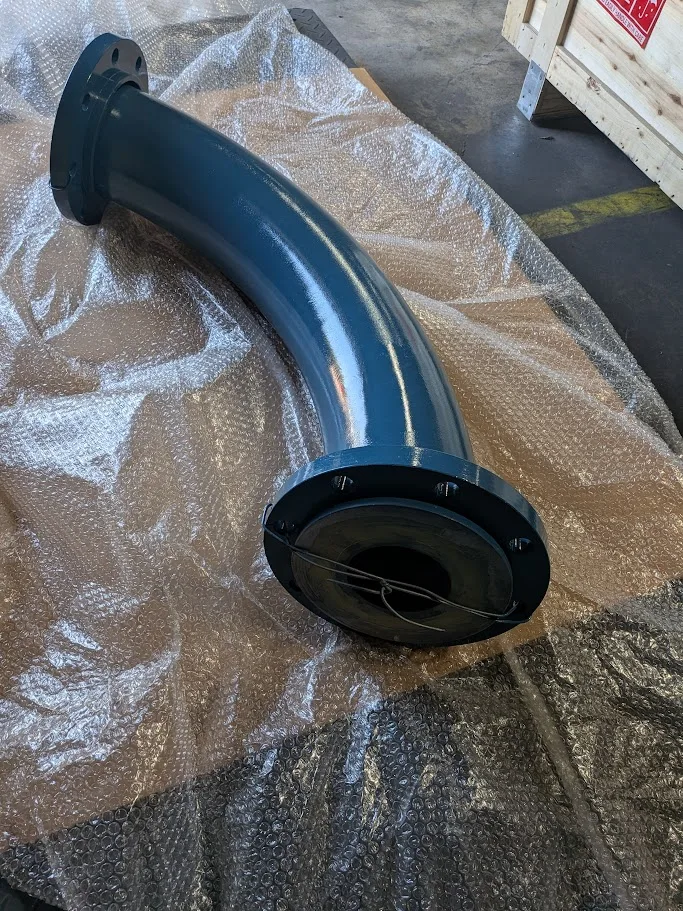
Long radius ceramic lined bend wrapped for shipping
03

Wear products

Lined pipe and elbows, cyclone and hydrocyclone liners, valves, chokes and pump parts for abrasive flow.

Wear products
04

Crucibles and melt products

High alumina and zirconia crucibles, segmented crucible linings, filters and sample cups for vacuum and air melting.

Crucible melt products
05

Degassing and die casting

Riser tubes, rotary degassers, porous plugs, thermocouple tubes and ladles for molten aluminum.

Degassing and die casting parts
06

Non-ferrous and aluminum

Channel furnace linings, backup ram and heating element holders for copper, brass, zinc and aluminum furnaces.

Non-ferrous furnace parts
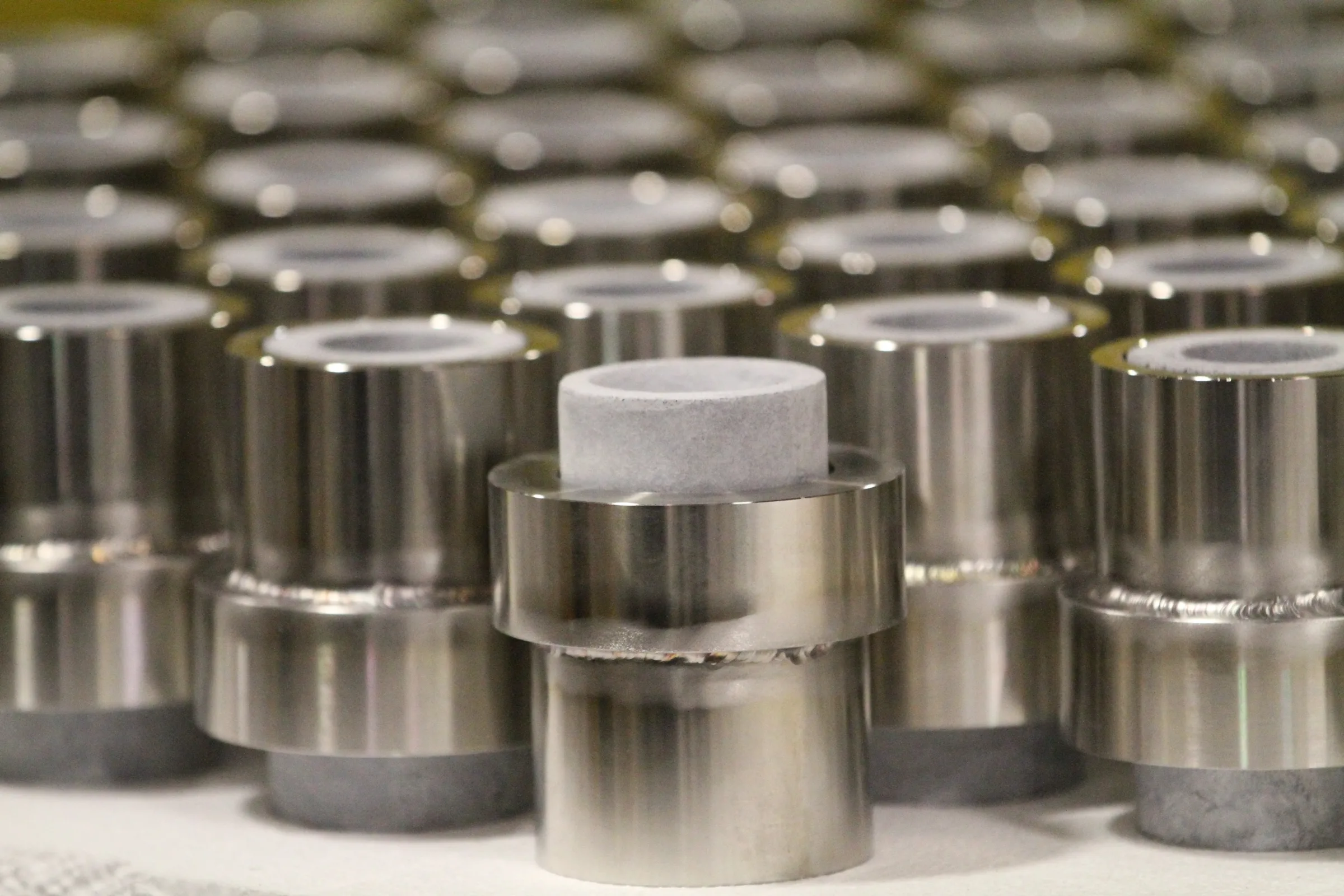
Ceramic nozzle inserts welded into polished steel sleeves
07

Nozzles

Air grid, fluidized bed, coal, burner, spray and atomizing nozzles that hold their bore under erosion and heat.

Ceramic nozzles
08

Kiln furniture

Low mass plates, beams, setters, saggers and pusher plates for industrial sintering, calcining and heat treating.

Industrial kiln furniture
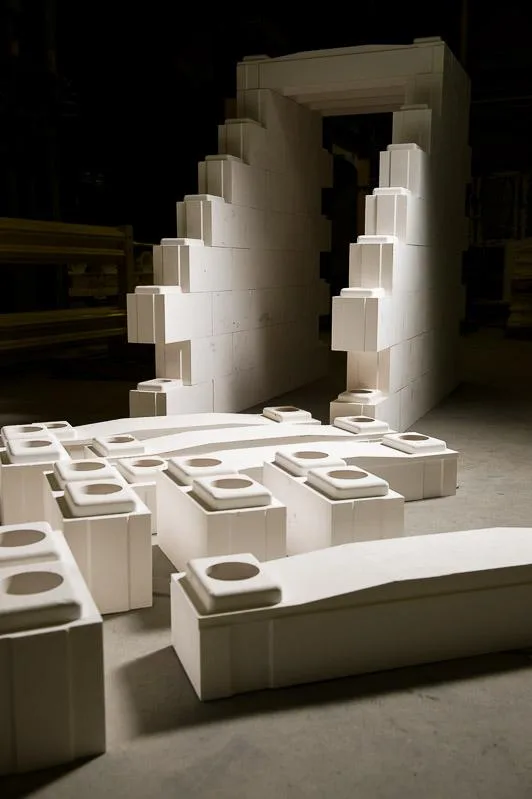
Interlocking white ceramic blocks with a doorway shaped wall behind them
09

Custom engineered shapes

One-off and series parts from 1 oz to 2 tons, cast from your dimensions when no catalog part fits.

Custom ceramic shapes

Start with the failure

The product name matters less than what destroys the part, because the same nozzle needs a different ceramic when particles wear it than when heat cracks it.

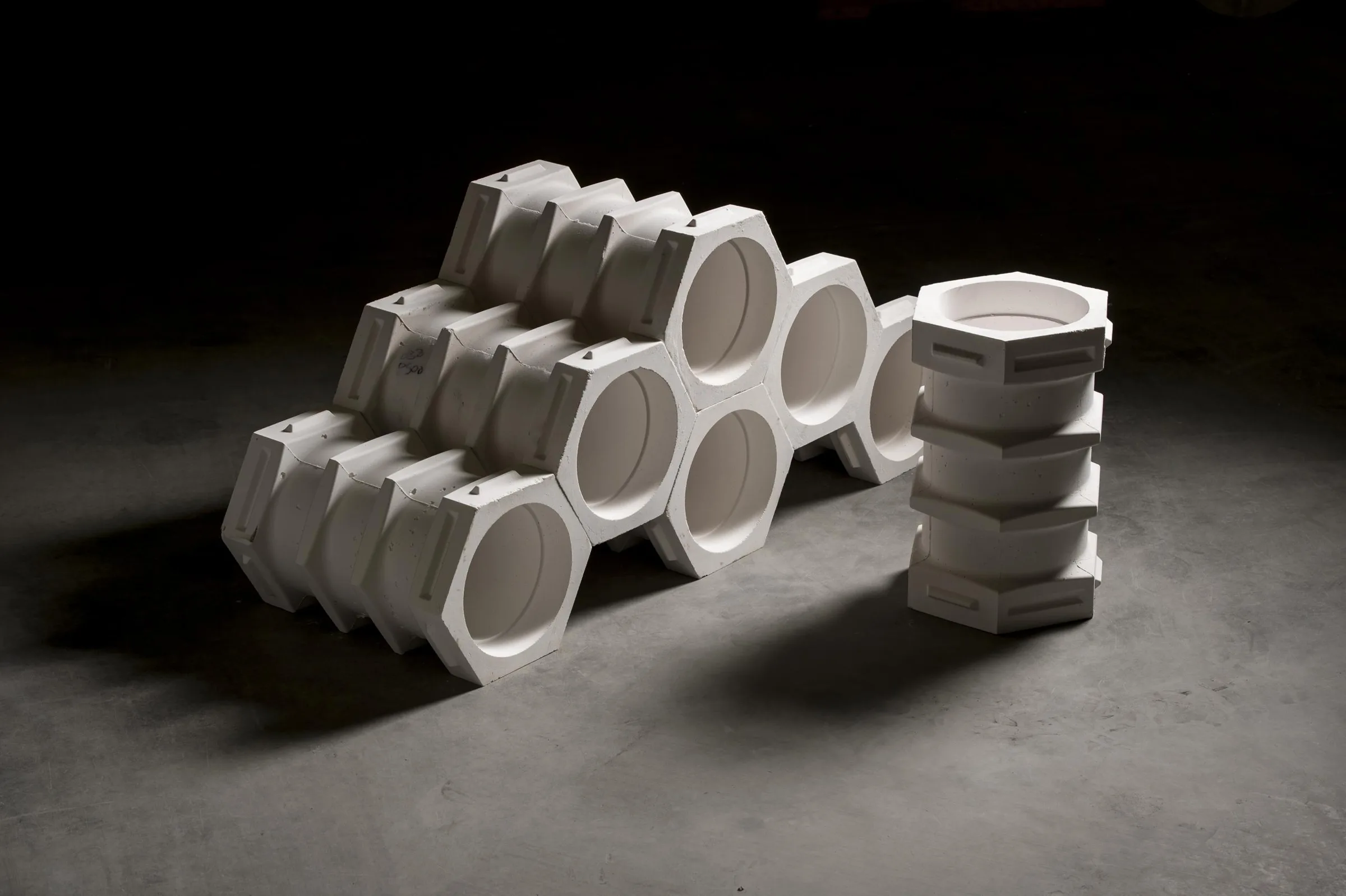
Interlocking hexagonal checkerwall blocks

Choosing by what attacks
the part

Abrasion and erosion: particles in gas or slurry cut steel at bends, orifices and inlets. Silicon carbide grades and dense alumina carry most of these parts, from lined elbows to air grid nozzles.

Heat and thermal shock: furnace parts fail when one side heats faster than the other. Porous, fine grained structures and grades such as mullite, fused silica or aluminum titanate take the swings that crack dense parts.

Molten metal: crucibles, riser tubes and degassing parts need ceramics that molten aluminum or superalloys do not wet or dissolve.

Corrosion and atmosphere: sulfur, acids and hydrogen rich atmospheres attack the binder phase first. The grade is chosen for the chemistry, not only for the temperature.

Silicon carbide parts and other grades

Blasch casts silicon carbide parts in six bonding systems, from oxide and nitride bonded to reaction bonded, recrystallized, alumina bonded and sintered. Next to them stand alumina, mullite, zirconia composites, fused silica and aluminum titanate, more than 15 grades in all.

The bonding system decides as much as the carbide itself. A fully dense part resists wear but can crack under thermal cycling, a bonded grade with controlled porosity gives up a little hardness and survives the cycles.

One process for all nine groups

Every group comes out of the same forming process: a ceramic slurry is cast into machined steel molds and frozen, so it sets without binder burnout and shrinks very little. Parts leave the mold close to their final shape, with threads, bores and changing wall thickness already in place.

That is why a crucible, a nozzle insert and a 2 ton furnace block can come from one plant, and why a new geometry does not need new machining steps. How the forming process works

Frequently asked

Questions about Blasch products

Do you sell standard catalog parts?

Some parts, such as tunnel blocks for common sizes, are kept in stock. Most are engineered for a single plant and cast to order.

Do I need a drawing to request a part?

No. Dimensions, the medium, the temperature and the flow are enough for a Blasch engineer to design the part.

Which product group fits my problem?

Start with where the part sits and what destroys it. If no group fits, the part becomes a custom shape.

Where are the parts made?

In Albany, New York, under an ISO 9001:2015 quality system, with some shapes made by vetted partners when their forming method suits the part better.

Precast tunnel wall being built block by block in a furnace

Not sure which group
your part belongs to?

Describe the part, where it sits and how it fails. A Blasch engineer tells you which product fits or designs a new one.

Talk to an engineer Call