Self-supporting ceramic structures

Self-supporting ceramic structures:
tunnels and checkerwalls without mortar

Interlocking precast blocks for reformer tunnels and furnace checkerwalls, plus ceramic media and filters for hot gas.

Walls that hold together through the shape of their blocks,
not through mortar that cracks at the first cycles.
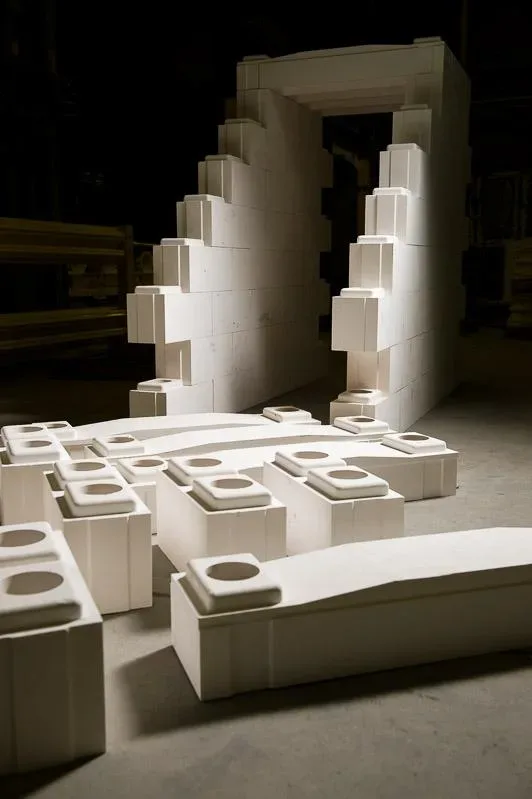
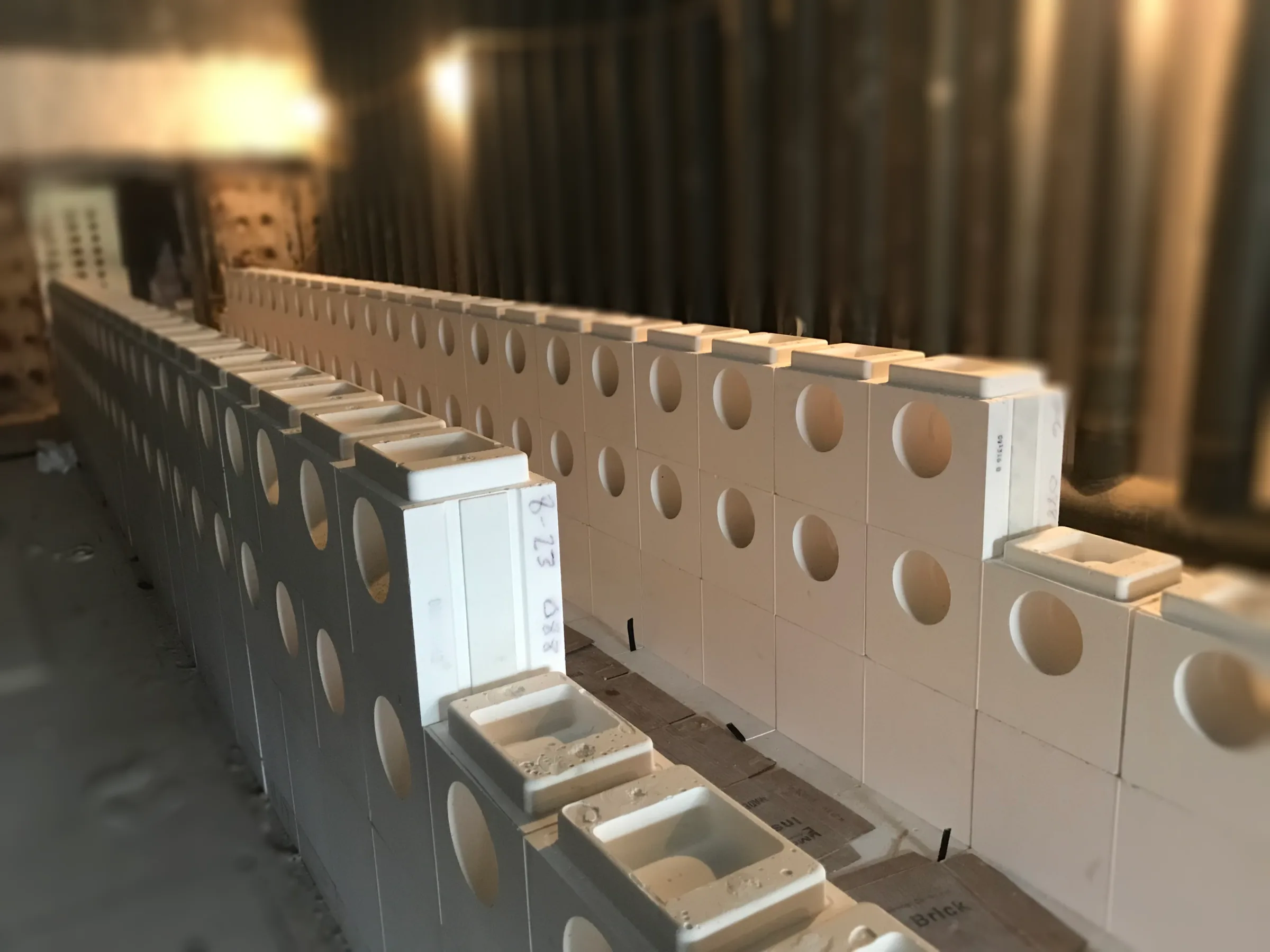
Precast ceramic blocks with round openings in front of an assembled block arch in a workshop
In short

Self-supporting ceramic structures are tunnels, walls and checkerwalls built from interlocking precast ceramic blocks that are stacked without mortar and hold each other in place. Each block takes up its own thermal expansion, so the structure stays tight and standing through heat-up and cool-down, where brick and mortar crack. Blasch builds them as StaBlox flue gas tunnels for top-fired reformers and as HexWall and VectorWall checkerwalls for sulfur recovery, sulfuric acid and thermal oxidizer furnaces.

Brick and mortar,
or blocks that lock together

Most furnace internals are still laid course by course. The weak point is rarely the brick, it is the joint between two bricks.

Brick, mortar and castable

  • Mortar joints crack with every thermal cycle
  • Flat spans sit in tension and sag over time under creep
  • Stacked cylinders and loose shapes can topple in an upset such as a delayed ignition
  • Every wall needs skilled masons, then drying and curing time

Interlocking precast blocks

  • Tabs, slots or tongue and groove joints lock each block to its neighbors
  • Round openings act as arches and keep the ceramic in compression
  • Expansion gaps are spread over every block instead of a few joints
  • Blocks arrive fired, are set dry and can be taken down and set again

Why they stay up

A brick wall stands because of its mass; an interlocking wall stands because of its shape, so it can be lighter and still survive the cycles that crack mortar.

Four structures
for furnaces and reformers

All four are cast by Blasch in creep resistant, mullite bonded compositions and installed without mortar.

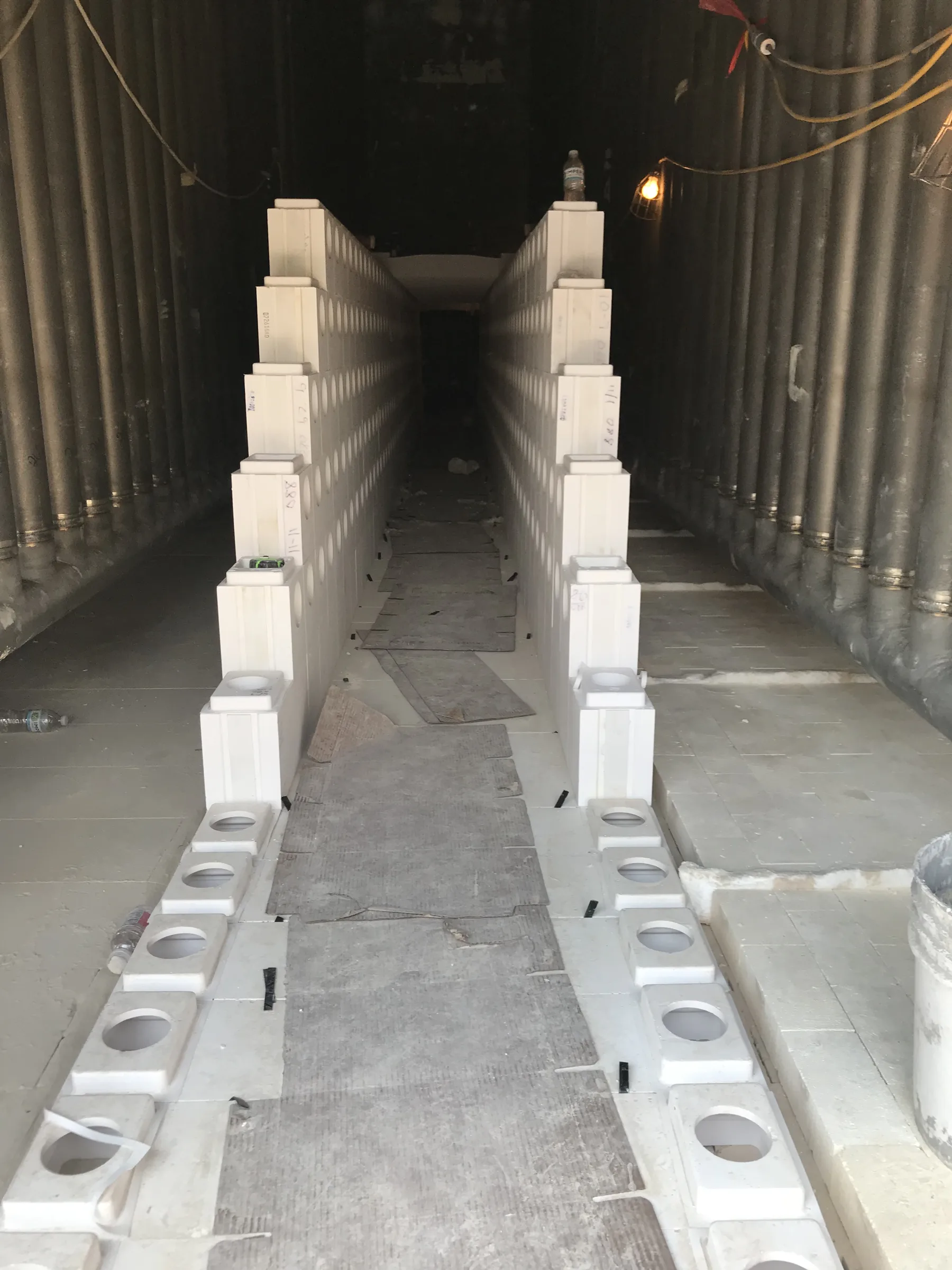
Long precast tunnel wall inside a reformer furnace
01

StaBlox flue gas tunnel system

Interlocking tunnels for the floor of top-fired reformers, with an orifice insert sized for every opening.

StaBlox tunnel system
Precast tunnel walls standing in a reformer furnace
02

StaBlox tunnel replacement

Stocked blocks, lids and bases to rebuild a single failed tunnel in the next short outage.

Replace one tunnel
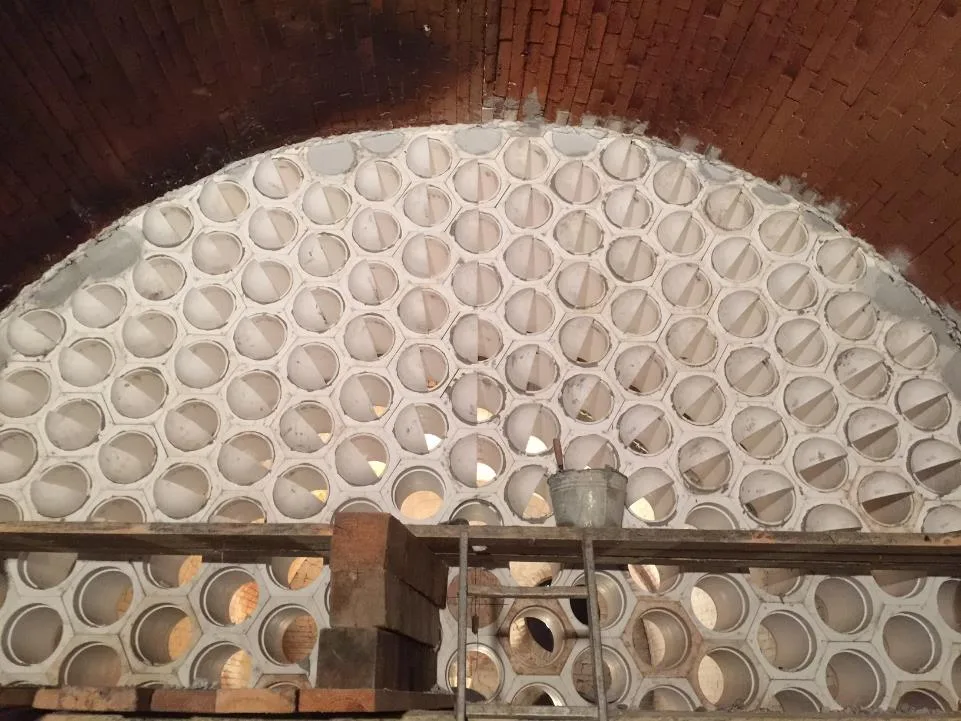
Checkerwall with angled openings installed in a furnace
03

VectorWall mixing checkerwall

Hex blocks fitted with angled tiles that turn the gas into a swirl, for better mixing in Claus and acid furnaces.

VectorWall checkerwall
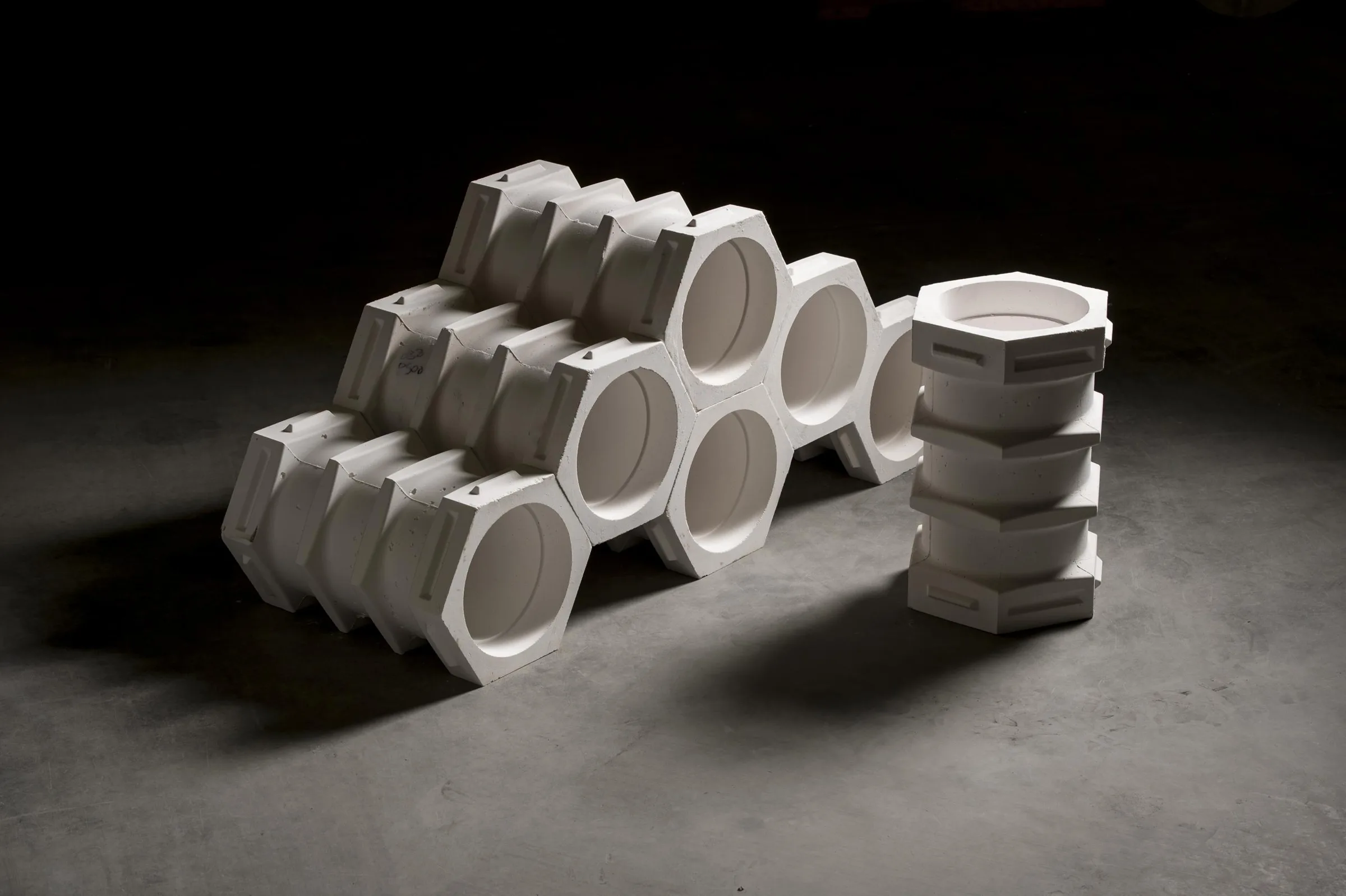
Stacked six-sided ceramic blocks with round openings
04

HexWall checkerwall

Six-sided blocks with tabs and slots on every side, built as a stable baffle wall even in large furnaces.

HexWall checkerwall
Two workers setting precast tunnel blocks inside a reformer furnace

How an interlocking structure
carries its load

A HexWall block has six sides and locks to every neighbor with tabs and slots. Its round opening turns the unsupported part of the block into an arch, so the ceramic carries the load in compression, where it is strong, instead of in tension.

A StaBlox tunnel uses hollow side blocks, a base that spreads the load over the furnace floor and tie rods across the tunnel in place of buttresses. Against a brick tunnel, the hollow design removes up to 60% of the weight.

In both systems, thermal growth goes into many small gaps, one per block, instead of into a few joints that have to absorb the growth of a whole wall.

Ceramics inside
the gas stream

Two more product lines in this group sit in the hot gas instead of holding it in: media that store heat, and elements that filter it.

Thermal storage media

Alumina balls and shapes for regenerative heat storage, and inert support balls for catalyst beds in syngas plants.

Thermal storage media

Hot gas filters and recuperators

Porous ceramic candle filters and monolithic elements that clean exhaust gas or recover its heat at temperature.

Hot gas filters and recuperators

Shorter outages, fewer specialists

Refractory masonry is a skilled trade, and plants report outages stretched or work deferred because crews are hard to find. Precast structures move the skilled part of the job into the factory. On site, a general refractory crew sets finished blocks to a layout.

Three published figures show what that does to the schedule. In 2018, two US ammonia plants set a 43 ft StaBlox tunnel in about 4 hours. A HexWall goes in in about a third of the time of a brick baffle wall, according to a 2015 paper by MECS. And the wall of a refinery CO boiler with six burners, rebuilt from tongue and groove precast shapes, took 5 days instead of 3 weeks.

Material

The blocks are cast in mullite bonded compositions chosen for their resistance to creep, the slow sagging of ceramic under load at temperature. For HexWall blocks, Blasch states mechanical stability above 1,650 °C (3,000 °F). More on mullite as a refractory.

These structures run in hydrogen and ammonia plants and across refining and chemical processing, wherever a furnace internal has failed more often than the turnaround plan allows.

Frequently asked

Questions about self-supporting structures

What does self-supporting mean for a refractory structure?

The structure holds together through the shape of its blocks, not through mortar or anchors. It still stands on the furnace floor or in a keyway of the lining, but no joint depends on a binder.

What is a checkerwall?

A perforated wall across a furnace. It mixes the gas, holds it at temperature long enough to react, and shields the equipment downstream, such as the waste heat boiler tubesheet, from radiant heat.

Can the blocks be reused?

Yes. Because the blocks are set dry, a wall or tunnel can be taken down for inspection or repair and the undamaged blocks set again.

Do we need refractory masons to install them?

No. The blocks arrive fired and are set by a general refractory crew following the layout from Blasch.

Angled ceramic tiles seen up close in a checkerwall

Planning a tunnel
or checkerwall rebuild?

Send the furnace dimensions and what failed last time. A Blasch engineer lays out the blocks for your unit.

Talk to an engineer Call