Engineering

Precast refractory shapes
that arrive ready to set

Fired ceramic shapes in place of castable and brick, so the outage is spent installing, not forming and curing.

Castable is formed, cured and dried during your outage.
A precast shape has done all of that before it arrives.

Two precast tunnel walls on the floor of a reformer furnace during installation
In short

Precast refractory shapes are refractory components cast, cured and fired in a factory and delivered in their final form, ready to install. Compared with castable placed on site, they remove forming, curing and dry out from the outage, and their properties are set and checked before they reach the plant. Blasch engineers its precast shapes for one position, from your dimensions, and many are designed to be set dry without mortar, so a regular refractory crew can install them in hours.

Castable on site
or a shape from the kiln

Both are refractory. The difference is where the work happens and how much of it falls inside your outage.

Precast tunnel wall being built block by block in a furnace

Castable and brick

  • Forms built and stripped inside the unit
  • Curing and a controlled dry out before heat-up
  • Quality that depends on mixing, placing and weather
  • Skilled masons for brick and mortar

Precast Blasch shapes

  • Cast and fired in Albany, checked before shipping
  • No curing or dry out time on site
  • Fiber insulation possible behind them, since they bring no moisture- Fiber insulation possible behind them, since no water is addednbsp;in
  • Shapes that can be removed for inspection and set again

Time moved out of the outage

Every hour of forming, curing and dry out that happens in a factory instead of inside your unit is an hour your plant is back in production.

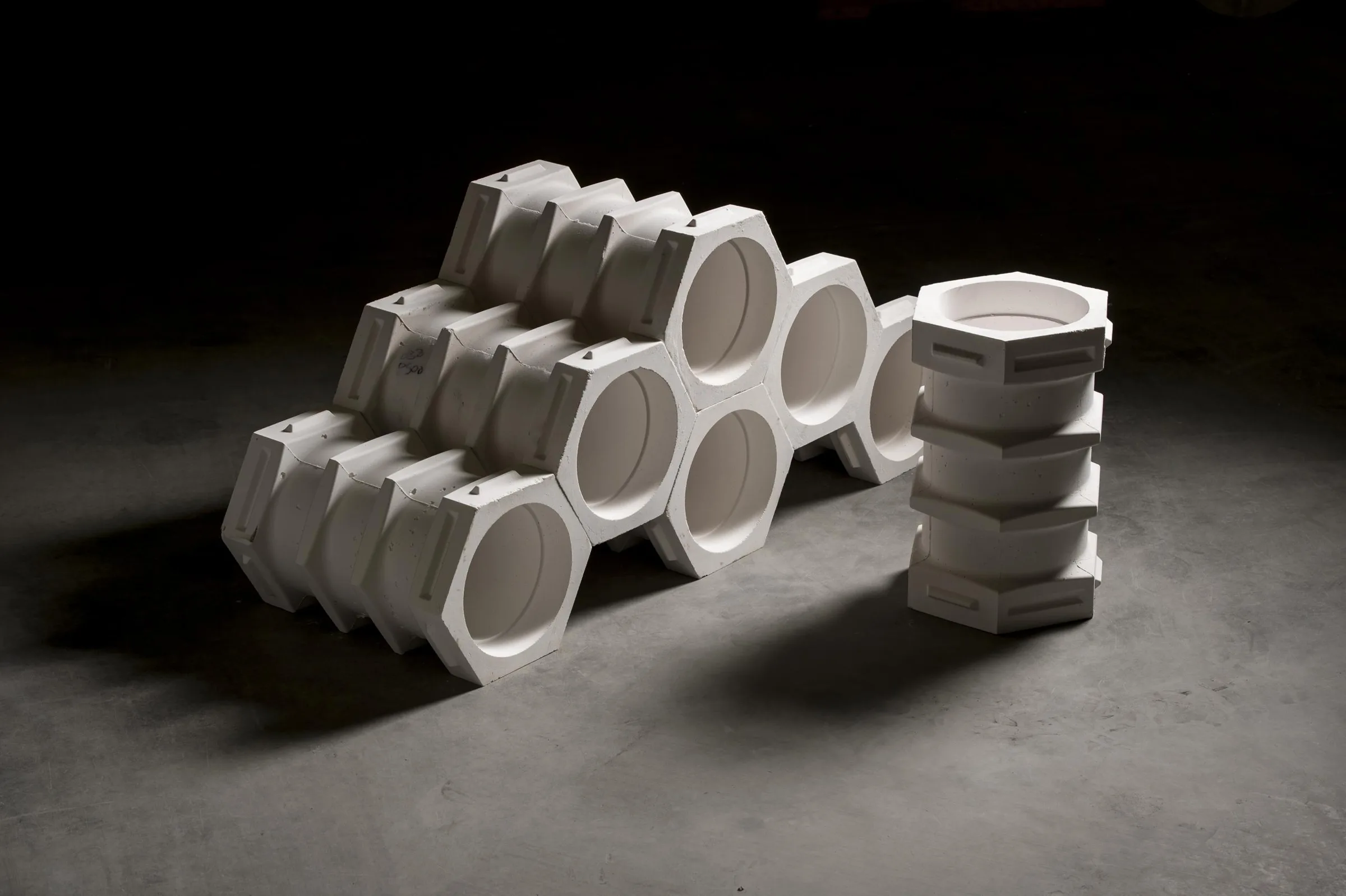
Interlocking hexagonal ceramic checkerwall blocks

Where precast shapes make the difference

Precast pays where a shape repeats or a structure fails in the same place: tunnel walls in reformers, checkerwalls in Claus furnaces, ferrules on boiler tubesheets, burner walls, kiln furniture and wear shapes.

Blasch builds many of these as self-supporting ceramic structures: interlocking blocks held by their own geometry instead of mortar, each taking up its own thermal expansion.

In a refinery CO boiler, a burner wall rebuilt from precast tongue and groove shapes was finished in five days. The conventional rebuild had been planned at three weeks.

Fewer masons, shorter outages

Qualified refractory masons need years of training, and there are fewer of them than there used to be. Operators respond by extending outages or deferring work. Precast shapes that a general refractory crew can set reduce the dependence on that skill.

At two US ammonia plants, StaBlox tunnel walls were set without masons, cutting or curing; a 43 ft tunnel took about 4 hours. StaBlox compromised tunnel replacement

Fired, not just cured

Many precast shapes on the market are castable poured into a mold and cured. Blasch shapes are cast with the Blasch process and fired, so they arrive with their final ceramic bond, close tolerances and the thermal shock behavior the grade was chosen for. How the Blasch process works

When castable is still the right choice

Castable stays practical for irregular repairs, patching and areas where no shape repeats. A common combination is precast shapes at the hot face where failures repeat, with castable only around their perimeter, as with hex head ferrules.

Frequently asked

Questions about precast refractory shapes

What are precast refractory shapes?

Refractory components cast and cured or fired before delivery, in their final form. They are installed like building blocks instead of being formed in place like castable.

Are precast shapes more expensive than castable?

Per ton of material, often yes. The saving is in the outage: no forming, curing or dry out on site, faster installation and a longer life where the shape is engineered for the duty.

Can precast shapes be repaired?

Single shapes can be removed and replaced, and interlocking systems can be taken apart and rebuilt, which makes inspection and partial repair easier.

Do I need drawings for a precast shape?

No. A Blasch engineer designs the shape from the dimensions of the area and the operating conditions.

Two workers setting precast tunnel blocks inside a reformer furnace

Which castable section
do you rebuild every outage?

Send the location, the dimensions and how it fails. A Blasch engineer proposes a precast design and the grade.

Talk to an engineer Call