Industries

Industrial furnace ceramics
with less mass to heat

Low mass kiln furniture, setters, saggers, element holders and burner parts for kilns and heat treating furnaces.

Every pound of kiln furniture is heated and cooled with the ware.
Thin, precise ceramic shapes that carry the load with less mass.
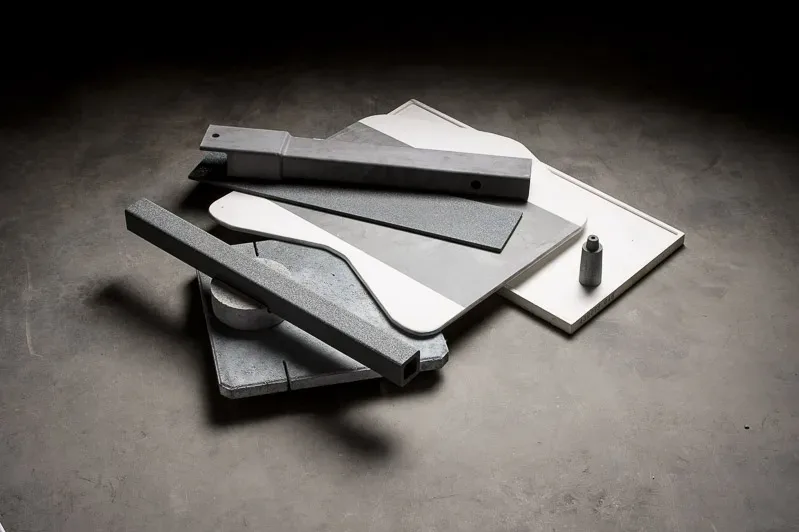
Kiln furniture plates and setters
In short

Industrial furnace ceramics are the shapes inside a kiln or furnace that carry, hold or heat the product: kiln furniture such as plates, beams, posts and rollers, pusher plates and muffle liners, saggers and setters, heating element holders, burner parts and thermocouple tubes. Blasch casts them thin and to tight tolerances in high purity alumina and silicon carbide, so they carry the same load with less mass. Less mass means shorter ramp up and cool down, less energy into the furniture and more room for the ware on the same kiln car.

Thick and heavy,
or thin and engineered

When energy was cheap, kiln setups were built heavy: thick brick, blocks, plates and supports. Much of the fuel went into the furniture, not the product.

Traditional kiln setups

  • Thick cast blocks and plates with high thermal mass
  • Long cold to cold cycles for every firing
  • Dead load that takes space from the ware
  • Bulky monolithic or brick insulation that is hard to repair

Low mass Blasch shapes

  • Thin plates, beams, posts and rollers in silicon carbide or alumina
  • Shorter ramp up and cool down
  • More ware on the same kiln car
  • Tight tolerances that repeat from one load to the- Precise shapes that install the same way every timenbsp;next
Ceramic plates, saggers, boats and setters

Sintering, firing, calcining and heat treating

Kiln room operators use Blasch low mass support assemblies in place of cast block and thick plate. The kiln furniture, pusher plates and muffle liners are engineered around the ware, in recrystallized, nitride bonded or reaction bonded silicon carbide or high purity alumina.

For debinding and sintering of metal injection molded parts, calcining of lithium cathode powders or firing of dental zirconia, plates, saggers, boats and setters are designed for the specific part and atmosphere.

Ultra high alumina with minimal silica and MgO and spinel based materials are in development for reducing and basic atmospheres.

Where the fuel goes

In a kiln, the furniture is fired with every load, so cutting its mass saves energy on every cycle for as long as the furniture lasts.

Ceramic heating element holders and insulators

Furnaces, burners and heating elements

Furnace engineers come to Blasch when thick monolithic or brick insulation keeps failing. Engineered insulating shapes, heating element holders and insulators and burner components are cast in high strength, thermal shock resistant material.

Thin walled burner tiles, burner nozzles and pilot tips, thermocouple protection tubes and hot gas filters and recuperators come from the same process, in intricate shapes that install the same way every time.

Where these parts are used

Sanitary ware, refractory shapes, electronics, lithium battery cathode powders, abrasives and grinding media, technical ceramics, SOFC and SOEC production, ceramic filters and brick manufacturing.

Semiconductor furnaces use high purity alumina and silicon carbide support structures in place of graphite or quartz arrangements, in horizontal and vertical designs.

Applications in industrial process heating

Powder metallurgy sintering, metal injection molding sintering, radiant tubes, industrial burners, recuperators and heat recovery, and furnace beams and supports.

Saggers for cathode materials have their own page under battery materials manufacturing. Crucibles and linings for melting are under molten metals.

Who you talk to

Market manager for process heating on the previous Blasch site: Tim Connors, in the role of Director of Business Development, Blasch Global Solutions.

Frequently asked

Questions about industrial furnace ceramics

What is low mass kiln furniture?

Kiln furniture made from thinner sections of strong ceramic, so the supports weigh less while carrying the same load. Less mass heats and cools faster and takes less energy.

Which materials does Blasch use for kiln furniture?

Recrystallized, nitride bonded and reaction bonded silicon carbide, high purity alumina, mullite and cordierite, chosen for temperature, atmosphere and load.

Can Blasch design setters for a specific part?

Yes. Setters and saggers are designed around the part or powder they carry, for batch and continuous furnaces.

Does Blasch build furnaces or kilns?

No. Blasch makes the ceramic components inside them: furniture, setters, element holders, burner parts and custom shapes.

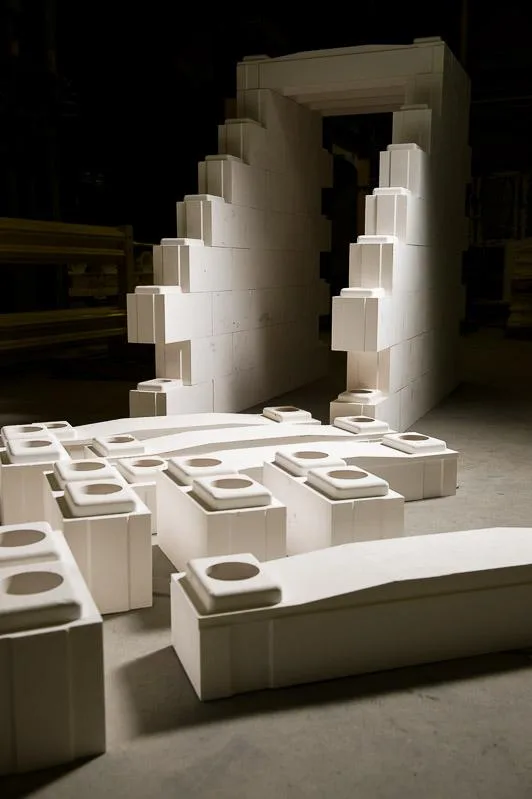
Stacked precast ceramic blocks forming an opening

How much of your kiln load
is furniture?

Send the furnace type, the temperature and what you fire. A Blasch engineer proposes a lighter setup and the material.

Talk to an engineer Call