Kiln furniture

Silicon carbide kiln furniture
and pusher plates for continuous furnaces

Plates, beams, posts, rollers, pusher plates and muffle liners for industrial sintering and heat treating.

In a pusher furnace the furniture travels with the product, cycle after cycle.
Its grade decides how many trips it makes.
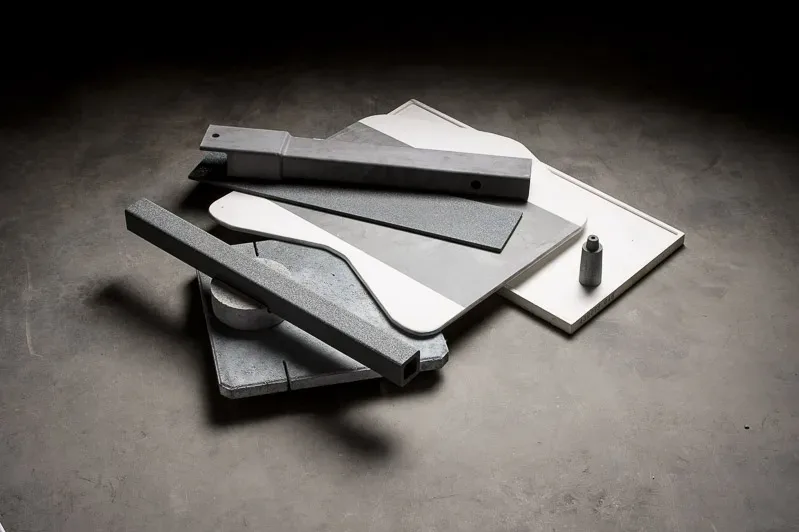
Kiln furniture plates and setters
In short

In continuous furnaces, silicon carbide kiln furniture usually lasts longest where the atmosphere is oxidizing or neutral and the load is high: recrystallized and nitride bonded silicon carbide keep their strength and resist creep at temperature, so plates and beams stay flat in thin sections. In hot hydrogen or other reducing atmospheres, low silica, ultra high alumina often outlasts silicon carbide grades that rely on a silica rich bond. Blasch casts pusher plates, plates, beams, posts, rollers and muffle liners in both families, engineered for one furnace and one product.

Where continuous furnaces wear out their furniture

Pusher plates: each plate is pushed against the one in front for the whole length of the furnace. Edges chip, the sliding face wears, and every entry into the hot zone is a thermal shock.

Plates and beams: under constant load at temperature, a weak grade creeps and sags until the stack tilts.

Posts and rollers: small cross sections carry the whole load and must stay straight, or the ware moves out of position.

Muffle liners: the muffle separates the process atmosphere from the heating side. A crack lets atmosphere through and changes the result on the product.

The cheapest plate

In a continuous furnace the plate that costs the least is the one you do not have to change, because every replacement means sorting, cooling or slowing the whole line.

Silicon carbide kiln furniture by grade

The word silicon carbide covers several materials with different bonds. For kiln furniture the bond matters more than the carbide content.

Grade Strength at temperature Suited to
Recrystallized SiC high, no secondary bond phase thin plates and beams in oxidizing kilns
Nitride bonded SiC high, nitride bond plates, beams, posts under load, good oxidation resistance
Reaction bonded SiC dense, contains free silicon beams, rollers and wear faces below the limit of the free silicon
Ultra high alumina lower than SiC, very little silica reducing and hydrogen atmospheres
Mullite, cordierite moderate supports in fast thermal cycling

Blasch casts these grades near net shape, so slots, locating features and pusher edges are formed in the mold rather than ground in later. Nitride bonded silicon carbide

Muffle liners and burner parts

Muffle liners and burner parts in the same furnace see the hottest and most uneven temperatures. They are cast as one piece where brick would leave joints, with walls thinned where heat must pass and thickened where they carry the load.

Lighter structures, more throughput

Replacing thick cast blocks and plates with an engineered low mass assembly lowers the dead load on each pusher plate or car. The furnace then heats more product and less refractory, and heat up and cool down get shorter.

Related parts for industrial furnaces

Furniture that carries the load is one part of the furnace, the parts that hold the product and the heating elements are the others.

Saggers, setters and boats

Containers and setters for calcining battery powders and sintering MIM and powder metal parts.

Saggers and setters

Heating element holders

Ceramic holders and insulators that keep electric heating elements in place at temperature.

Element holders and insulators

Industrial process heating

Burner parts, supports and shapes for furnaces in heat treating and firing.

Process heating industry
Frequently asked

Questions about pusher plates and kiln furniture

Which material is best for pusher plates?

It depends on atmosphere and temperature. Nitride bonded and recrystallized silicon carbide suit oxidizing service, low silica alumina suits hot hydrogen atmospheres.

Why do our plates crack at the furnace entrance?

The cold plate meets the hot zone and the faces heat faster than the core. A thinner section and a grade with higher thermal shock resistance reduce that stress.

Can you match our existing plate dimensions?

Yes. The dimensions of the current plate and the push direction are enough to design the replacement, with locating features cast in.

Do you supply complete furniture layouts?

Yes. Blasch engineers can design the whole support structure around your ware, from plates and posts to beams.

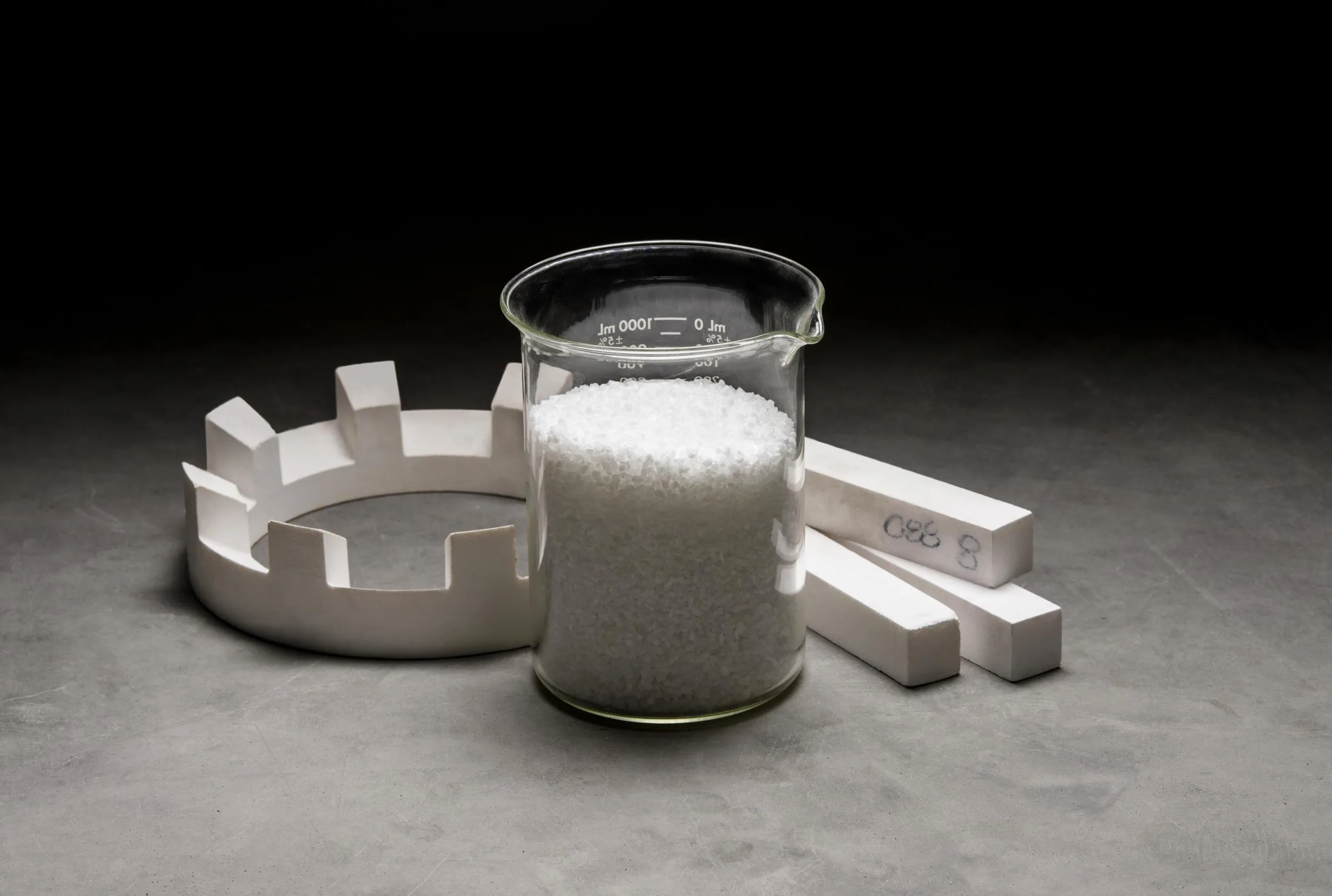
White alumina parts and alumina powder in a glass beaker

Changing plates
too often?

Send the furnace type, atmosphere, peak temperature and the dimensions of the current plate. A Blasch engineer proposes a grade and a design.

Talk to an engineer Call