Industries

Refinery refractory
that lasts the whole campaign

Precast ceramic components for sulfur recovery, waste heat boilers, FCC units and chemical reactors.

Claus furnaces, tubesheets, catalyst lines and reactors.
Ceramic parts for the spots where refractory fails mid-campaign.

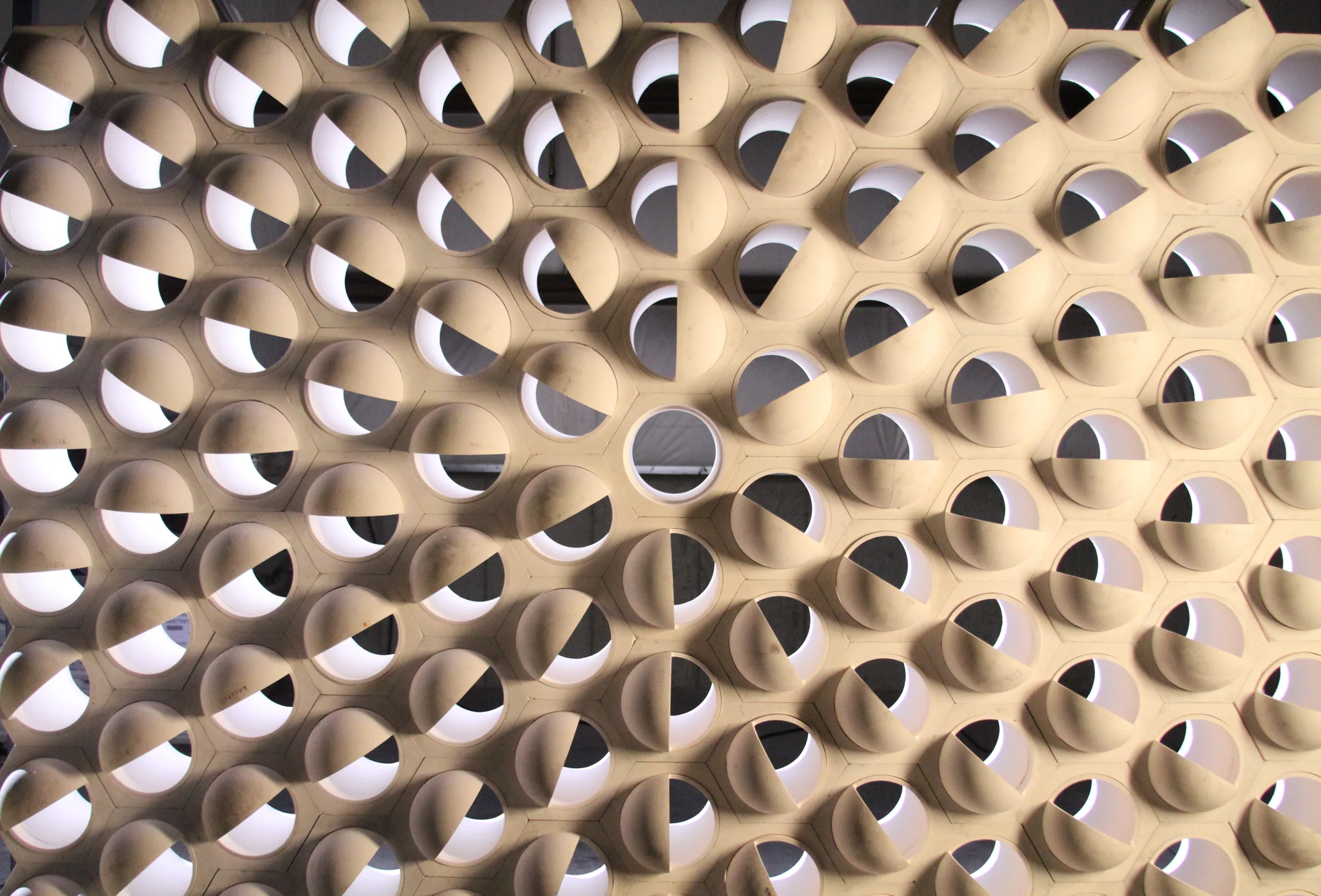
Checkerwall with angled openings built across a sulfur recovery furnace
In short

The refinery refractory systems that extend campaigns are precast ceramic components designed for one position in the unit: checkerwalls that mix the gas in a Claus reaction furnace, ferrules that protect waste heat boiler tubesheets, and silicon carbide parts for the abrasive zones of an FCC unit. Blasch engineers each part from the unit's dimensions and process conditions, and most are set dry or with very little castable, so the outage is spent installing rather than curing. That combination is what lets a sulfur recovery unit or a chemical reactor run to the planned turnaround instead of the next failure.

Why refinery refractory fails
before the turnaround does

Refining and chemical units combine thermal cycling, corrosive atmospheres and abrasive catalyst. Most of the refractory in them is still brick, castable and anchors placed by hand during the outage.

Close view of angled tiles set into a ceramic checkerwall

Brick, castable and anchors

  • Large monolithic sections crack when the unit heats and cools unevenly
  • Metal anchors expand almost twice as much as the ceramic around them
  • Cracks open a path for hot gas to the tubesheet or the steel shell
  • Forming, curing and dry out take days of every outage

Precast engineered parts

  • Blocks and ferrules that take up their own expansion, without mortar between them
  • No anchors in the hot face of a ferrule installation
  • A ceramic grade chosen for the gas, the temperature and the particles
  • Parts fired in Albany and set in hours by a regular refractory crew
Full checkerwall with angled openings

Sulfur recovery and thermal oxidizers

In a Claus reaction furnace, the gas needs time, temperature and turbulence to destroy ammonia and hydrocarbons before it reaches the waste heat boiler.

HexWall checkerwalls are stacked dry from interlocking blocks with round openings, so the unsupported part of each block works as an arch. VectorWall adds vectoring tiles that set the gas into rotation for a narrow residence time distribution.

The same walls are used in tail gas incinerators, thermal oxidizers, sulfur burning furnaces and spent acid regeneration furnaces, where DuPont MECS distributes them for sulfuric acid service.

The part that sets the date

In most refinery units, the turnaround date is set by the one refractory component that wears out first, so engineering that component is worth more than upgrading everything around it.

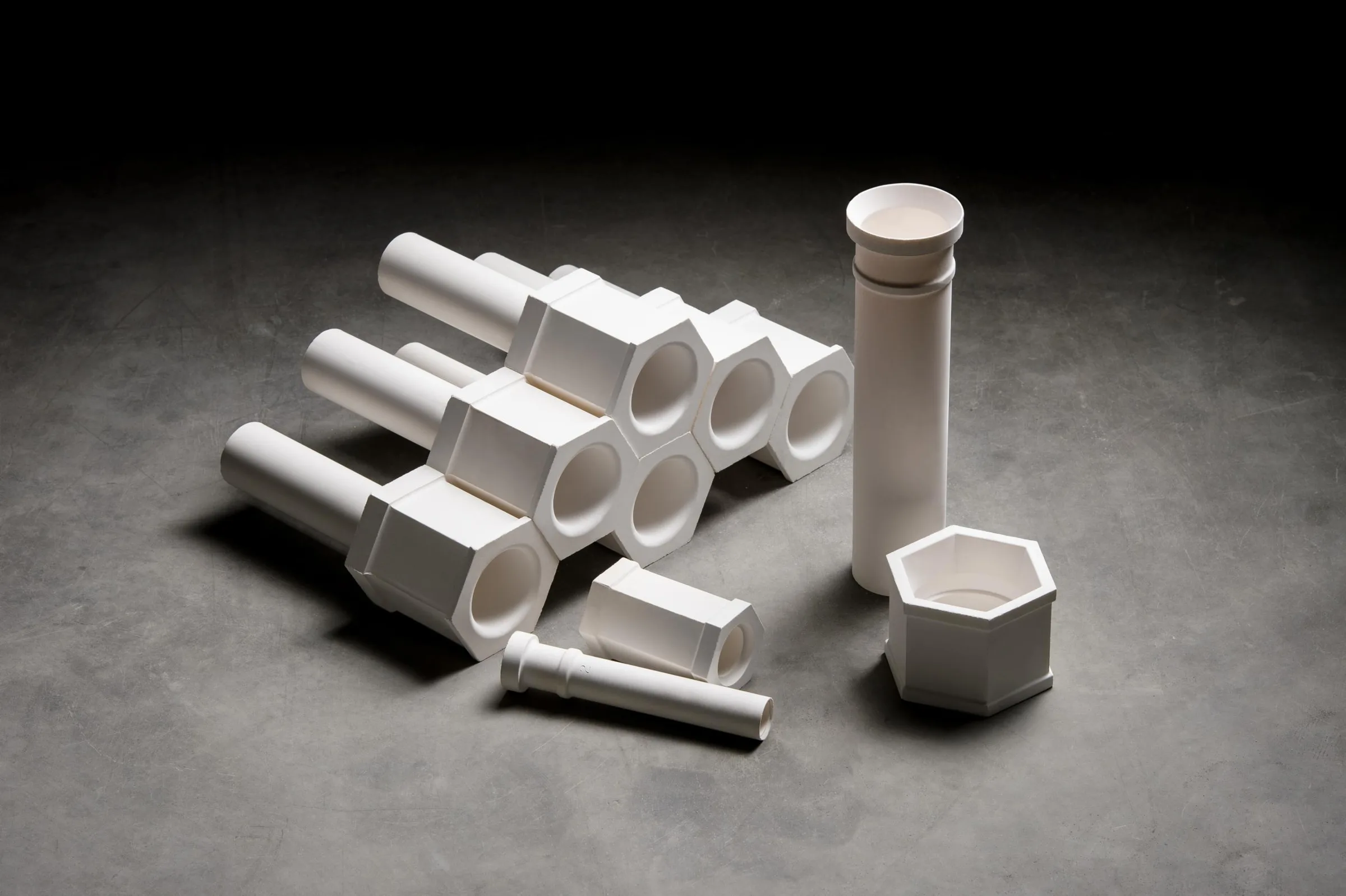
Hex head ceramic ferrules and tube shapes

Waste heat boilers and tubesheets

Behind every hot process gas sits a boiler, and the tube inlets at its tubesheet see the highest heat flux in the train.

Ceramic ferrules shield each tube inlet. Hex head designs close into one surface at operating temperature without castable between them, and two piece ProLok ferrules lock their stems so vibration cannot walk them out.

Ferrules from Blasch are used in boilers after sulfur recovery, sulfuric acid, VCM, nitric acid, steam methane reforming, titanium dioxide, ethylene and FCC units. All ferrule types

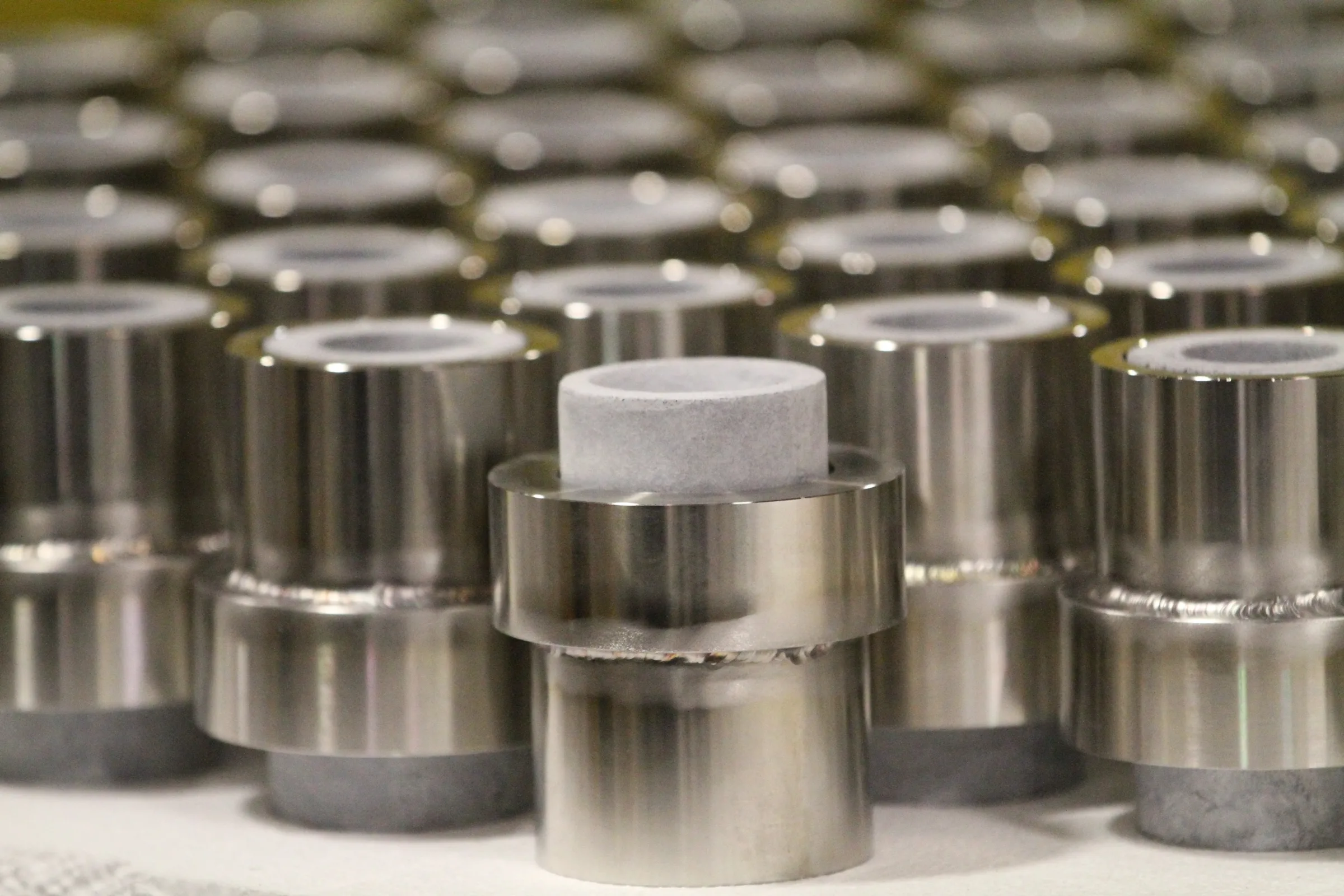
Rows of air grid nozzles with ceramic inserts

Fluid catalytic cracking and TiO2

FCC units move abrasive catalyst at high temperature and velocity. Blasch makes alumina bonded silicon carbide air grid nozzles, lined elbows for catalyst lines and linings for cyclones and scrubbers.

Titanium dioxide plants see the same abrasion plus chlorine chemistry. Micronizer linings, vortex finders, valves and reactor linings are cast in silicon carbide grades developed for that service.

Blasch components for refining and chemical plants

Each part below is designed for the unit it goes into, from its dimensions and operating conditions.

VectorWall checkerwall

A mixing checkerwall for Claus furnaces and incinerators, built from HexWall blocks and vectoring tiles.

VectorWall mixing checkerwall

Ceramic ferrules

One and two piece ferrules that protect the tubesheet at the inlet of every boiler tube.

One and two piece ferrules

Ceramic lined elbows

One piece cast liners for catalyst transfer and unloading lines, fitted inside a steel body.

Ceramic lined elbows

Results from refining and chemical units

In a European refinery FCC unit, elbows in a catalyst transfer line carried catalyst at 690 °C and failed within days. A reaction bonded silicon carbide lined replacement ran up to 12 months. CeraLine in an FCCU catalyst line

In a sulfuric acid plant in Australia, hex head ferrules cut installation time by 67% compared with round ferrules while a waste heat boiler with 859 tubes was retubed in a three week outage. Waste heat boiler retubing

For a 500 t/d gas plant sulfur recovery unit with lean acid gas, a published calculation put the fuel gas saved by a VectorWall at more than $250,000 a year, at $3 per million Btu. VectorWall in a Claus SRU

Applications in refining and chemical processing

Sulfur recovery units, Claus reaction furnaces, SRU waste heat boilers, ammonia and BTEX destruction, tail gas incinerators, thermal oxidizers, sulfuric acid production, spent acid regeneration and sulfur burning furnaces.

Fluid catalytic cracking with its regenerator air distributors, cyclones and diplegs, catalyst lines and CO boilers.

Titanium dioxide chloride process, carbon black reactors, ethylene furnace transfer line exchangers, VCM and nitric acid waste heat boilers, syngas and gasification.

Steam methane reforming, reformer tunnels, revamps and secondary reforming have their own page under hydrogen and ammonia production.

Who you talk to

The market manager for refining and chemical processing on the previous Blasch site was Tim Connors, Director of Business Development, Blasch Global Solutions.

Blasch works with licensors, EPCs and plant operators. Ferrules and checkerwalls are designed from the boiler and furnace data, and a drawing is not needed to start.

Frequently asked

Questions from refinery engineers

What does Blasch make for sulfur recovery units?

Checkerwalls for the reaction furnace (HexWall and VectorWall) and ferrules for the waste heat boiler tubesheet. Both are precast and installed without mortar between the blocks or ferrules.

Can precast parts replace castable in a refinery unit?

Often, yes. Where a shape repeats or a section fails in the same place, a precast part avoids forming and curing on site and can be pulled for inspection.

Does Blasch line pipe for FCC catalyst service?

Yes. Elbows and spools are lined with a one piece cast ceramic sleeve inside a steel body. It is a liner with its own wall thickness, not a coating.

Which other chemical processes does Blasch serve?

Titanium dioxide, carbon black, ethylene, VCM, nitric acid and sulfuric acid plants, plus flare and thermal destruction systems.

Full checkerwall with angled openings

Which refractory part decides
your next turnaround?

Send the unit, the position and how the part fails today. A Blasch engineer answers with a material and a design.

Talk to an engineer Call