CeraLine elbows

Ceramic lined elbows:
the bend is where the line fails

One-piece CeraLine elbows for pneumatic conveying, slurry and catalyst lines.

In a conveying line the elbow wears out first.
CeraLine puts solid ceramic where the stream hits hardest.

Flanged 90 degree ceramic lined elbow with a blue steel body
In short

In pneumatic conveying, the ceramic lined elbow that lasts longest has no joints where the stream strikes the outer radius, a liner wall sized for the wear rate, and a ceramic grade chosen for the particles, the velocity and the temperature. CeraLine elbows are cast as one piece in silicon carbide or dense alumina and built to the dimensions of the elbow they replace. In a bagasse boiler ash line, one such elbow lost about a tenth of its liner wall in 30 months, while steel elbows in the same spot had lasted 3 to 4 months.

End view of a lined elbow with the ceramic ring inside the flange

Where a conveying elbow
wears through

At a bend the particles cannot follow the gas. They strike the outer wall, slide along it and cut a groove that ends in a hole, while the straight pipe before and after still has wall left.

The usual answers are heavier steel, hardened inserts, a mortar filled box behind the bend, or tiles glued along the outer radius. Each one buys time and still leaves steel or joints in the path of the stream.

A one-piece liner puts ceramic around the whole bore. When the conveying rate or the material changes and the wear spot moves, it moves across ceramic, not onto bare steel.

The part that sets the schedule

The elbow decides when a conveying line comes down, so an elbow that wears at a known rate turns an emergency repair into a planned job.

Elbow shapes and
fittings we line

Every shape below is cast as a liner for one specific line, in the angle and radius the layout needs.

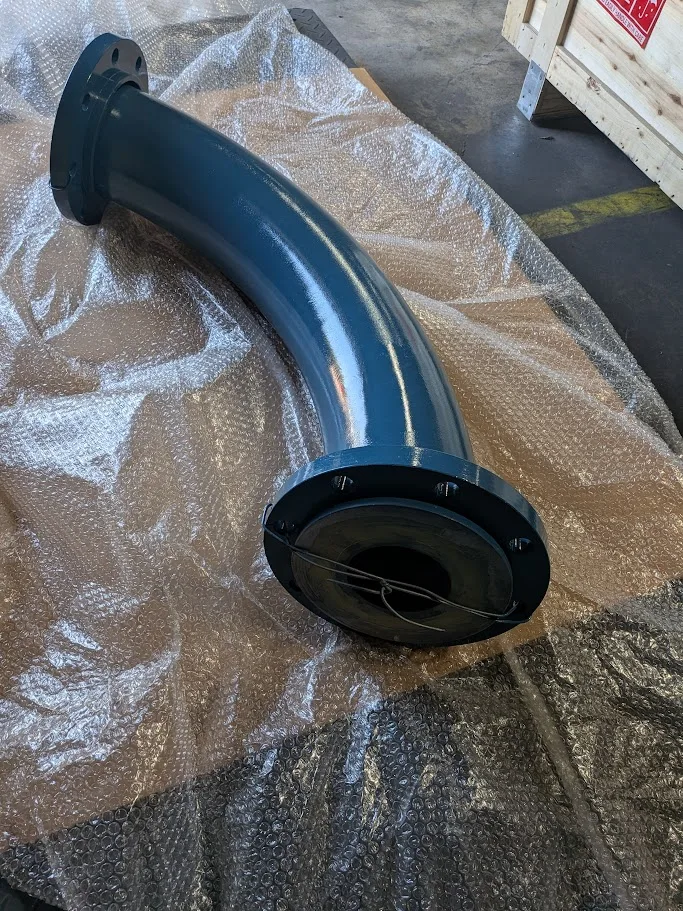
Long radius lined bend on plastic wrap before packing

Long radius elbows

A radius of five pipe diameters or more, as 45 and 90 degree bends or 180 degree return bends.

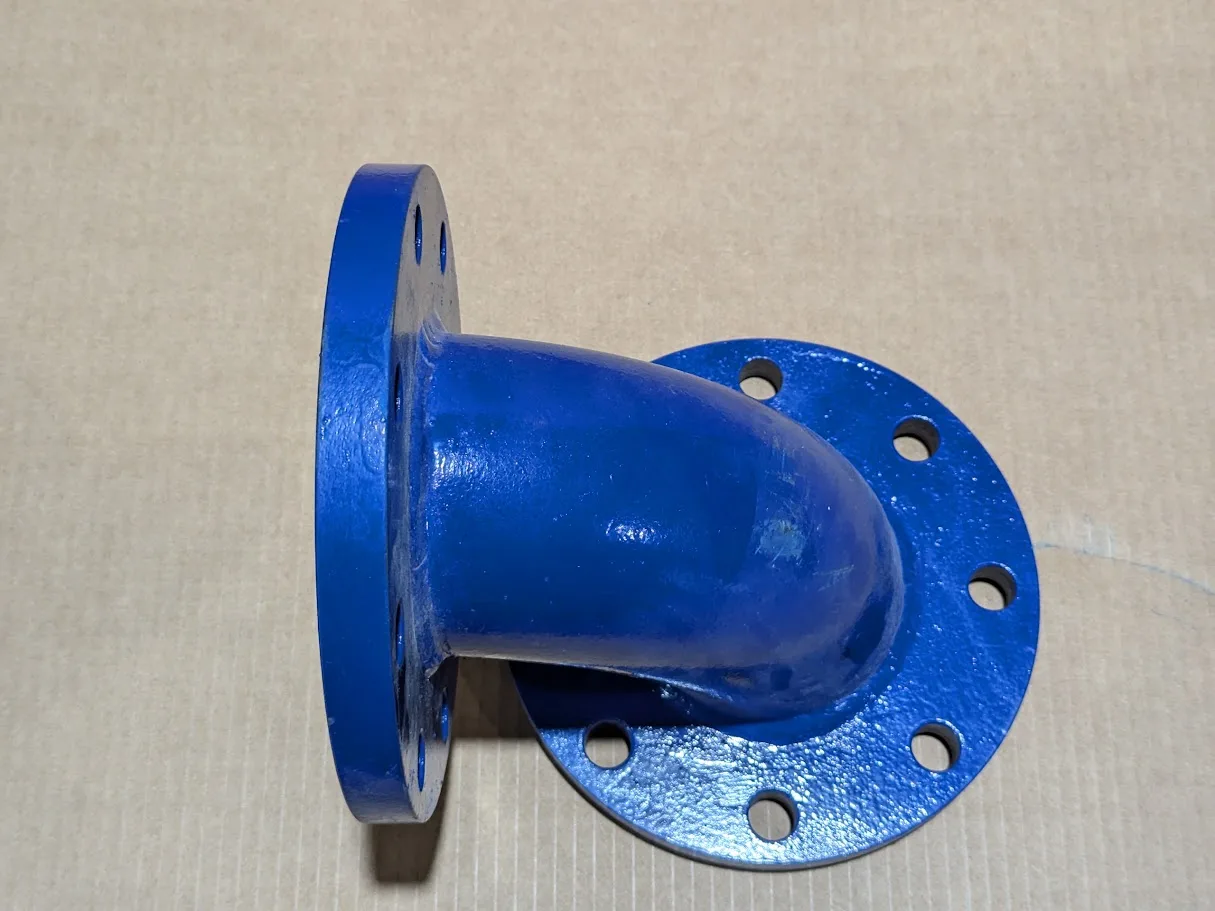
Flanged short radius lined elbow standing on cardboard

Short radius elbows

A radius of one to three pipe diameters, for tight layouts where a long sweep does not fit.

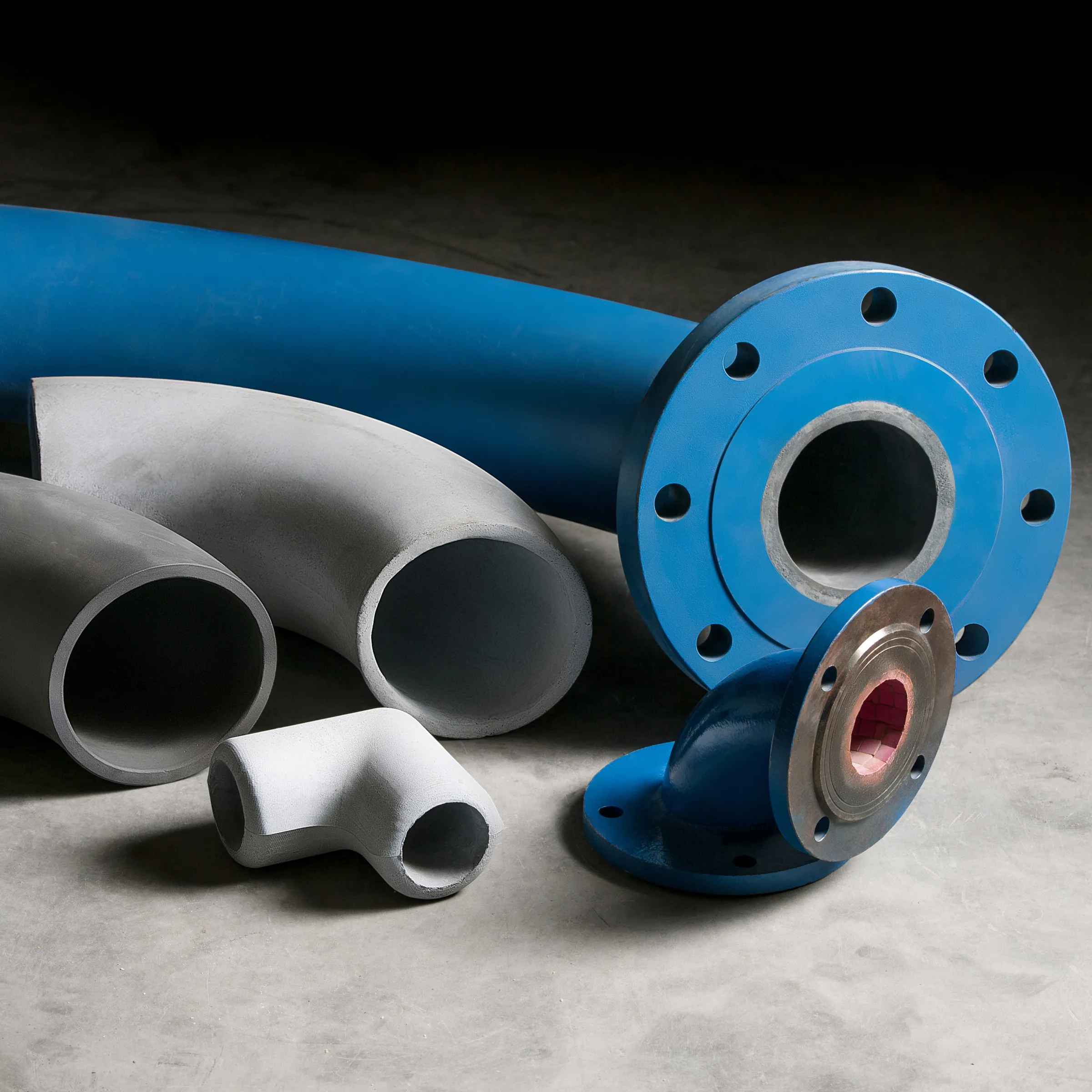
Lined elbows and tees with blue and gray steel shells

Tees, wyes and laterals

Branch fittings in the same ceramic grades, for lines that split or merge a conveyed stream.

Chokes, reducers and transitions
Long radius lined bend with flanges on both ends

What operators report
after the switch

Pet coke: at a plant conveying petroleum coke into a boiler, CeraLine elbows lasted 12 to 18 months. The mortar backed box elbows before them had lasted about three months.

Foundry sand: an iron foundry lifts sand about 80 ft by air through two 90 degree elbows. Since the switch the elbows have stopped failing, and the remaining repairs are on the straight pipe before and after them.

Boiler ash: the bagasse boiler measurement, with liner thickness, wear depth and installation date, is documented in the ash conveying case study.

Choosing the elbow for
your conveying line

Five things decide the design. You do not need a drawing to answer them.

  • Material conveyed: fly ash, bottom ash, pet coke, sand, catalyst, cement or battery powders
  • Conveying conditions: dilute or dense phase, gas velocity, solids rate and duty cycle
  • Temperature: steady value and how fast it swings
  • Chemistry: dry, wet, caustic or acidic
  • Geometry: pipe size, bend radius, angle, center-to-face dimension and end connection

From these, the engineer picks the grade, from dense alumina to sintered silicon carbide, and a liner wall between 1/4 inch and 6 inches. The finished elbow takes the flange, Victaulic groove, weld end or thread of the part it replaces.

Lined straight runs and spools come from the same CeraLine ceramic lined pipe family. For the sections between two elbows, see lined pipe spools.

Typical users are coal and biomass plants with ash handling, refineries with catalyst unloading lines, foundries, cement plants and battery material producers. Ceramics for power generation

Frequently asked

Questions about ceramic lined elbows

Long radius or short radius: which lasts longer?

The radius is usually set by the existing layout, and a redesign of the line is rarely worth it for the elbow alone. CeraLine is made in both, so the liner follows the line, not the other way around.

Can a lined elbow replace a steel elbow without cutting the pipe?

Yes. It is built to the center-to-face dimension and the end connection of the elbow it replaces and goes in like a standard fitting.

Why not a thicker steel elbow?

Extra steel wears at the rate of steel. It moves the failure date out by weeks, but the line still fails in the same place, only later.

Is the elbow lined only at the outer radius?

No. The liner runs around the full bore and along the whole bend, so there is no edge between ceramic and steel inside the elbow.

A row of blue lined elbows

Which elbow in your line
fails first?

Send the pipe size, the bend radius and what you convey. A Blasch engineer designs a lined elbow that drops into that spot.

Talk to an engineer Call