Custom engineered shapes

Custom ceramic parts
from your dimensions, no drawing needed

Measurements, conditions and the way the old part failed are enough to design and cast the new one.

Most custom inquiries arrive without a drawing.
The design work is part of what Blasch delivers.

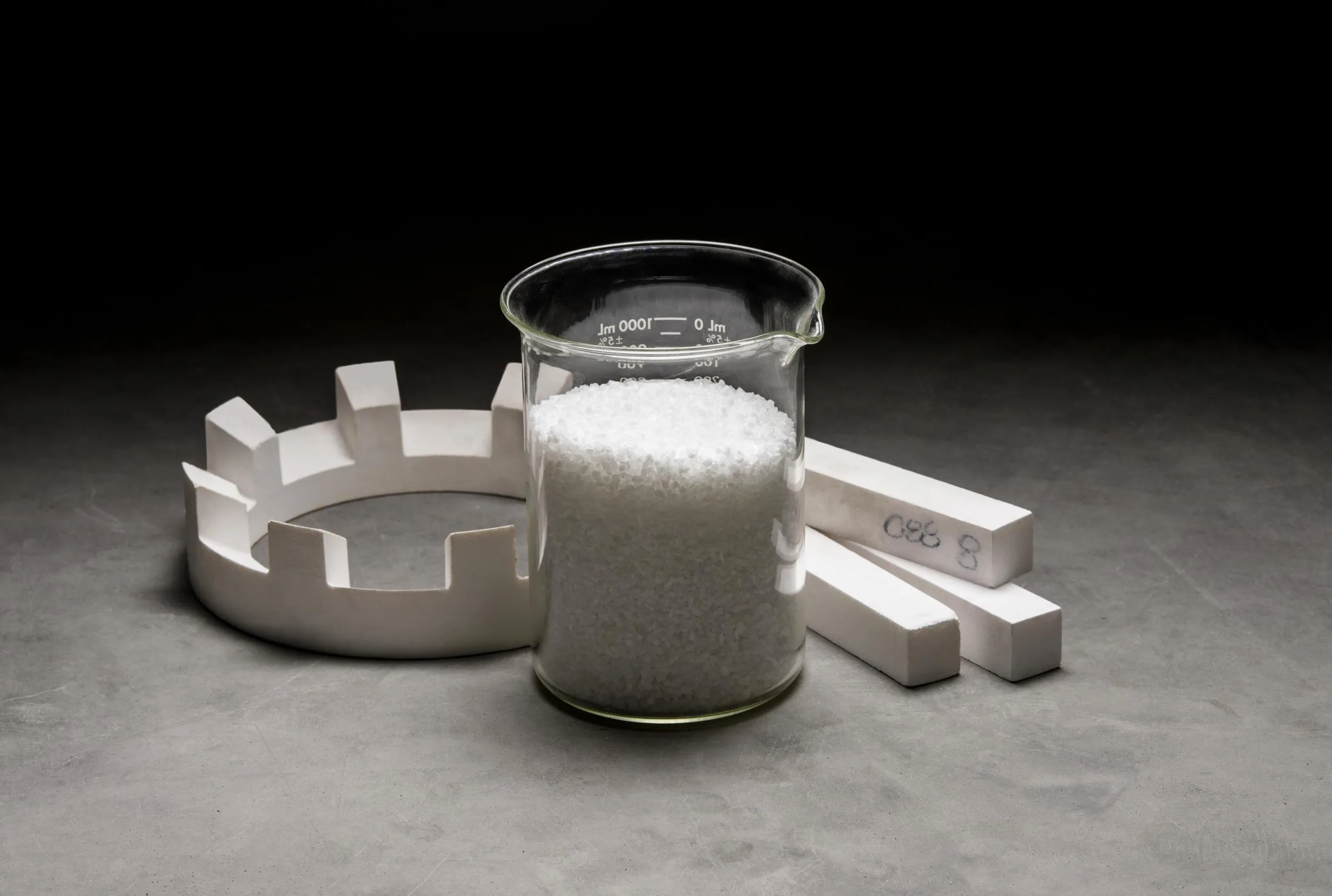
White alumina parts and alumina powder in a glass beaker
In short

Yes. A custom ceramic part can be engineered from dimensions alone: Blasch engineers take the measurements of the space or the worn part, the medium, the temperature and the flow, choose the ceramic grade and produce the design and drawing themselves. The part is then cast near net shape in Albany, New York, within about 0.5% of its nominal dimensions, as a single prototype or a series of up to about 1,000 pieces.

White alumina parts and alumina powder in a glass beaker

What to send instead of a drawing

Dimensions: the outer envelope, bores, flanges and mounting points, measured on the old part or in the space it has to fill.

Conditions: medium, particle load, velocity, temperature and how fast it changes, and the atmosphere around the part.

The failure: where the old part wore, cracked or corroded, and after how long. A photo of the worn part often says more than a drawing.

The fit: how the part is held today, welded, bolted, threaded or set in refractory, so the new one drops into the same place.

From measurements to a cast part

One engineer stays your contact from the first call to delivery.

01

Review

The engineer reads the failure and the conditions and decides whether ceramic is the right answer at all.

02

Grade and design

Material, wall thickness and joints are chosen, and flow, heat or stress are modeled where the part calls for it.

03

Prototype

One part or a small batch is cast and tested in your process before a series is ordered.

04

Series

The same molds repeat the geometry from the first part to the last, with each batch checked for strength, thermal shock and size.

Replacing a metal part in kind

Engineers often reach for high nickel alloys when a part runs too hot or wears too fast. Blasch regularly replaces such alloy castings and fabrications with a ceramic part of the same geometry, including threads, thin and thick sections and the original attachment. The ceramic part is lighter and in many services lasts longer than the alloy it replaces.

The limit is mechanical: ceramics take compression and heat well, but not impact or bending loads that steel shrugs off. Where a part sees both, it is cast as a ceramic insert in a metal housing or shell.

Replacing brick, castable and gunnite

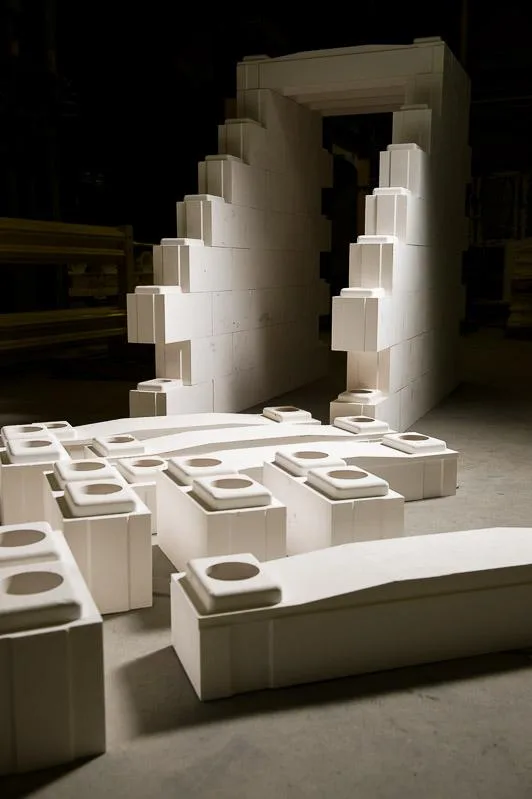
Monolithic refractory fails at its weakest point, usually the mortar joint or the anchor. Cast as interlocking shapes, the same lining stacks without mortar, each piece moves on its own as it heats up, and a smaller crew sets it. More on precast refractory shapes

Why the tolerance matters on site

A part cast to ±0.005 inch per inch fits the second time like the first. For spares that means the replacement drops into the old mounting without grinding or shimming during the outage.

The real specification

How the old part failed tells an engineer more about the new one than any drawing of the part that already did not last.

Where custom ceramic parts run

Custom shapes go wherever a standard part does not fit the geometry or the conditions.

Mining and mineral processing

Discharge and classifier parts, valve trims and liners for slurry that erodes cast iron.

Mining parts

Heavy industrial processing

Burner walls, quench and impingement parts, and shapes for boilers and gasifiers.

Heavy industry

Industrial process heating

Supports, burner parts and furnace shapes that replace thick brick and castable sections.

Process heating parts
Frequently asked

Questions about custom ceramic parts

Who creates the drawing?

A Blasch engineer. You receive the design for approval before anything is cast.

Can you copy a worn part we send in?

Yes. The worn part, or a sound spare, gives the geometry, and the wear pattern shows where the new design needs more material or a different grade.

Is a single part possible?

Yes. Quantities start at one piece, which is how most custom parts are proven before a series.

Which ceramic will the part be made of?

It depends on what attacks it. Alumina, mullite, zirconia composites, fused silica and several silicon carbides are options. Compare the grades

Interlocking white ceramic blocks with a doorway shaped wall behind them

Measure the part,
we design the rest

Send the dimensions, a photo of the worn part and the operating conditions. A Blasch engineer comes back with a grade and a design.

Talk to an engineer Call