Wear products

CeraLine ceramic lined pipe:
one cast liner, no joints to wear out

One-piece ceramic liners for pipe, elbows and spools in abrasive and corrosive service.

A ceramic sleeve cast and fired in one piece, set into a steel pipe.
No tiles, no epoxy joints, no sprayed layer.

Blue lined elbow with the product name painted on the steel shell
In short

Ceramic lined pipe is steel pipe with a ceramic layer on the inside that takes the wear from abrasive or corrosive media. CeraLine makes that layer as one cast piece: a fired ceramic sleeve with a smooth bore and a constant wall, mortared or bonded into the steel body before it ships. With no tile joints and no epoxy for the media to wash out, the liner wears slowly and evenly across its surface instead of failing first at the seams.

Looking down the smooth bore of a ceramic lined pipe

A liner is not a coating

Many inquiries start with the words "coating for my pipe". A coating is a layer sprayed or troweled onto the steel, and its life ends where the stream has cut through to the metal underneath.

A CeraLine liner is a part of its own. It is cast, fired and at least 1/4 inch thick, with walls up to 6 inches in elbows and 8 inches in spools where the wear calls for it.

Blasch does not coat or spray. If you came looking for a coating, the real question is how much wear wall your process needs, and a cast liner gives you that wall in solid ceramic.

Why tiled pipe
fails at the joints

Tiled, segmented and one-piece liners can use the same ceramic. The difference is how many pieces meet inside the bore.

End view of a lined pipe with the ceramic ring inside the flange

Tiles and segments

  • Many small tiles held in place by epoxy or mortar
  • The media erodes the joint material faster than the ceramic
  • Loosened tiles shift or drop out and leave the steel exposed
  • Every joint is an edge in the flow, with turbulence and added pressure drop

One-piece CeraLine

  • One cast sleeve per section, with no joints along the bore
  • Wear spreads over the ceramic surface instead of cutting into seams
  • Shiplap or tongue and groove ends where two sections meet
  • A smooth bore with minimal pressure drop and turbulence

What the joint decides

In a lined pipe the ceramic is rarely the first thing to go, the joint between two pieces is, so the fewer joints in the bore, the longer the line runs between shutdowns.

One liner,
three kinds of parts

CeraLine covers the straight runs, the bends where the stream changes direction, and the fittings that tie a lined line into the rest of the plant. All wear products

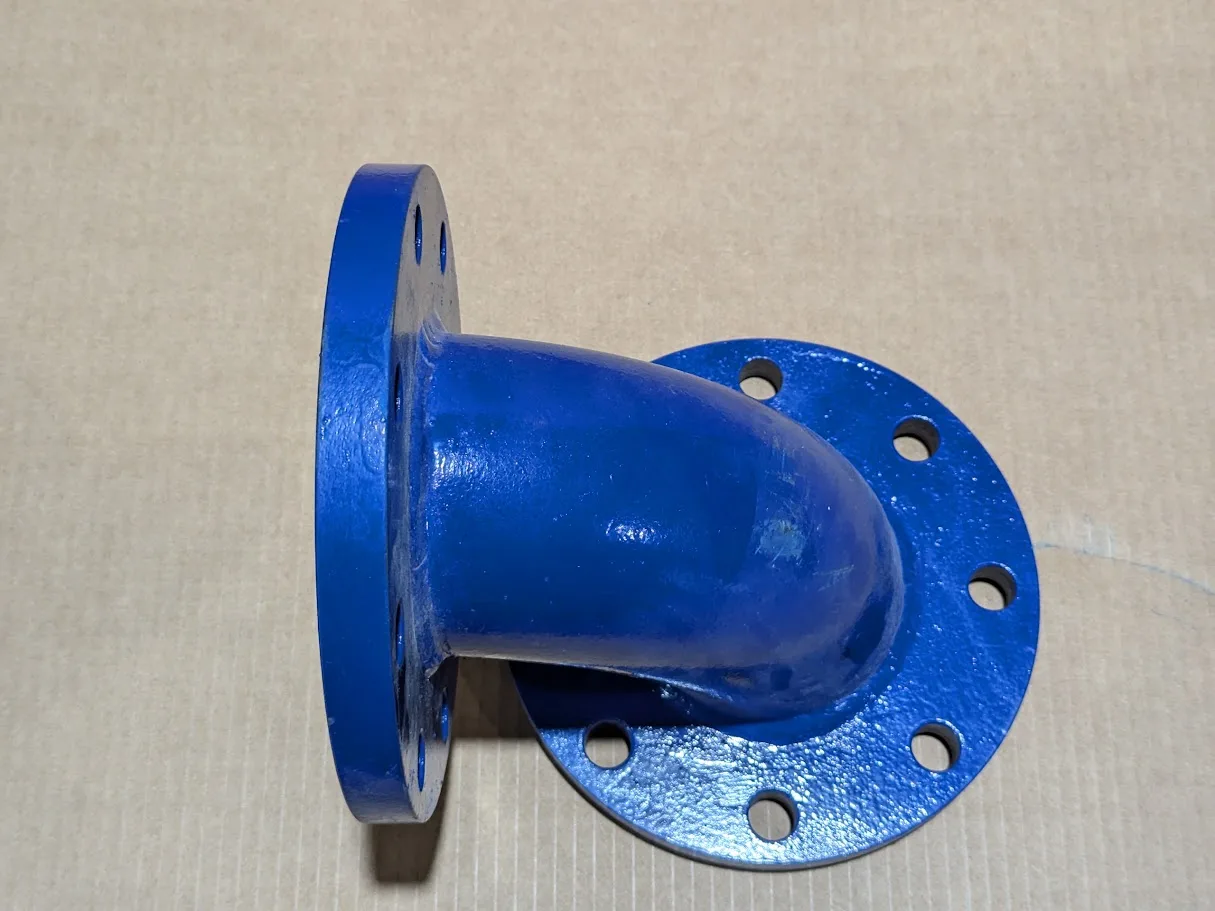
Flanged short radius elbow with a blue painted steel body

Elbows and bends

Long and short radius, 45, 90 and 180 degrees, built to the center-to-face dimension of the elbow it replaces.

Ceramic lined elbows
Large spool with a white ceramic liner inside a steel flange

Pipe spools

Straight lined sections up to 7 ft long and 3 ft in diameter, with ends that match your existing flanges.

Lined pipe spools

Chokes, reducers and tees

Reducers, choke rings, tees, wyes and laterals, where a change in diameter or direction speeds up the media.

Chokes and reducers

CeraLine dimensions and materials

Every part is designed for one line. The ranges below show what the casting process covers.

Elbows Pipe and spool liners
Inside diameter 1/2 in to several feet up to 3 ft
Wall thickness 1/4 in to 6 in 1/4 in to 8 in
Geometry long and short radius, 45°, 90°, 180°, custom angles straight, up to 7 ft long
Ends ANSI flanges, Victaulic, weld on, slip on, threaded, precast flanges same as elbows
Joints between sections not applicable shiplap, tongue and groove

The ceramic grades are alumina bonded silicon carbide (ALTRON), reaction bonded silicon carbide (InVinCer RB), recrystallized silicon carbide (InVinCer Rx), nitride bonded (NITRON), oxide bonded (OXYTRON), sintered silicon carbide (ULTRON) and dense alumina.

The grade follows the medium: particle hardness and velocity for abrasion, temperature swings for thermal shock, chemistry for corrosion. Silicon carbide grades

Measured in
operating plants

Three lines where steel parts failed on a schedule the plant did not choose, each result with the application it was measured in.

Bagasse boiler ash line, Guatemala

more than 8 times the life of steel

Steel 90 degree elbows in continuous pneumatic ash conveying at 60 to 70 °C lasted 3 to 4 months. The CeraLine elbow went in in March 2023 with a 20.7 mm liner in a 100 mm bore. After 30 months about 2 mm had worn away at the point of highest wear, and the bore was still round.

To the case

FCCU catalyst transfer line, Greece

from days to past 12 months

Steel elbows at the regenerator failed within days, with catalyst at 690 °C and constant temperature swings. Elbows lined with reaction bonded silicon carbide have passed 12 months, and about 13 of them, in 90 and 45 degree versions, now run in the same line.

To the case

Lithium battery plant, US Midwest

over a year in corrosive service

Stainless pipe and elbows carrying highly corrosive material had to be replaced every few months. Elbows and spools with reaction bonded silicon carbide liners in 304 stainless bodies with custom flanges have now run for more than a year.

To the case
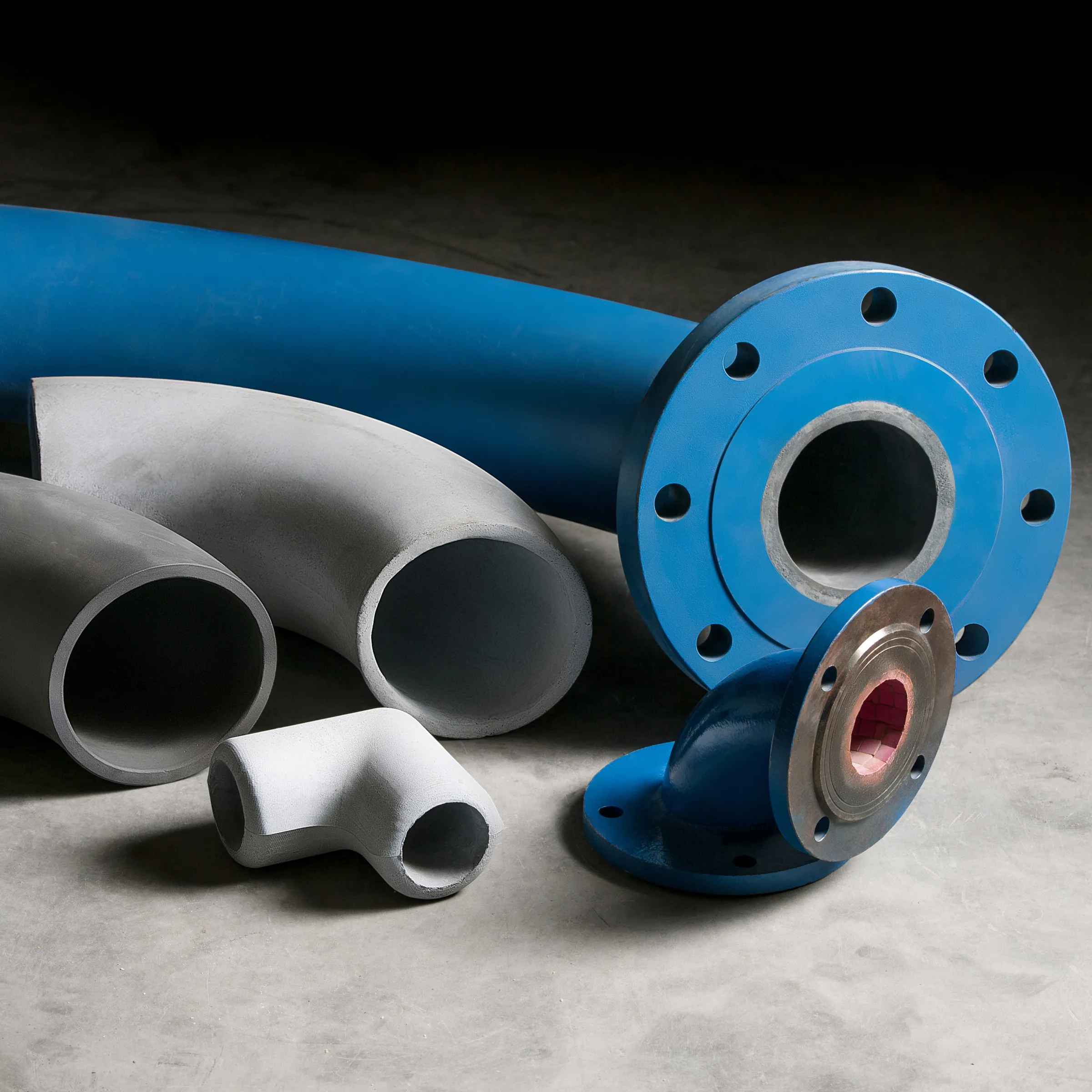
Lined elbows and tees with blue and gray steel shells

Where ceramic lined pipe
pays for itself

CeraLine runs where steel lasts months: fly ash and bottom ash conveying, pet coke and fuel transport, carbon and trona injection, FCC catalyst lines, slurry and tailings lines, foundry sand, cement and battery materials.

Two things bring most lines to a ceramic liner: the media cuts through steel, or the chemistry eats it. Many lines have both, and the grade is chosen so one liner handles the abrasion and the corrosion together.

Where the line has to keep its inside diameter, the steel body is made one size larger and joined to the existing pipe with a special flange or reducer, so the bore has no step at the connection.

From dimensions
to a drop-in part

A drawing helps when you have one. Most CeraLine projects start without.

01

Describe the line

Medium, temperature, velocity, and how often the current part fails. Dimensions are enough to start.

02

Engineering

A Blasch engineer chooses the ceramic, the wall, the joints between sections and the end connections, then draws the part.

03

Casting and assembly

The liner is cast, fired and set into its steel body in Albany, New York.

04

Installation

The finished elbow or spool bolts or welds in where the old part was, with no ceramic work in the field.

Frequently asked

Questions about ceramic lined pipe

Is CeraLine a ceramic coating?

No. It is a solid ceramic sleeve, fired before it goes into the steel and never thinner than 1/4 inch. Blasch does not apply coatings or spray layers.

How long does ceramic lined pipe last?

That depends on the medium, the velocity and the grade. The useful number is the wear rate: once you know how much wall a liner loses per year, the replacement can go into a planned outage.

Does a one-piece liner handle temperature swings?

With the right grade, yes. Thermal shock resistance is weighed together with abrasion and chemistry when the engineer chooses between silicon carbide grades and alumina.

Can CeraLine replace a tiled elbow without changing the piping?

Yes. Each part is built to the face-to-face or center-to-face dimension and the flange pattern of the part it replaces, so it drops into the existing line.

Do I need drawings to get a quote?

No. Send the dimensions, the medium and the operating conditions. A Blasch engineer designs the liner and produces the drawings for you.

A row of blue lined elbows

Replacing the same elbow
every few months?

Tell us what runs through the line and where it fails. A Blasch engineer comes back with a liner design for that line.

Talk to an engineer Call