Wear products

Wear resistant ceramics
for the spot where steel wears through

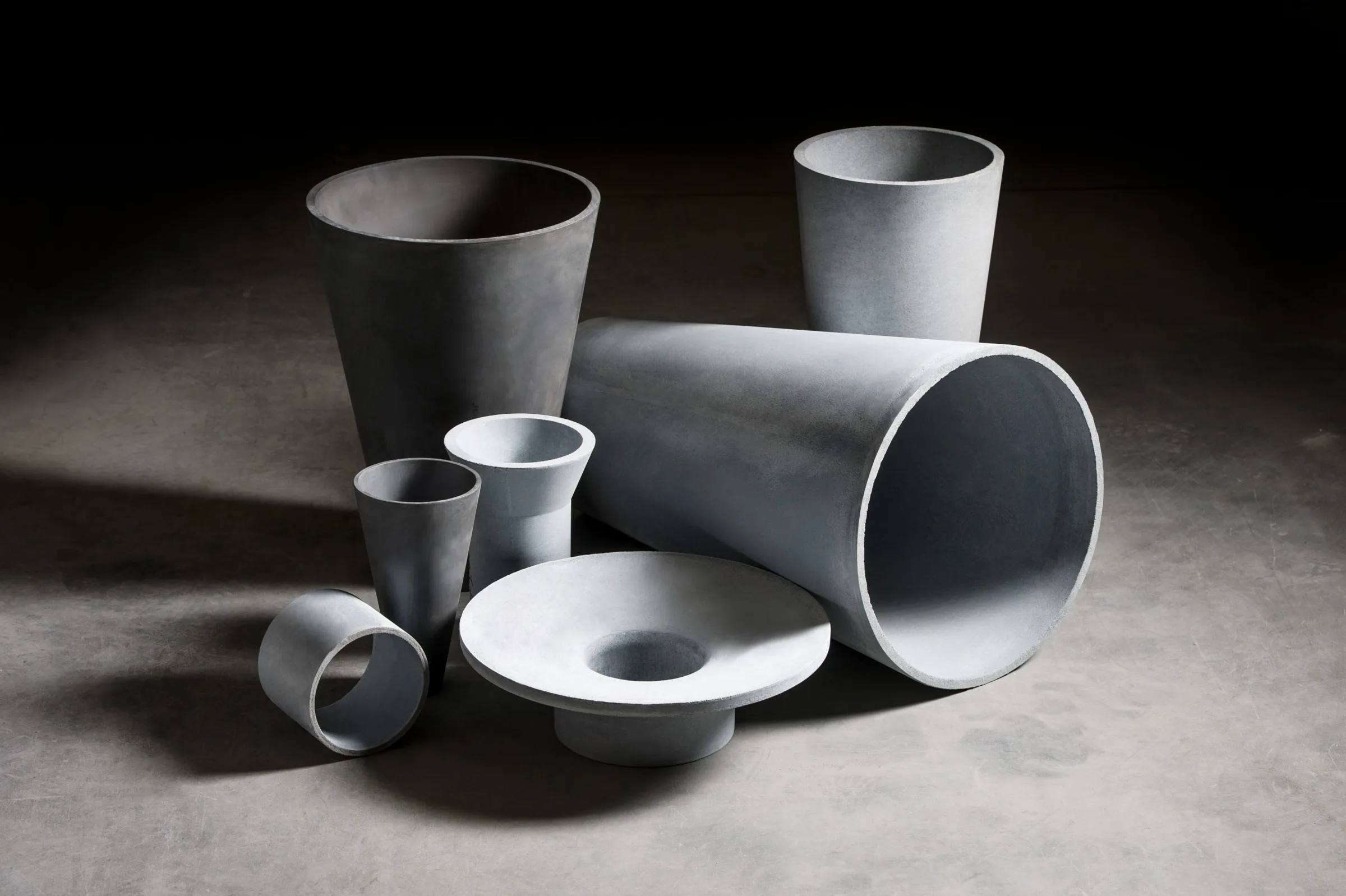
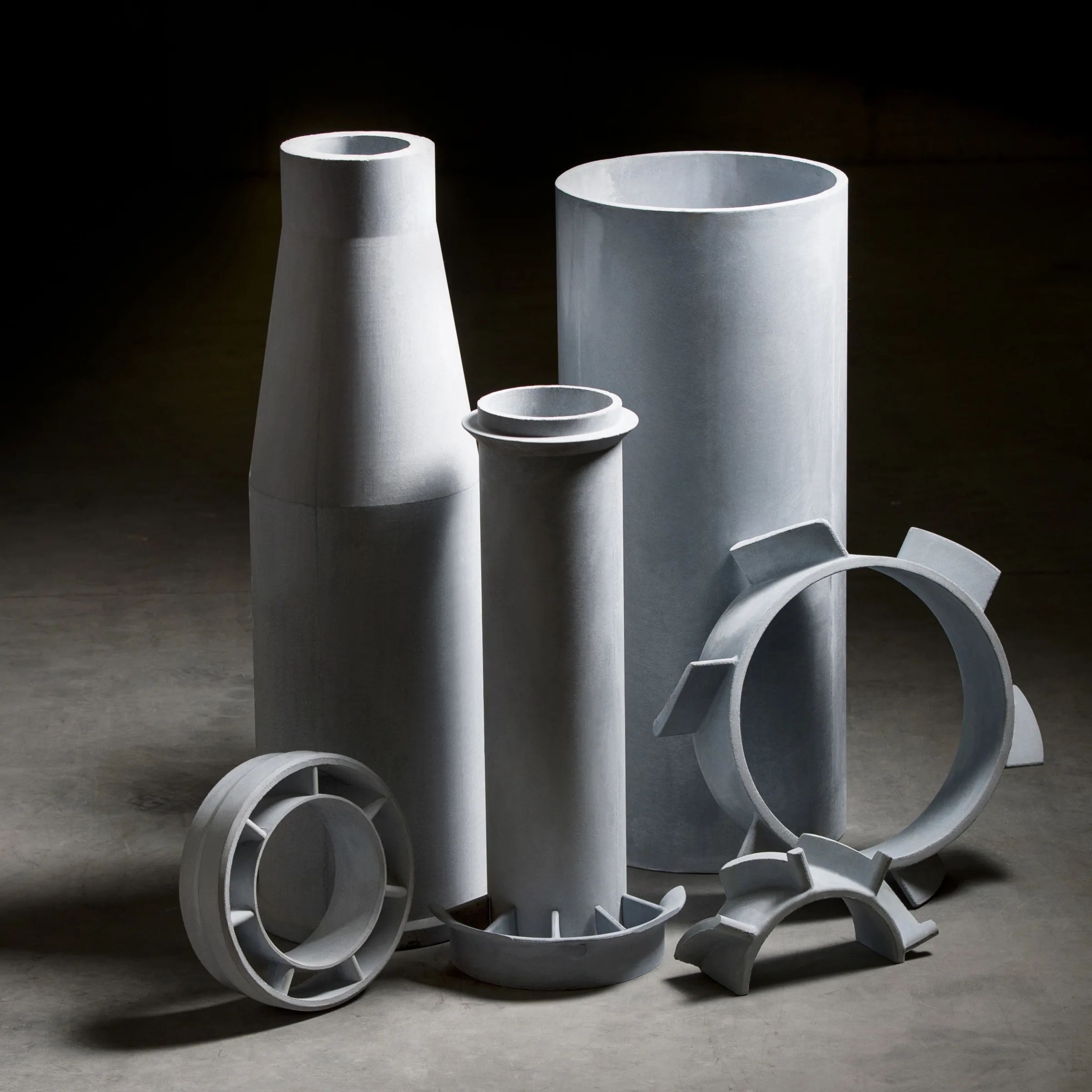
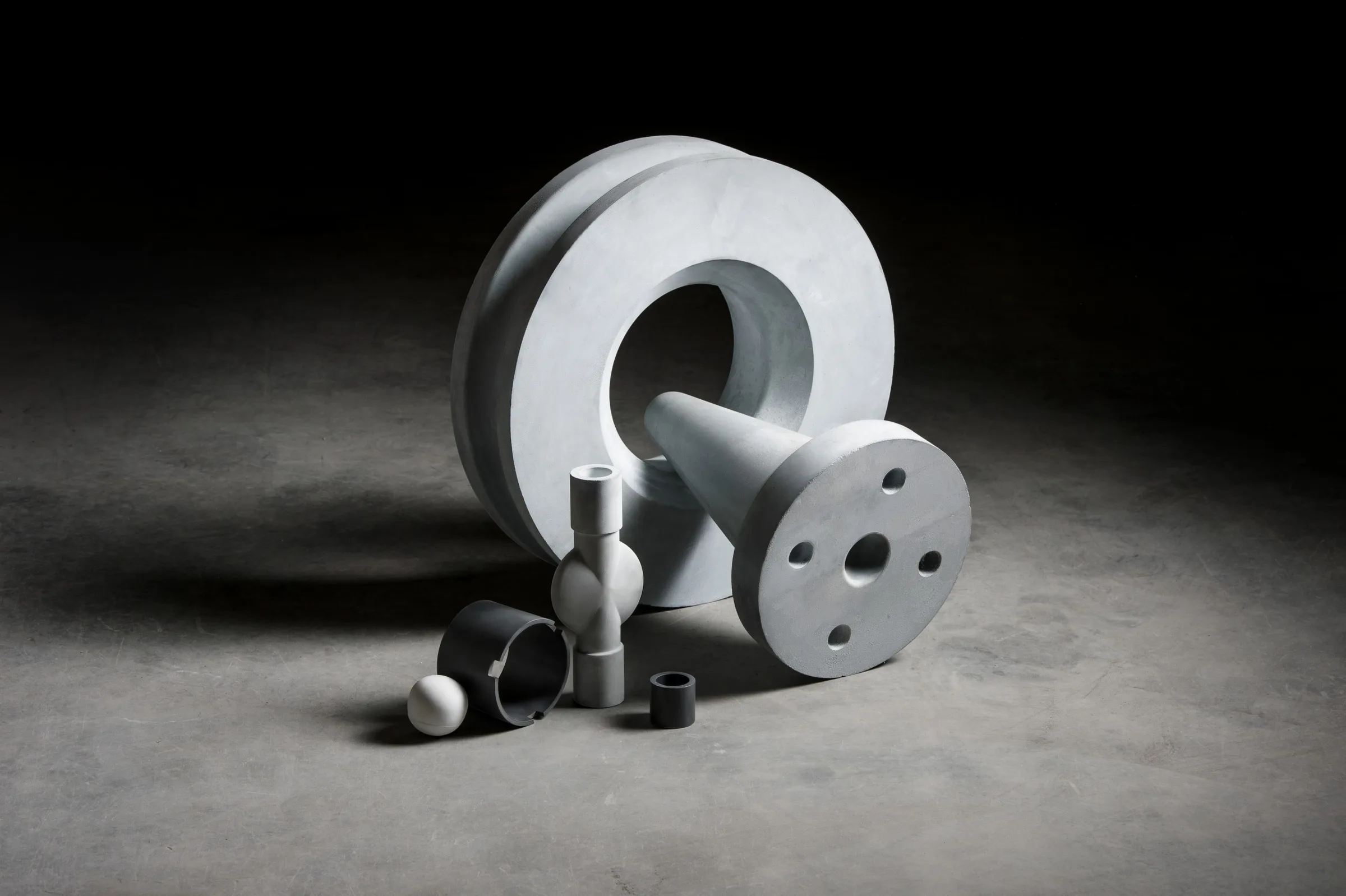
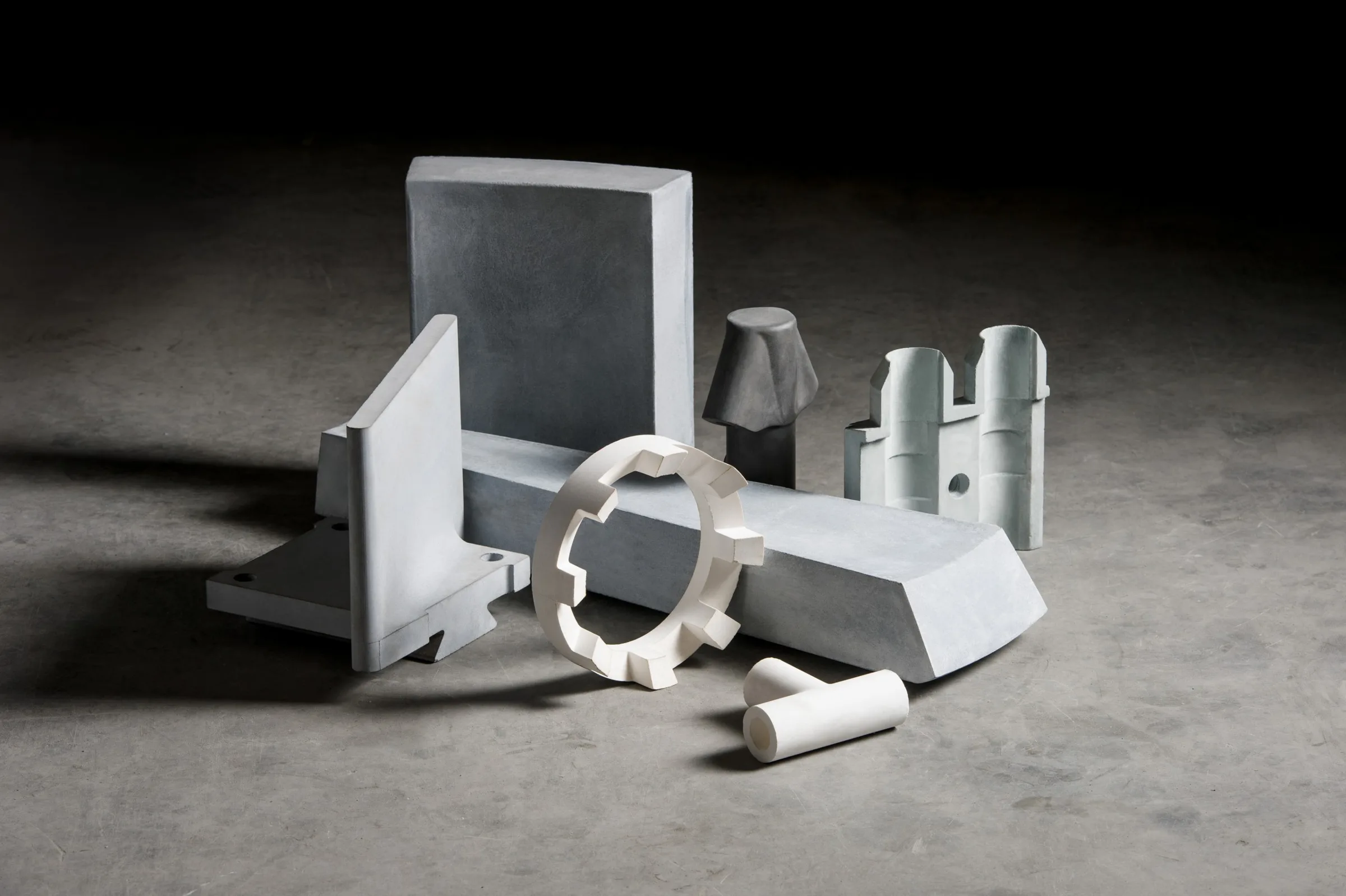
Cast ceramic liners, tubes, seats and shapes for pipes, cyclones, pumps, valves, mills and hot process vessels.

Solids wear out steel where they turn, speed up or hit a wall.
Blasch casts the ceramic part for exactly that spot.
Ceramic shapes for mining and mineral processing
In short

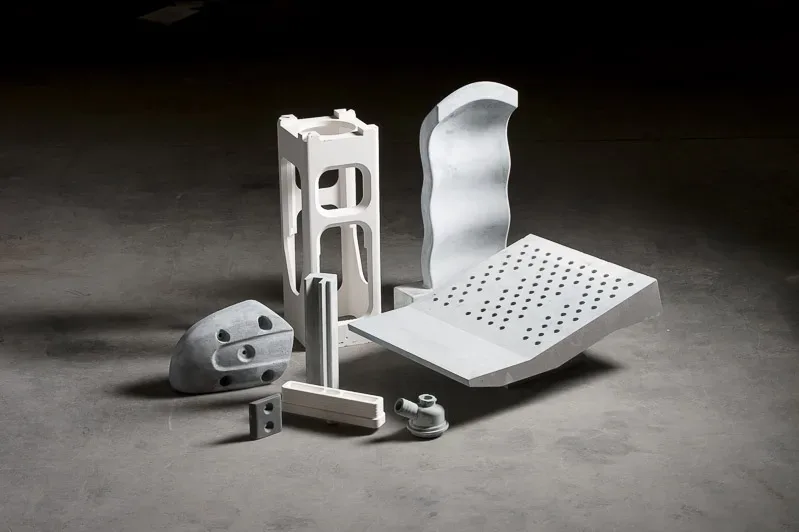
The ceramic wear parts that outlast steel are the ones placed where solids change direction or speed: elbows and reducers in conveying lines, apexes and vortex finders in cyclones, multicyclone tubes, pump liners, valve seats and micronizer liners. Cast in one piece from silicon carbide or dense alumina, they lose wall slowly where steel wears through in months. In a bagasse boiler ash line, a lined elbow has run 30 months with about 10% wear on a spot where steel lasted 3 to 4 months.

Patch the steel again,
or change the part

Most plants fight wear with the material they already know. It buys time, and the same part fails again at the same place.

Typical today

  • Thicker steel, hardened castings or weld overlay
  • Rubber or urethane linings that cut through under coarse solids
  • Tiles glued in by hand, with a joint every few inches
  • Repairs scheduled by the wear, not by the plant

Cast ceramic from Blasch

  • One piece where the part allows it, few joints where it does not
  • A grade chosen for the particles, the heat and the chemistry
  • Built to the dimensions of the part it replaces, for drop-in installation
  • Wear you can measure and plan for

Built for one spot

Every wear part fails at its weakest point, so the part that lasts is the one designed for the exact place where your current part fails.

Pipe, elbows
and fittings

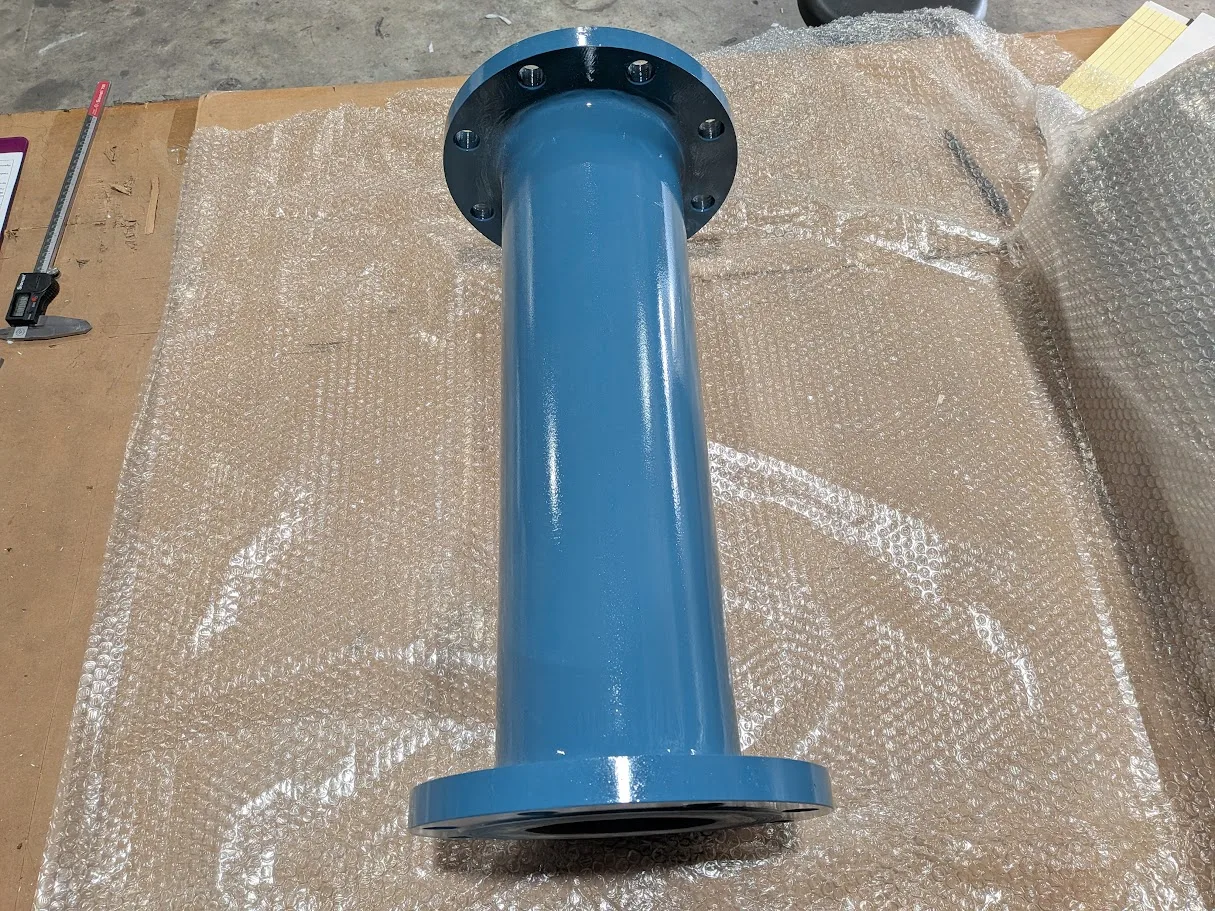
Conveying lines fail at the bends and restrictions first. CeraLine lines the whole line with one-piece liners.

Straight flanged ceramic lined pipe section

CeraLine ceramic lined pipe

One cast liner per section instead of tiles or a coating, for ash, coke, catalyst, slurry and battery materials.

CeraLine lined pipe
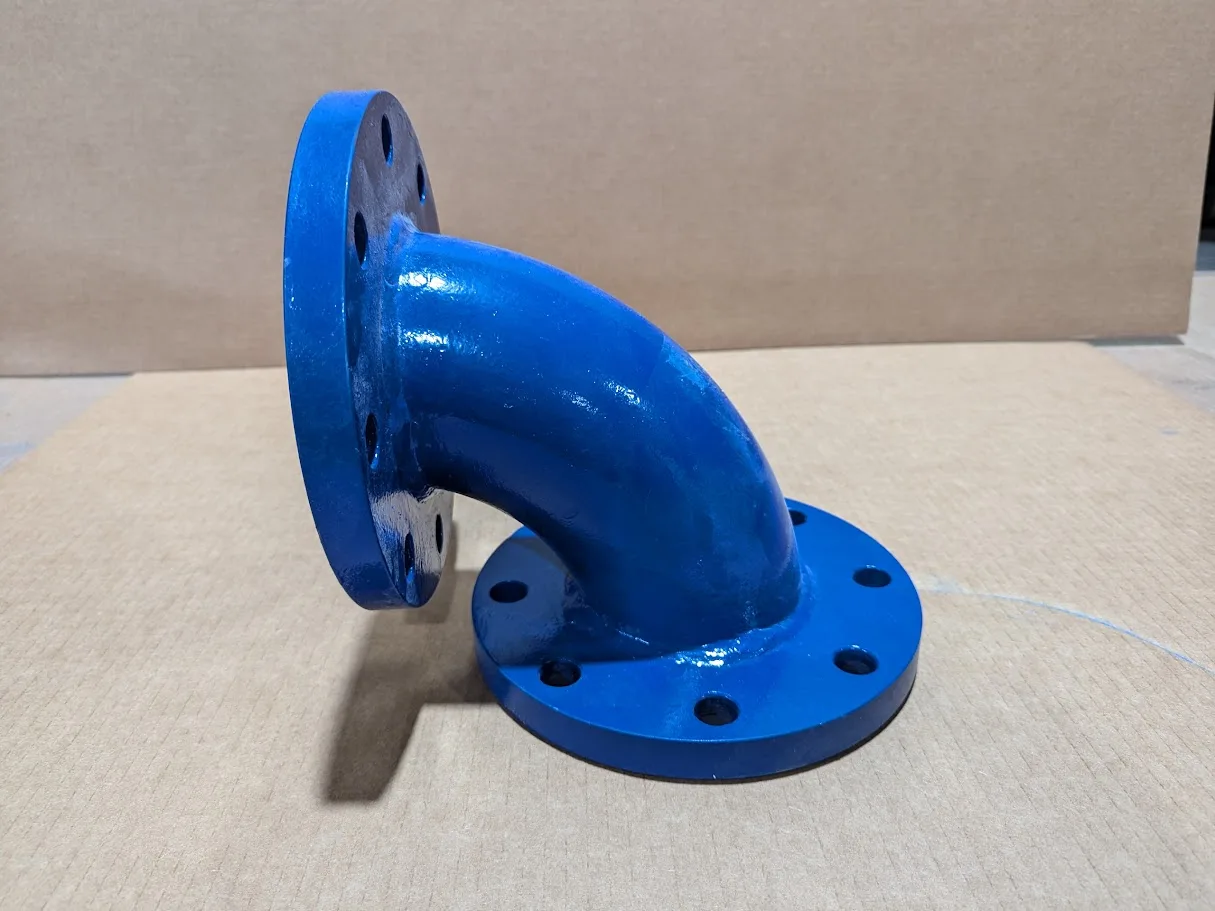
Blue flanged ceramic lined elbow on cardboard

Ceramic lined elbows

Long and short radius elbows lined around the full bore, where pneumatic conveying wears hardest.

Ceramic lined elbows
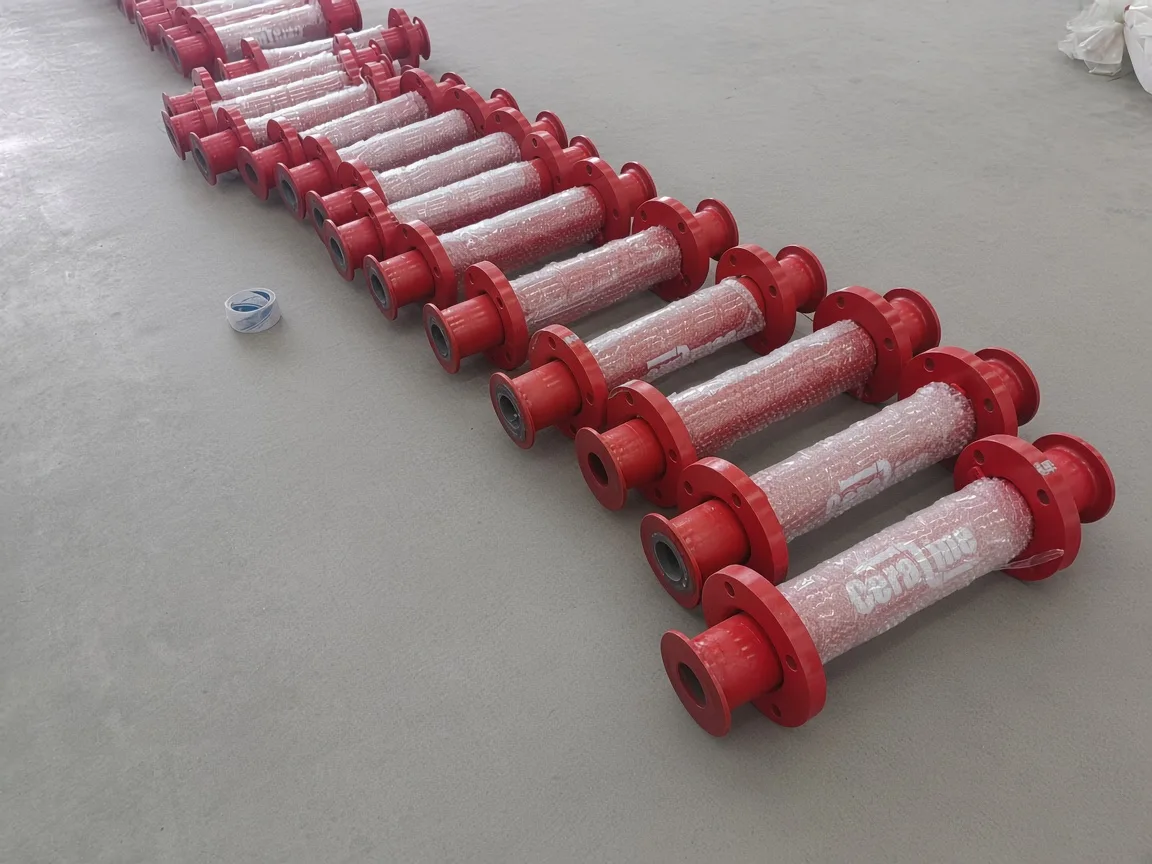
Red flanged lined spools laid out in a row

Lined pipe spools

Straight spools up to 7 ft that arrive finished and bolt in during the outage.

Pipe spools
Ceramic in-line chokes and reducers

Chokes and reducers

Silicon carbide chokes, choke rings and reducers for the narrowest, fastest point of a line.

Chokes and reducers

Abrasion, impact, heat and chemistry

Sliding abrasion grinds along a wall, as in a pipe bend or a multicyclone tube. Impingement hits a surface head on, as at an impingement block or a cyclone inlet. Both are what silicon carbide and dense alumina are made for.

Ceramic is hard and brittle. Where oversize lumps hit it, the design adds a tougher grade, a metal shell or a polyurethane backing that holds a cracked part in place.

Heat and chemistry decide the grade as much as the particles do. Steam mills and FCC lines need thermal shock resistance, battery and chemical plants need a ceramic the process stream cannot dissolve.

Blasch does not coat or spray. Every part on this page is a cast and fired ceramic component with its own wall thickness.

Three documented cases show the range: an FCCU catalyst line where steel failed within days, a lithium battery plant with a highly corrosive stream, and an iron ore pelletizing plant that switched its multicyclone parts to ceramic.

Cyclones and dust collectors

Separation equipment wears where the flow spins fastest and where the solids leave.

Hydrocyclone liners encased in polyurethane

Hydrocyclone liners

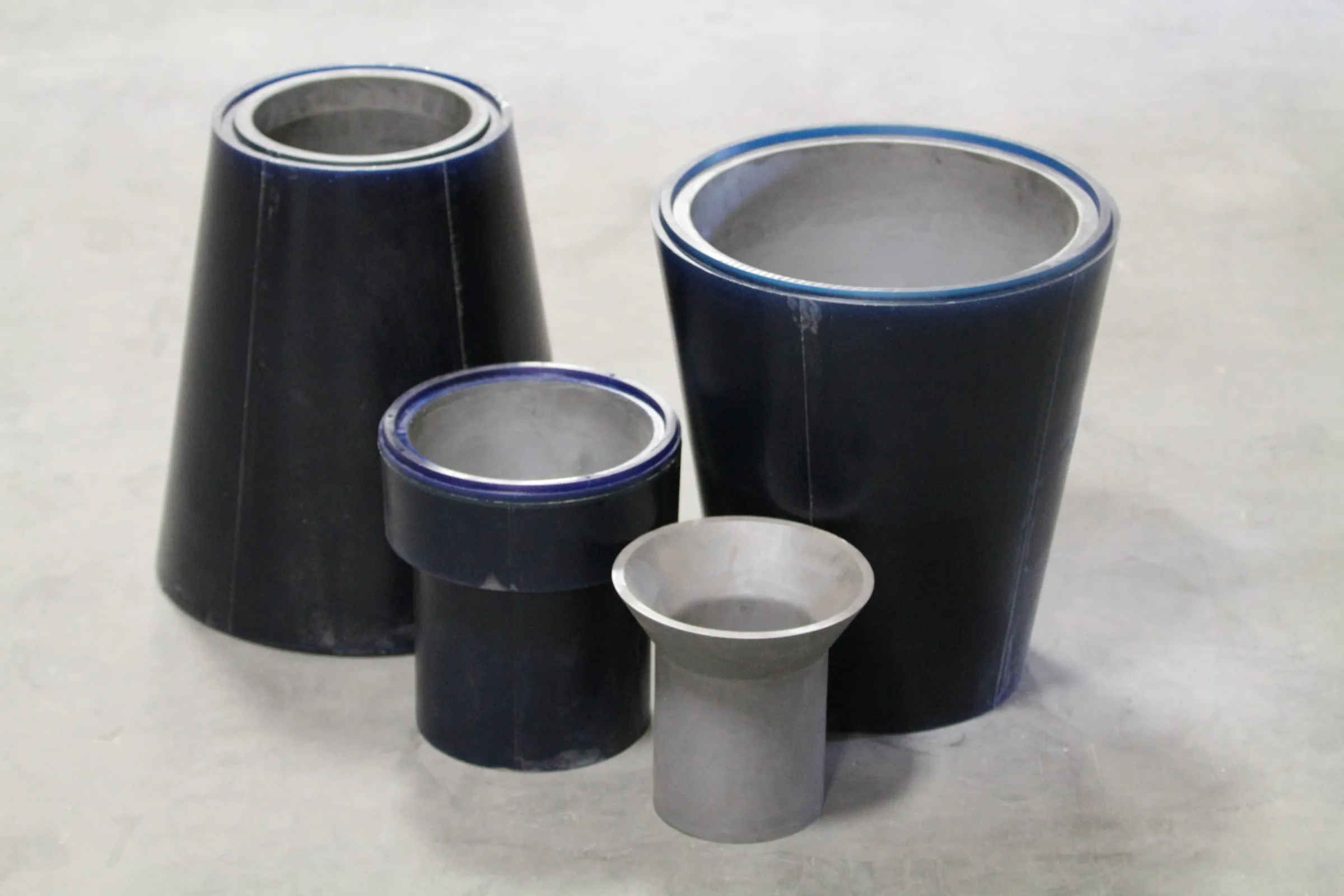
One-piece silicon carbide apexes, cones and cylinders up to 60 inches, with optional polyurethane backing.

Hydrocyclone liners
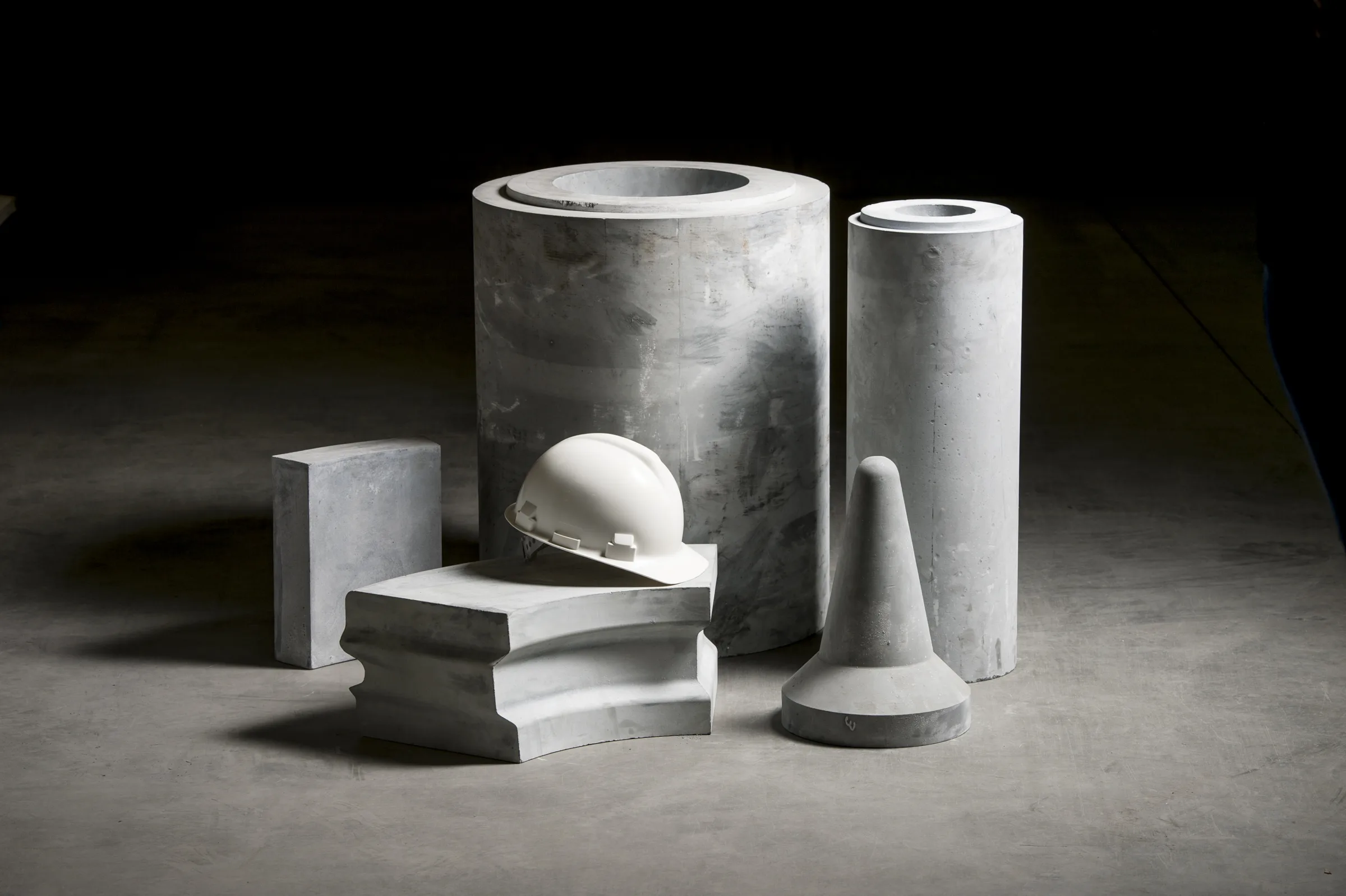
Ceramic cyclone liners, cones and tubes

Vortex finders and thimbles

Central outlet tubes for calcining cyclones, hydrocyclones and mills, up to several meters across.

Vortex finders
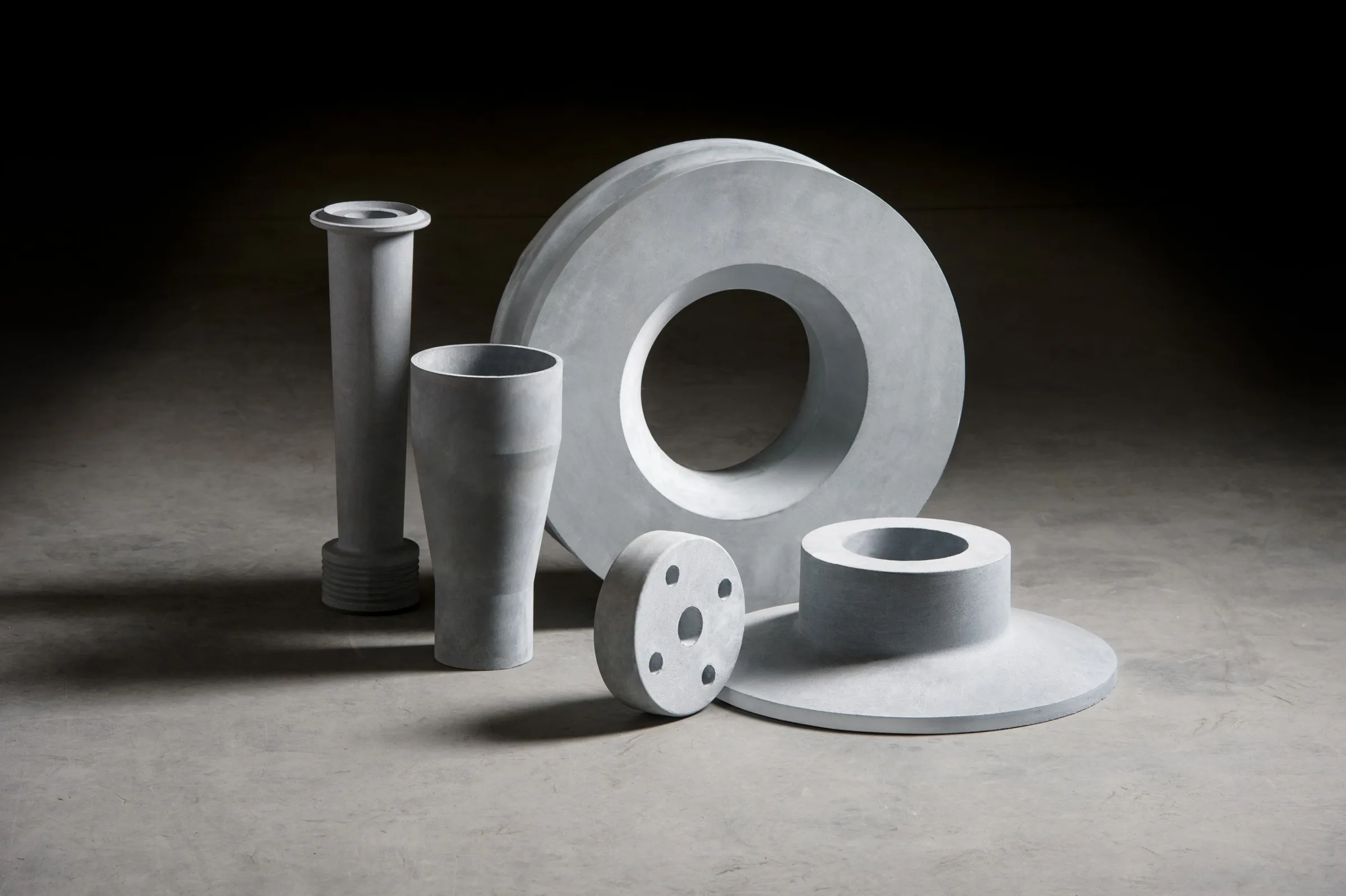
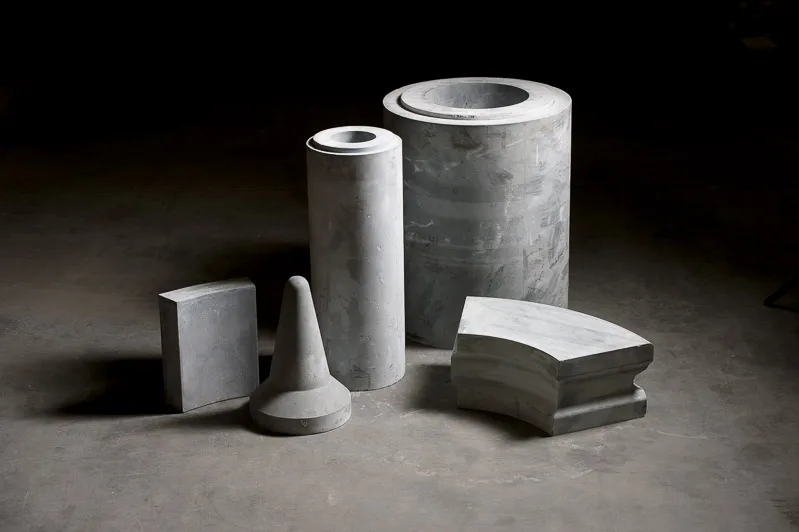
Nitride bonded silicon carbide shapes

FCC cyclone and scrubber linings

Precast shapes for cyclones, diplegs, separators and scrubber venturis in FCC units.

Scrubber and cyclone linings
Mechanical dust collector components in ceramic

Multicyclone dust collectors

SiClone tubes, spin vanes and outlets that replace cast iron in mechanical collectors.

Dust collector components
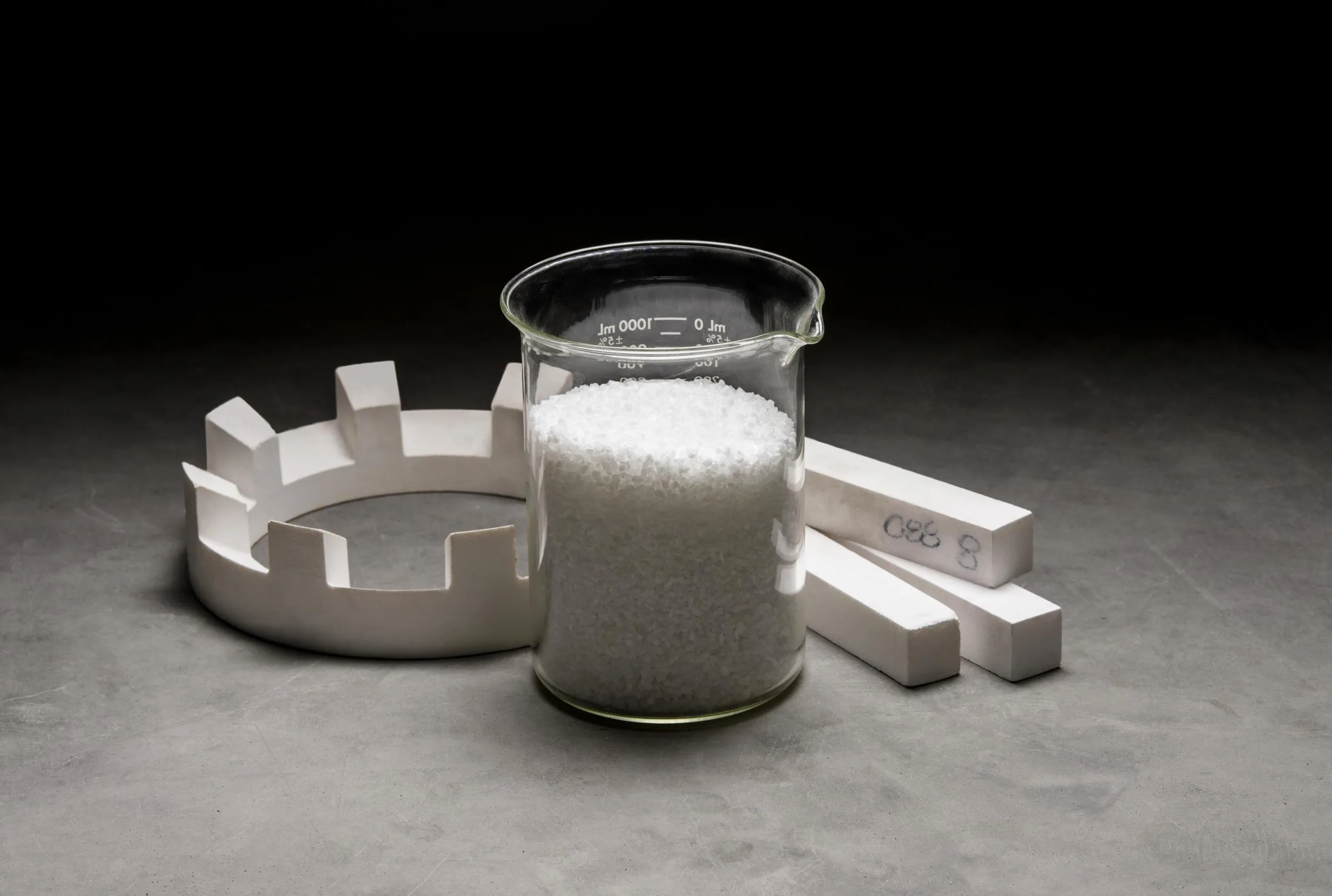
White alumina parts and powder in a glass beaker

Which ceramic for
which wear

ALTRON, an alumina bonded silicon carbide, is the grade for fine, hard catalyst in FCC units. InVinCer RB, reaction bonded, carries much of the slurry, pump and lined pipe work.

NITRON, nitride bonded, makes the large shapes for autoclaves and flash vessels. OXYTRON, oxide bonded, handles hot dust in multicyclones above 1,200 °F. Sintered ULTRON and dense alumina complete the range.

The grade is chosen per application, from the particles, the temperature and the chemistry, not from a table of hardness values.

Valves, pumps, mills and
pressure vessels

Equipment that moves, grinds or depressurizes slurry wears at the surfaces that see the highest velocity.

Abrasion resistant ceramic valve components

Valve components

Seats, balls, discs, gates and body linings for slurry, ash and mill discharge valves.

Valve components

Pump components

Suction side liners, impeller faces and volutes, new or fitted to worn pump plates.

Pump components
Large ceramic micronizer ring on a pallet

Micronizer liners

One-piece bowl liners, nozzles and vortex finders for jet mills, cast to fit the steam ring.

Micronizer liners
Ceramic impingement block and lining shapes

Impingement block linings

Large silicon carbide shapes for autoclave flash pots, quench vessels and vent blast tubes.

Impingement blocks
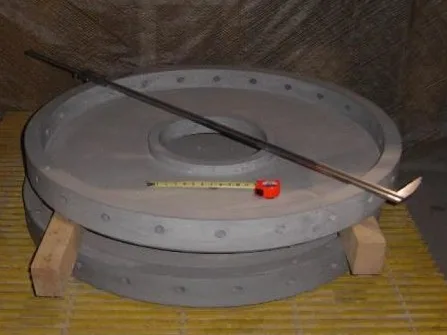
Large flanged spool with a thick white ceramic liner

Designed from your dimensions

Every part in this group starts with the part that fails today. Its dimensions, the medium, the temperature and how often it fails are enough to begin.

A Blasch engineer chooses the grade and designs the part. It is cast near net shape in Albany, fired, and assembled into steel where needed, so it goes in like the part it replaces.

Wear at high
process temperature

Some wear parts sit where heat and thermal cycling matter as much as the solids.

Reactor vessel lining components and bubble caps

Reactor vessel linings

Sleeves, linings, bubble caps and tuyeres for fluidized bed and chlorination reactors.

Reactor vessel linings

Transfer line exchanger cones

Precast, fired inlet cones for ethylene furnace exchangers, with no cure out on site.

TLE cones

Core setters for investment casting

Setters that hold ceramic cores for turbine airfoils true through repeated firings.

Core setters
Frequently asked

Questions about wear resistant ceramics

Which is more wear resistant, silicon carbide or alumina?

It depends on the wear. Silicon carbide grades are harder and handle heat and thermal shock better; dense alumina is a good fit for many abrasive services at lower cost. The engineer chooses per application.

Will a ceramic part fit our existing equipment?

Yes. Parts are built to the dimensions and connections of the part they replace, so pipes, cyclones, pumps and valves keep their layout.

How do we start without a drawing?

Send the dimensions of the worn part, what flows through it and how long it lasts today. A Blasch engineer takes it from there.

Does Blasch also make nozzles and ferrules?

Yes, as separate groups. See ceramic nozzles and the full product range.

A row of blue lined elbows

Which part in your plant
wears out too fast?

Tell us where it sits, what it is made of today and how long it lasts. A Blasch engineer answers with a ceramic part designed for that spot.

Talk to an engineer Call