Wear products

Ceramic cyclone liners
for FCC units and flue gas scrubbers

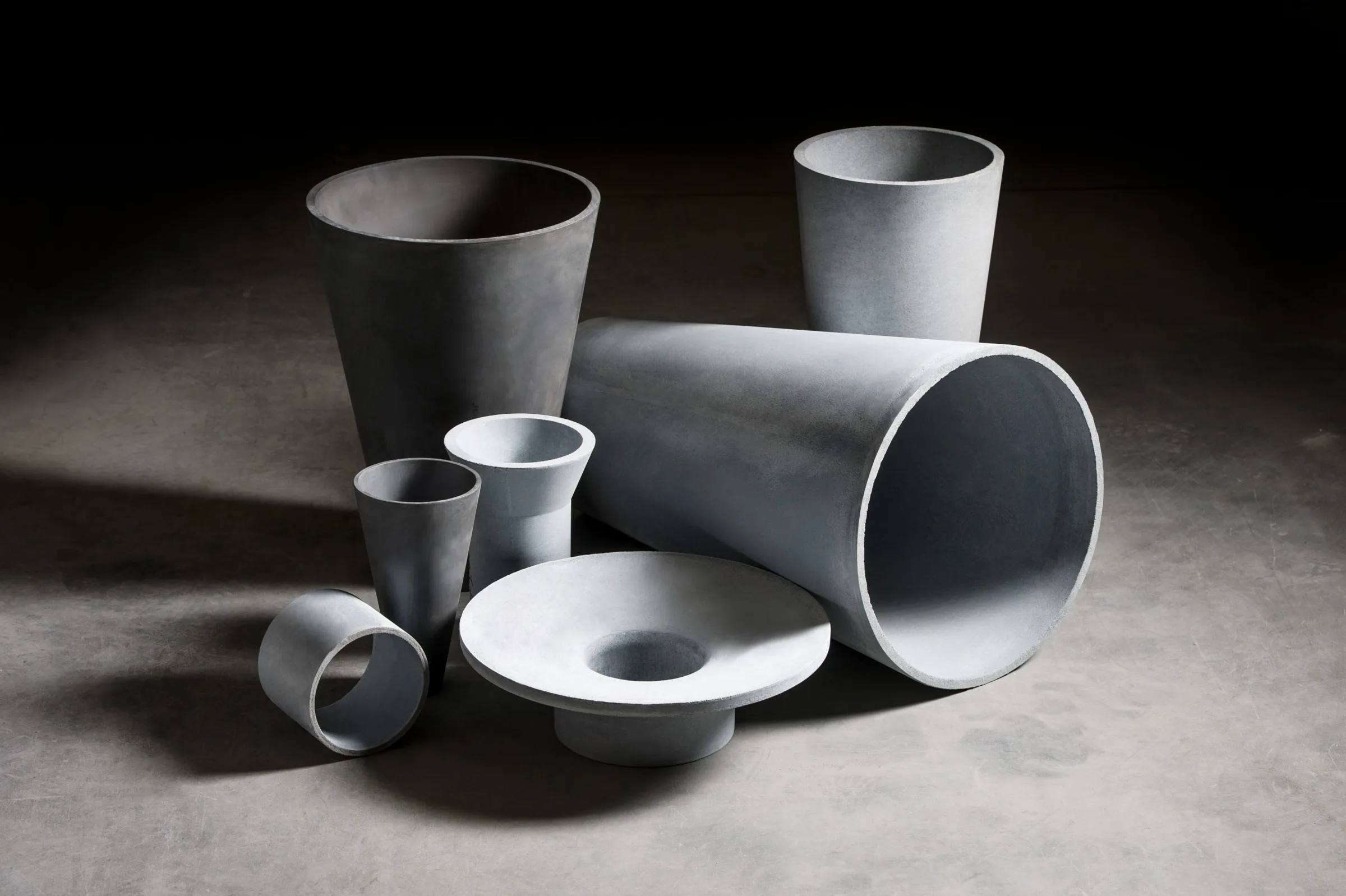
Precast silicon carbide shapes for cyclones, diplegs, dustbowls, separators and scrubber venturis.

Catalyst at high velocity cuts through steel and castable.
Precast silicon carbide takes its place in cyclone and scrubber.
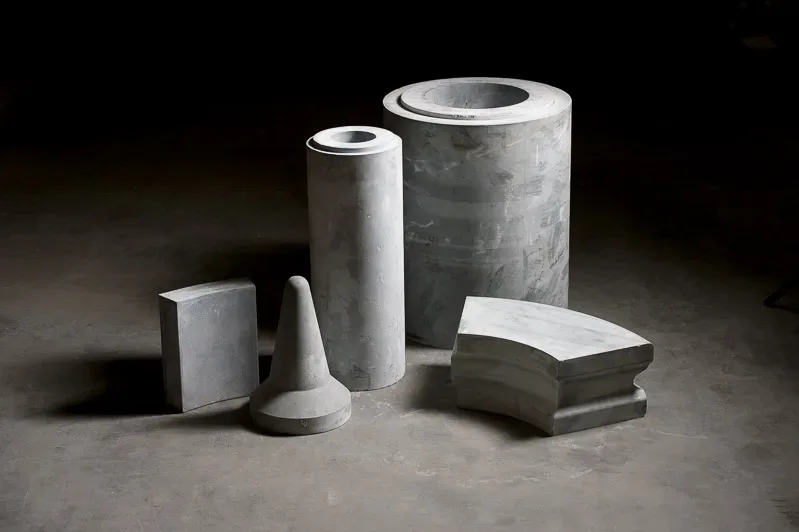
Nitride bonded silicon carbide shapes
In short

In FCC cyclones, diplegs, dustbowls, third stage separators and scrubber venturis, erosion is held back most reliably by precast shapes in a dense, abrasion resistant silicon carbide such as ALTRON (alumina bonded) or NITRON (nitride bonded), installed in place of hexmesh castable or high alloy steel. Blasch casts these shapes as single pieces or as interlocking tile arrangements, sized to the geometry of the cyclones and scrubbers already in the unit.

Where FCC catalyst erodes

Catalyst circulates between reactor and regenerator, and cyclones pull it back out of the gas at high velocity. The barrels, cones, diplegs and dustbowls of those cyclones see a constant stream of hard, fine particles.

Downstream, the fines that escape reach the third stage separator and the flue gas scrubber, where nozzles and venturis wear in the same way.

The common linings are erosion resistant castable held in hexmesh, and high alloy steel. Both wear, and castable needs anchoring, forming and curing every time it is repaired.

The Hydrocarbon Engineering article Hard Choices by Blasch engineers covers material selection for these abrasive services.

What the lining buys

An FCC unit runs only as long as its fastest eroding part allows, so a lining that outlasts the castable around it lets the plant, not the wear, set the next turnaround.

Parts we line
in the FCC unit

Four areas of the unit where Blasch supplies linings, from the regenerator cyclones to the stack scrubber.

Cyclones, diplegs and dustbowls

Cyclone linings and dipleg and dustbowl sections in ALTRON or NITRON, shaped to the existing geometry.

Second and third stage separators

Linings for the separators that catch the fines the primary cyclones let through.

Scrubber nozzles and venturis

Ceramic scrubber nozzles and venturi linings for the flue gas scrubber.

Catalyst piping and elbows

One-piece lined elbows for catalyst transfer and unloading lines.

Ceramic lined elbows

ALTRON and NITRON in FCC service

ASTM C704 is the standard abrasion test for refractories: a sample is blasted with silicon carbide grit at room temperature and the volume it loses is measured in cubic centimeters. The lower the loss, the slower the material erodes. Blasch rates ALTRON at a loss approaching 1.5 cc. Alumina bonded silicon carbide

Where a steel component is welded into the unit today, Blasch builds a ceramic and metal assembly that welds into the same place. The air distributor in the regenerator uses the same idea, see ALTRON air grid nozzles.

In the catalyst transfer line of a refinery in Greece, steel elbows had failed within days. The lined elbows that replaced them are documented in the FCCU catalyst line case.

More parts for refineries are on refining and chemical processing, the full wear range on wear products.

Frequently asked

Questions about FCC cyclone linings

Do precast shapes need curing during the turnaround?

No. They are fired before delivery, so the time on site goes into setting the parts, not into forming and drying a castable.

Does Blasch supply the cyclone itself?

No. Blasch makes the ceramic linings and the ceramic and metal assemblies for the cyclones and scrubbers you already have.

Ceramic cyclone liners, cones and tubes

Which part of your FCC unit
erodes first?

Tell us the part, its dimensions and how long it lasts today. A Blasch engineer proposes the shape, the grade and how it installs.

Talk to an engineer Call