Nozzles

FCC air grid nozzles
that hold their orifice for the campaign

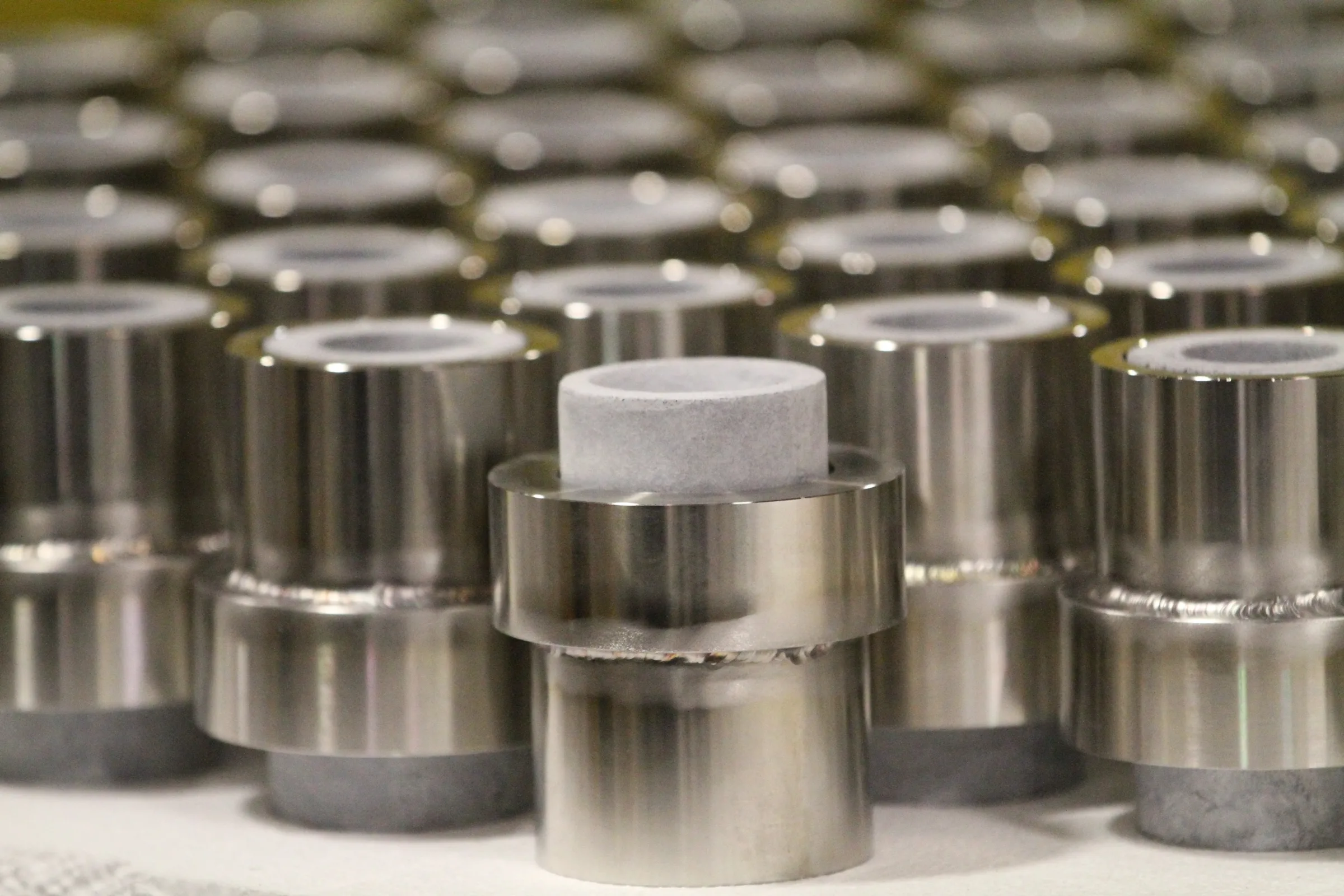
ALTRON silicon carbide nozzles in a weldable metal assembly for FCC regenerator air distributors.

The air grid decides how evenly the regenerator burns off coke.
Its nozzles decide how long the grid stays even.

Ceramic nozzle inserts welded into polished steel sleeves
In short

Air grid nozzles in an FCC regenerator resist catalyst erosion best when the orifice is made of an abrasion resistant ceramic that also tolerates thermal cycling, such as ALTRON alumina bonded silicon carbide or NITRON nitride bonded silicon carbide. Blasch casts the ceramic orifice into a metal assembly that is welded in place of the existing steel nozzle, without changes to the grid. According to Blasch, ALTRON assemblies typically last two to five times longer than high alloy steel nozzles.

Why steel nozzles
lose the distribution

The air distributor grid, also called air grid or gas distributor, injects combustion air into the dense bed of spent catalyst. Each nozzle has an orifice sized for an even spread of air across the bed.

Steel nozzles, 304H or chromoly

  • Hot catalyst and flue gas erode the orifice wider and out of round
  • The worn bore takes on a keyhole shape that blasts its neighbors
  • Air goes where the holes are biggest, fluidization turns uneven
  • Afterburn, catalyst losses and attrition rise over the campaign

ALTRON ceramic assemblies

  • A cast silicon carbide orifice keeps its geometry and its air flow
  • The bond balances abrasion resistance with thermal shock resistance
  • A metal body is welded to the grid like the old nozzle
  • Replacement and repair fit into a normal turnaround

An even grid, | the whole campaign

An FCC campaign runs 5 to 20 years, and the regenerator can only burn as evenly as the most worn nozzle in its grid allows.

Ceramic nozzle inserts welded into polished steel sleeves

How the assembly works

Ceramics cannot be welded to a steel grid. The Blasch assembly holds the silicon carbide insert in a metal sleeve, and the sleeve is welded to the grid in the same position as the steel nozzle it replaces.

The orifice is cast to size, not drilled, and repeats from one nozzle to the next. Every nozzle in the grid starts with the same flow and keeps it.

Assemblies are built for the two common grid types, pipe distributor grids and plate style distributors, and copy the geometry of the existing nozzles.

Why the ceramic grade matters in an FCCU

Silicon carbide is the usual choice against catalyst erosion, but the casting method, the bond and the microstructure decide how it performs. A fully dense ceramic resists abrasion well and can still crack in a regenerator that cycles in temperature. ALTRON and NITRON were developed for this balance and have run in FCC regenerators worldwide for more than 30 years. ALTRON alumina bonded silicon carbide

What a longer nozzle life is worth

The FCC unit converts heavy feed into gasoline and other higher value products, so regenerator efficiency goes straight into refinery margin. Nozzles that hold their orifice keep fluidization stable, coke burn efficient and catalyst losses down until the next planned turnaround.

The two to five times longer life is the range Blasch states for ALTRON assemblies against high alloy steel nozzles in FCC regenerators. Your result depends on catalyst, velocity and temperature cycling.

The published background

Blasch engineers described the material choice for abrasive refinery service, with a focus on alumina bonded silicon carbide air grid nozzles, in Hydrocarbon Engineering. Hard choices in abrasive service

Other FCC parts against catalyst erosion

The regenerator grid is one of several places where catalyst wears through steel.

Catalyst line elbows

Ceramic lined elbows for spent catalyst and transfer lines, where a refinery line at 690 °C went from days to over 12 months.

The FCCU catalyst line case

Cyclone and scrubber linings

Linings for cyclones, dustbowls and diplegs that see the same catalyst at higher velocity.

Cyclone linings

Fluidized bed nozzles

Bubble caps, arrowheads and tuyeres for boilers and reactors with fluidized beds.

CFB and BFB nozzles
Frequently asked

Questions about FCC air grid nozzles

Do the nozzles fit our existing air grid?

Yes. The assembly copies the outer geometry and the attachment of your steel nozzle and is welded in place without changes to the grid hardware.

Can single nozzles be replaced during a turnaround?

Yes. Because each assembly is welded like a steel nozzle, worn or damaged nozzles can be cut out and replaced individually.

Which material is used, ALTRON or NITRON?

Both are cast for FCC service. The choice depends on temperature, cycling and catalyst velocity at your grid.

What do you need for a quote?

The grid type, the nozzle dimensions and orifice sizes, and the regenerator conditions. A drawing helps but is not required.

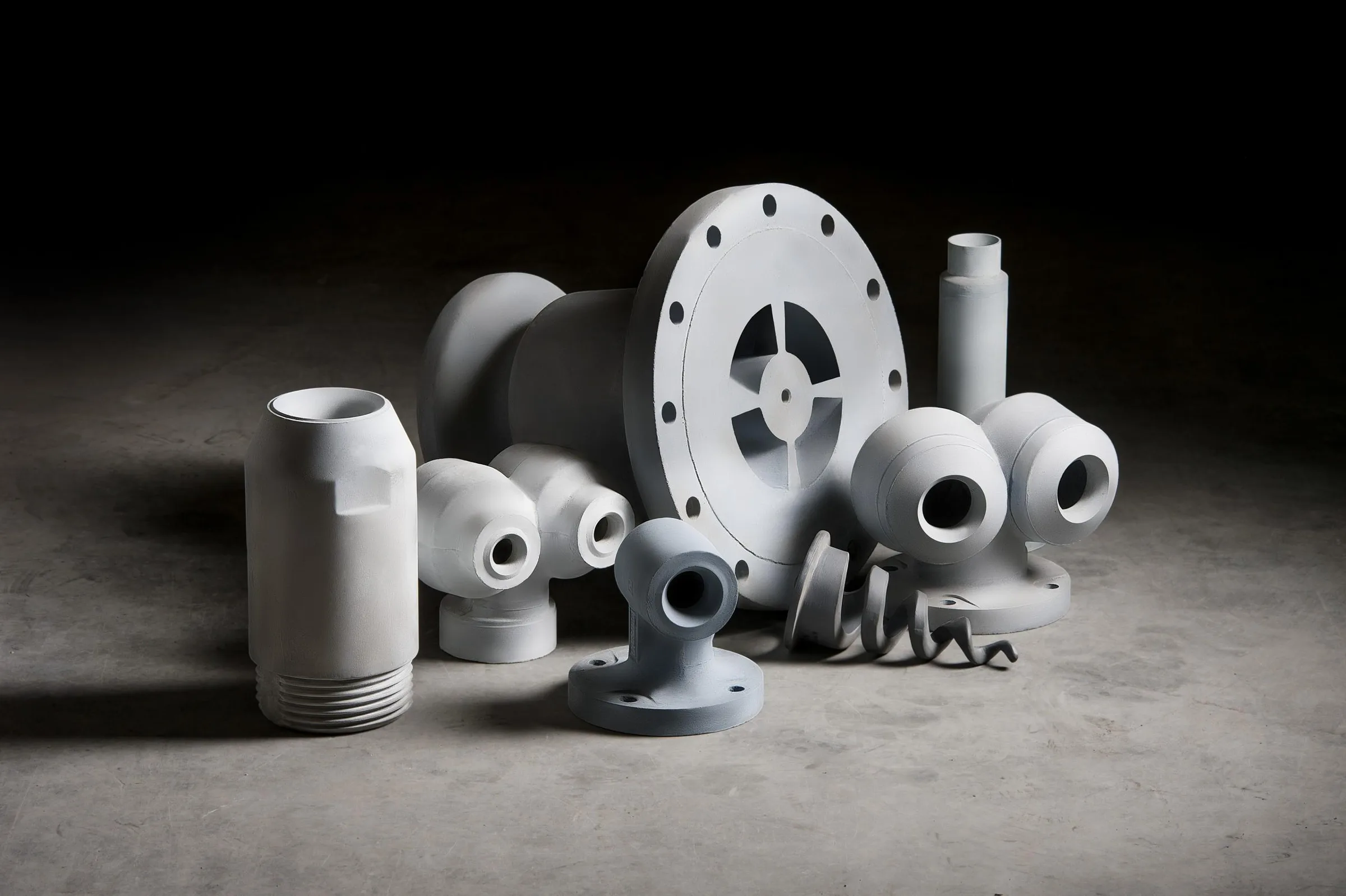
Cast ceramic spray nozzles, a spiral nozzle and a flanged fitting on a concrete floor

Planning the next
FCC turnaround?

Send the grid type, the number of nozzles and their dimensions. A Blasch engineer works out the assembly for your regenerator.

Talk to an engineer Call