Nozzles

Ceramic nozzles
that keep their bore under erosion and heat

Air grid, fluidized bed, coal, burner, spray and atomizing nozzles in silicon carbide, alumina and zirconia.

A nozzle is defined by its bore.
Once particles or heat change that bore, the whole process downstream changes.

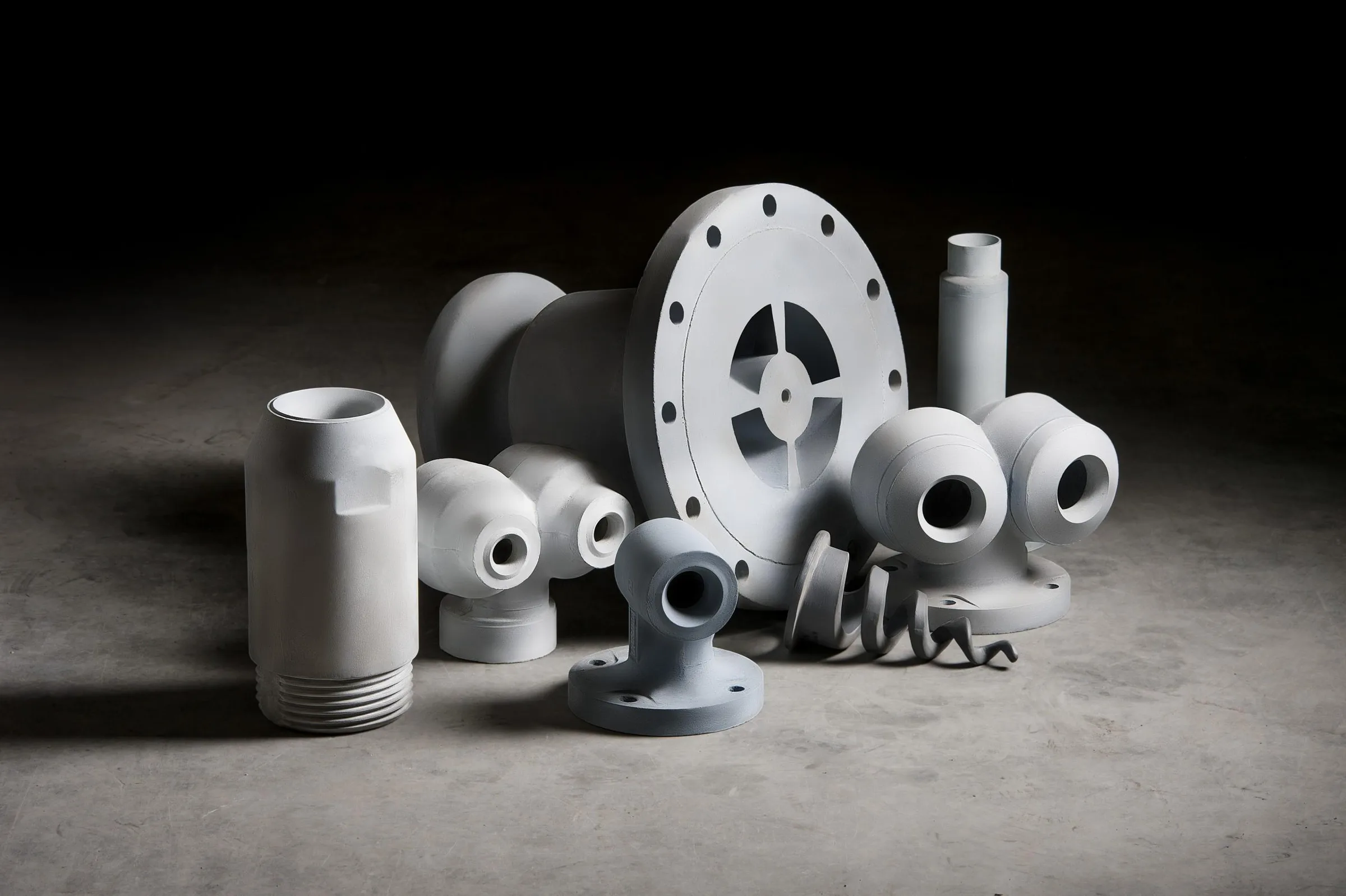
Cast ceramic spray nozzles, a spiral nozzle and a flanged fitting on a concrete floor
In short

Ceramic nozzles resist erosion and heat best when the grade matches the attack: alumina bonded and nitride bonded silicon carbide for catalyst, ash and slurry erosion, reaction bonded silicon carbide for dense wear faces, and oxidation resistant oxides or silicon carbides for flame and thermal cycling in a ceramic burner nozzle. Blasch casts air grid, fluidized bed, coal, burner, FGD spray and atomizing nozzles near net shape and fits them to existing steel by welding, threading, flanges or a metal housing, so they replace metal nozzles without changes to the system.

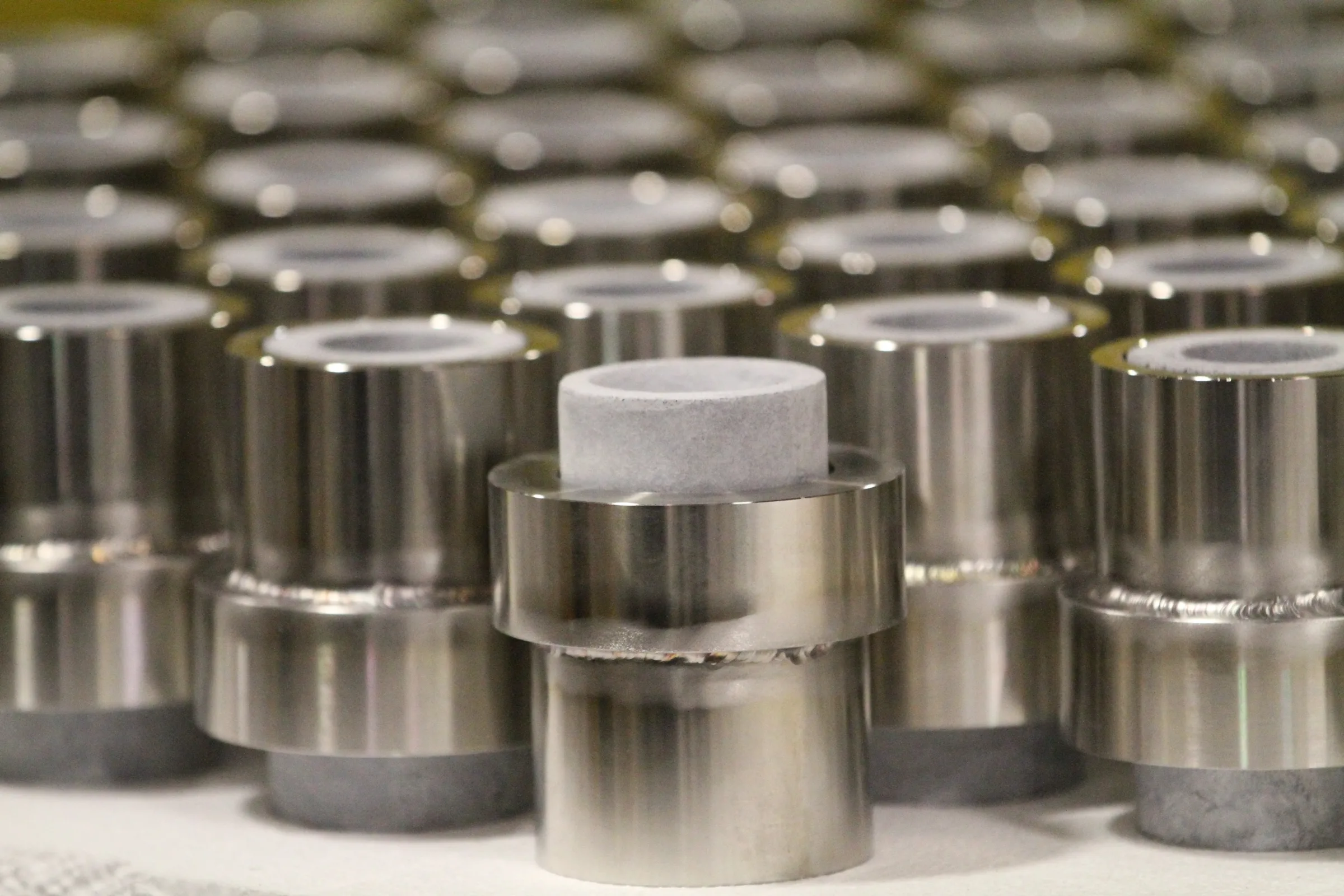
Ceramic nozzle inserts welded into polished steel sleeves

How nozzles fail

Erosion at the orifice: particles in air, gas or slurry cut the bore wider and out of round. In an FCC air grid this keyhole shape speeds up wear on the next nozzles and spoils the distribution.

Heat and oxidation: burner tips and flare tips see flame on one side and cooler gas on the other. Alloy steel scales and distorts, thick ceramic tiles crack from thermal shock.

Corrosion: flue gas, acid slurry and reducing atmospheres attack metal and the silica in some ceramics.

Plugging: bed material and slurry block bores that have lost their shape, and a blocked nozzle loads its neighbors.

More on nozzle erosion

A bore that stays a bore

A nozzle that keeps its original orifice keeps the flow pattern the process was designed for, which is why its wear shows up in yield, emissions and fuel long before it shows up as a hole.

Six nozzle families

Each family has its own page with the grades, mounting options and the processes it runs in.

Ceramic nozzle inserts welded into polished steel sleeves
01

Air grid nozzles

Ceramic and metal assemblies for FCC regenerator air distributors, welded in place of steel nozzles.

FCC air grid nozzles
02

CFB and BFB nozzles

Bubble caps, arrowheads, tuyeres and bed nozzles for circulating and bubbling fluidized beds.

Fluidized bed nozzles
03

Coal nozzles

Coal nozzle tips and linings for pulverized coal burners where coal and ash wear through cast alloy.

Coal nozzle tips
04

Burner nozzles and flare tips

Low mass burner nozzles, pilot tips and flare tips that resist oxidation better than alloy steel.

Burner nozzles and flare tips
Cast ceramic spray nozzles, a spiral nozzle and a flanged fitting on a concrete floor
05

FGD and spray nozzles

Silicon carbide spray nozzles for limestone slurry in desulfurization absorbers, gas cooling and injection.

FGD spray nozzles
06

Atomizing nozzles

Zirconia and ceramic nozzles for gas and water atomization of metal powders, with matching tundishes.

Atomizing nozzles

Grades for ceramic nozzles

Most Blasch nozzles are cast from one of four silicon carbides: ALTRON (alumina bonded), NITRON (nitride bonded), OXYTRON (oxide bonded) and InVinCer (reaction bonded). Zirconia, alumina, mullite and fused silica cover molten metal and flame service.

The bond decides how the nozzle behaves. Dense grades give the hardest wear face. Bonded grades with open, fine porosity trade a little hardness for the ability to survive start ups, trips and temperature swings. Alumina bonded silicon carbide

Fitting ceramic to steel

Ceramics cannot be welded to steel directly. Blasch nozzles are therefore threaded, flanged, bolted or cast into a metal assembly that is welded in, so the ceramic part drops into the existing grid, header or burner front.

Because the Blasch process repeats a geometry within about 0.5%, a ceramic nozzle can copy the bore, outer shape and attachment of the metal nozzle it replaces.

Where the nozzles run

Refinery FCC units, coal and biomass boilers, fluidized bed combustors, flue gas desulfurization absorbers, smelters, industrial furnaces and metal powder plants. Power generation

Frequently asked

Questions about ceramic nozzles

Can a ceramic nozzle replace our steel nozzle one for one?

In most cases yes. The ceramic copies the bore and the attachment of the steel nozzle, and a metal assembly allows welding where the grid needs it.

Which ceramic is used for a ceramic burner nozzle?

Oxidation resistant alumina, mullite or silicon carbides. In hydrogen rich flames, low silica grades or silicon carbide replace alumina silica mixes.

Do you make nozzles to our dimensions?

Yes. Most nozzles are made to the dimensions of the existing part. A drawing is not required.

Are ceramic nozzles brittle in service?

They do not take impact like steel. They are mounted so that the ceramic carries flow and heat while the metal parts carry mechanical loads.

Ceramic nozzle inserts welded into polished steel sleeves

Nozzles wearing out
between turnarounds?

Send the nozzle dimensions, the medium and the temperature. A Blasch engineer proposes a grade and a way to mount it in your system.

Talk to an engineer Call