Nozzles

Ceramic atomizing nozzles
for gas and water atomization of metals

Zirconia and silicon carbide nozzles and tundish assemblies that hold the melt stream on size.

The melt stream is only as round and steady as the nozzle bore it runs through.
Particle size starts there.

Ceramic atomizing nozzles
In short

In gas atomization of metal powders, the ceramic nozzle that guides the melt stream from the tundish into the gas jet is usually made of zirconia, which combines thermal shock resistance with a surface that molten metal does not wet. For other alloys and processes, oxide bonded and nitride bonded silicon carbide, fused silica and alumina are used. Blasch casts these atomizing nozzles to within about 0.5% of their dimensions and supplies them on their own or fired together with the tundish as a ready to install assembly.

What the atomizing nozzle has to survive

The nozzle sits under the tundish and carries the melt stream into the atomizing gas or water. It sees the full metal temperature from the first second of the pour, while its tip is cooled by the expanding gas next to it.

Thermal shock at the start: a cold nozzle meets molten metal. Grades with high thermal shock resistance and parts that are fired before use avoid cracks and outgassing on the first pour.

Wetting and buildup: when the melt wets the bore, metal freezes on the wall, the stream narrows and the run may stop. Non-wetting materials keep the bore open.

Erosion of the bore: a bore that grows changes the flow rate and with it the particle size distribution of the powder.

Fit and alignment: an exact fit between nozzle and mount, the right tip height below the gas die and a perpendicular stream decide whether the gas meets the metal where it was designed to.

Powder on size

A nozzle that keeps its bore and its position keeps the particle size distribution, and that is the number every powder customer checks.

Materials for atomizing nozzles

The grade follows the alloy, the pour temperature and the length of the campaign.

Zirconia

Thermal shock resistance and non-wetting behavior for long campaigns in high wear atomization.

Zirconia ceramics

OXYTRON

Oxide bonded silicon carbide that molten aluminum and copper alloys do not wet.

Oxide bonded silicon carbide

NITRON

Nitride bonded silicon carbide for strength and thermal shock in non-ferrous service.

Nitride bonded silicon carbide

Fused silica and alumina

Low expansion fused silica and high purity alumina for specific alloys and flow control parts.

Fused silica

Alloys and processes

Blasch atomizing nozzles are used with nickel and cobalt based superalloys, iron and chromium based alloys, copper, aluminum and magnesium alloys, precious metals and thermal spray alloys. They run in vacuum gas, inert gas and water atomization. Where an alloy needs a composition that is not standard, Blasch engineers develop a nozzle material for it.

Nozzle and tundish as one assembly

Nozzle and tundish work together to control the melt flow. Blasch supplies them fired and assembled, with the atomizing tip height, also called stick-through, and the perpendicularity of the nozzle set at the plant. The assembly ships ready to install, so the alignment is not left to the rebuild on site. Launders, snouts and tundishes

Tested and modeled before use

Every atomizing nozzle material is tested in the Blasch lab for strength, density, thermal shock, creep, oxidation and wear. For new designs, FEA shows the stresses at changing temperatures and CFD shows how metal and gas flow through the nozzle geometry.

The same plant casts crucibles and pour cups for vacuum induction melting, so the parts upstream of the nozzle can come from one source. Molten metals industry

Frequently asked

Questions about ceramic atomizing nozzles

Why zirconia for atomizing nozzles?

Zirconia combines thermal shock resistance with non-wetting behavior toward many molten metals, which keeps the bore open over long campaigns.

Can you supply nozzle and tundish together?

Yes. Both are fired and assembled at Blasch with the tip height and perpendicularity set, ready to install.

How exact are the nozzle dimensions?

The geometry is held within about half a percent, which keeps the fit between nozzle and mount repeatable.

Do you make nozzles for water atomization?

Yes. Nozzles are made for water atomization as well as for vacuum gas and inert gas atomization.

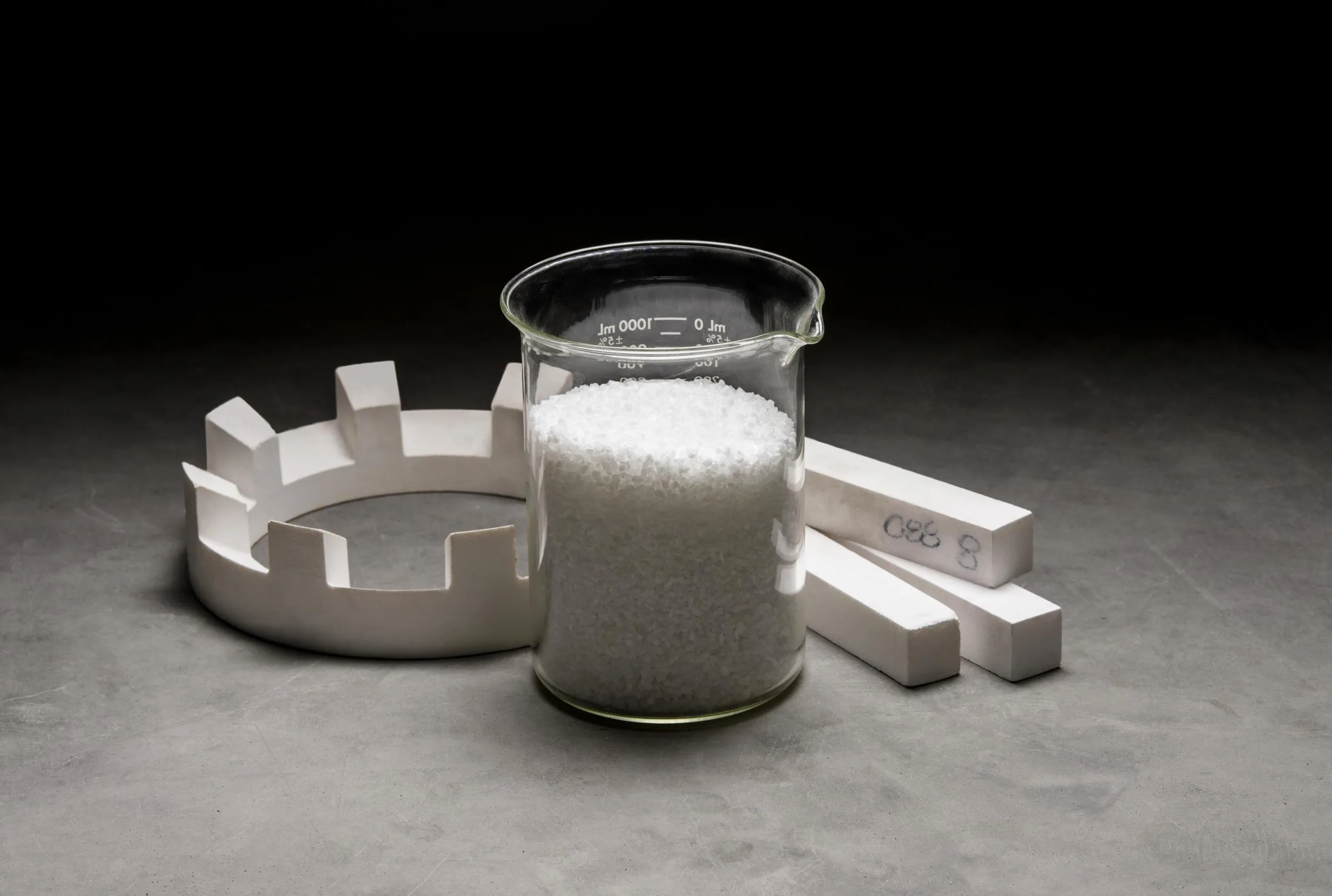
White alumina parts and alumina powder in a glass beaker

Particle size drifting
during the run?

Send the alloy, the atomizing process and the dimensions of your current nozzle. A Blasch engineer proposes the material and the assembly.

Talk to an engineer Call