Nozzles

FGD spray nozzles
that hold their spray in limestone slurry

Silicon carbide spray nozzles for desulfurization absorbers, gas cooling and reagent injection.

SO2 removal depends on the spray pattern in the absorber.
The pattern depends on an orifice that slurry wears every hour.

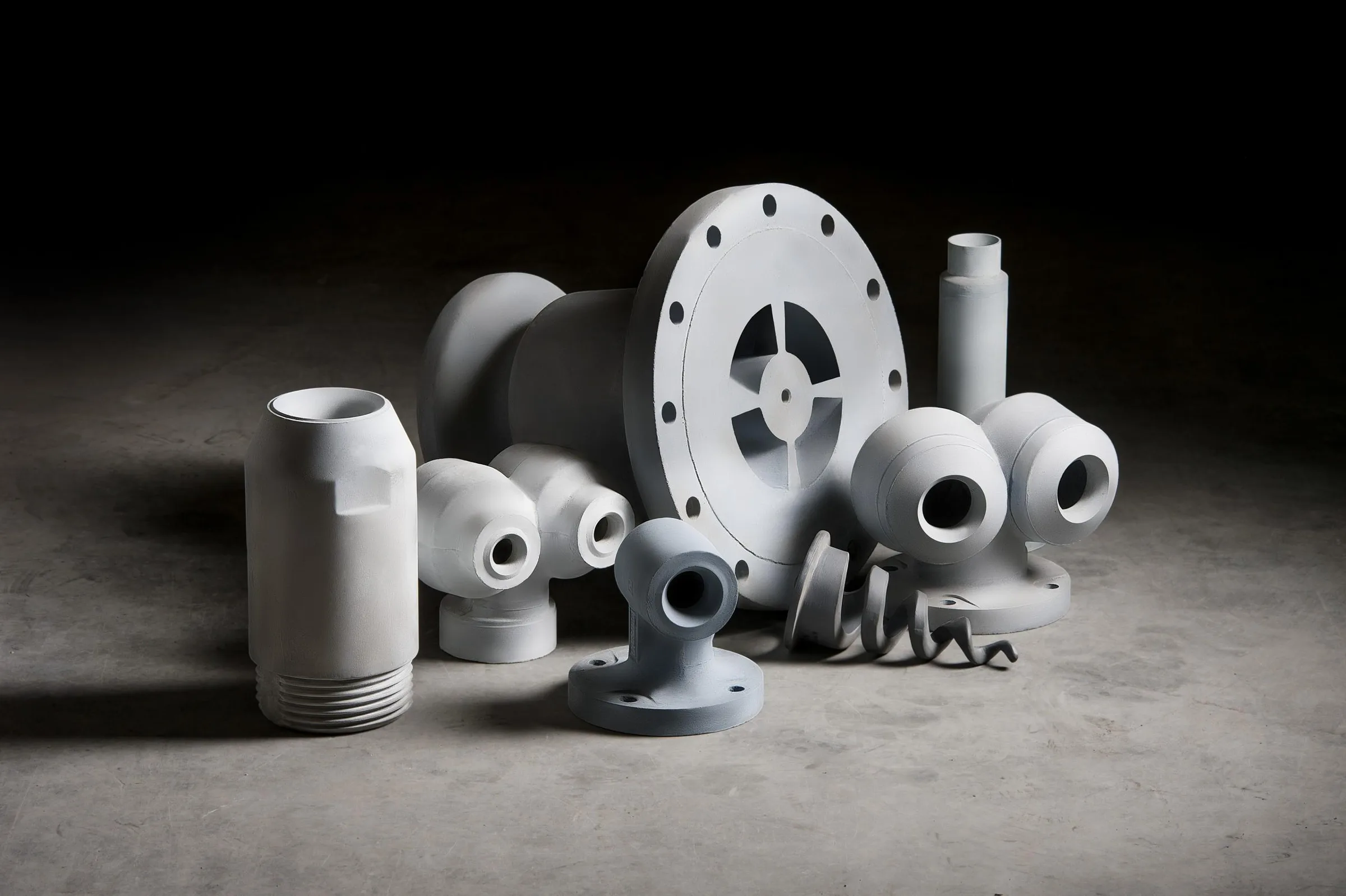
Cast ceramic spray nozzles, a spiral nozzle and a flanged fitting on a concrete floor
In short

FGD spray nozzles resist slurry erosion when the orifice and the swirl surfaces are cast from a dense, abrasion resistant silicon carbide, because limestone slurry wears softer materials until the spray angle and droplet size drift. Blasch casts FGD and ceramic spray nozzles in NITRON nitride bonded, OXYTRON oxide bonded and InVinCer reaction bonded silicon carbide, as spiral, tangential hollow cone and special designs. They come threaded, flanged or combined with a metal assembly to fit the existing spray headers.

Cast ceramic spray nozzles, a spiral nozzle and a flanged fitting on a concrete floor

Shapes the casting process allows

Spiral nozzles: the slurry leaves along a cast spiral that breaks it into concentric cone sheets, with an open path that resists plugging.

Tangential and hollow cone nozzles: the slurry enters a swirl chamber from the side and leaves as a hollow cone, with the inlet and chamber cast as one piece.

Special nozzles: internal vanes and complex bores are formed in the mold, not machined, so even small series keep the same geometry.

Threaded and flanged ends: threads and flanges are cast in, so the nozzle bolts or screws onto the header like the part it replaces.

Removal starts at the orifice

An FGD absorber removes SO2 only as well as its nozzles spread the slurry, so a worn orifice shows up in the stack readings before anyone sees it in the header.

How slurry wears a spray nozzle

Limestone slurry in a wet scrubber carries hard particles at high velocity through a small orifice. The wear concentrates where the flow is fastest: at the outlet edge, on the spiral and in the swirl chamber.

As the orifice grows, flow rises and pressure falls. Droplets get larger, the spray angle narrows and parts of the absorber cross section lose coverage. The result is lower SO2 removal at the same pump power, or more pump power for the same removal.

That is why FGD nozzles are often replaced on a fixed schedule. A material that wears more slowly stretches that interval and keeps the spray closer to its design until the next outage.

Silicon carbide grades for FGD spray nozzles

Grade Bond Strength in FGD service
NITRON nitride bonded silicon carbide abrasion resistance and toughness for spiral and cone nozzles
OXYTRON oxide bonded silicon carbide thermal shock resistance where hot gas meets the spray
InVinCer RB reaction bonded silicon carbide dense, very hard wear surfaces

The same nozzles run in gas cooling, NOx reduction, particulate removal and other injection duties, wherever an abrasive or corrosive liquid has to be sprayed into hot gas. Nitride bonded silicon carbide

Fitting the existing header

Blasch nozzles are cast to the connection of the nozzle in service, threaded, flanged or held in a metal assembly. A drawing is not required: the current nozzle or its dimensions and the spray data are enough.

Related parts for scrubbers and boilers

The absorber is not the only place in the flue gas path where slurry and ash wear steel.

Scrubber and cyclone linings

Ceramic linings for scrubber and cyclone sections that see the same abrasive flow.

Scrubber linings

Coal nozzle tips

Silicon carbide tips and linings for the burners of the boiler upstream of the absorber.

Coal nozzles

Erosion in cement plants

Precast abrasion resistant parts as an alternative to metal shapes and cast refractory in cement production.

Ceramic protection paper
Frequently asked

Questions about FGD spray nozzles

Why use silicon carbide for FGD nozzles?

Silicon carbide is far harder than the limestone particles in the slurry and resists the absorber chemistry, so the orifice keeps its size longer.

Can you match our current nozzle and spray angle?

Yes. The nozzle is cast to the geometry and connection of your current part. Send the nozzle or its dimensions and the spray data.

Do you make spiral and hollow cone nozzles?

Yes. Spiral and tangential hollow cone designs are cast with their internal shape in one piece.

Are the nozzles only for power plants?

No. They are used wherever gas is scrubbed, cooled or treated with an injected liquid, in power, cement and other heavy industries.

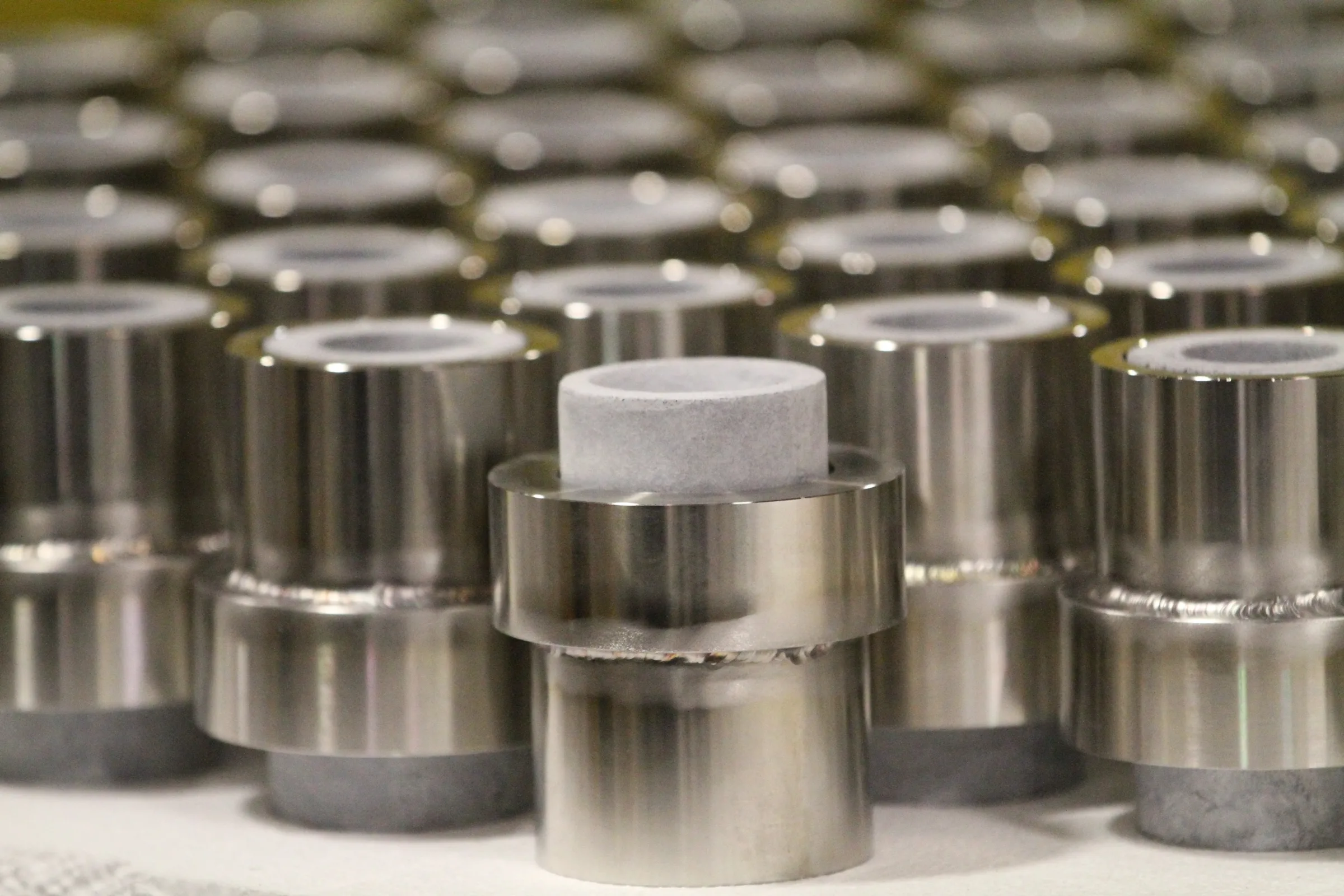
Ceramic nozzle inserts welded into polished steel sleeves

Replacing spray nozzles
every outage?

Send the nozzle type, its dimensions and the slurry conditions. A Blasch engineer proposes a grade and the connection.

Talk to an engineer Call