Technical Library

Hard choices:
selecting ceramics for abrasive FCC service

Why the hardest ceramic is not automatically the right one for an FCC regenerator air grid, from Hydrocarbon Engineering 2014.

Abrasion asks for hardness.
The regenerator also asks for thermal shock resistance.

Gray ceramic nozzles, one set in a steel sleeve, on a concrete floor
In short

This Hydrocarbon Engineering article by three Blasch engineers is about choosing materials for abrasive service in refineries. Its example is the air grid of the FCC regenerator, where metal nozzles erode and fully dense ceramics can crack. The authors argue for alumina bonded silicon carbide, cast to shape and fitted into a weldable ceramic and metal assembly, as the balance between wear resistance and resistance to thermal cycling.

About this paper

  • Publication: Hydrocarbon Engineering, December 2014
  • Authors: Tim Connors, Ted Collins and Jeffrey Bolebruch, Blasch Precision Ceramics
  • Topic: material selection for abrasive applications, FCC air grid nozzles
  • Full text: available on request; this summary draws on the article listing and on Blasch product information, the full text was not available to us

The hardest is not the best

A ceramic dense enough to shrug off catalyst can still fail the first time the regenerator trips, so the choice is a balance, not a ranking.

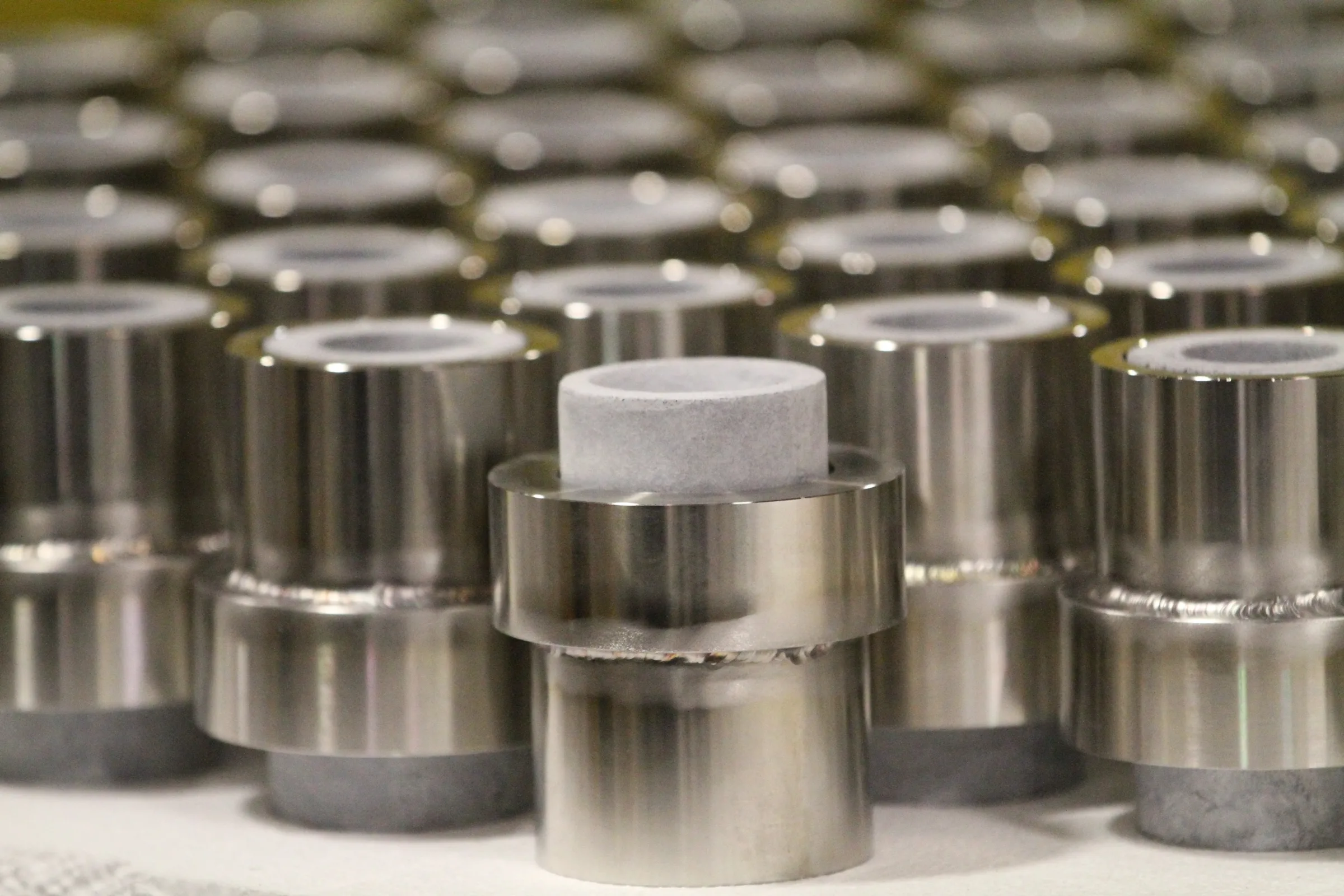
Ceramic nozzle inserts welded into polished steel sleeves

Where the air grid wears

The air distributor grid injects combustion air into the dense bed of spent catalyst. Its nozzles have controlled orifices and are traditionally made from alloys such as 304H or chromoly steel.

Over an FCC campaign of 5 to 20 years, hot abrasive catalyst and corrosive flue gas enlarge and distort the orifices, often into a keyhole profile. That jet then wears the neighboring nozzles, fluidization becomes uneven, and catalyst losses rise.

What the choice depends on

Abrasion resistance: the ceramic has to hold the orifice geometry for the whole campaign.

Thermal shock: fully dense ceramics can crack under the temperature swings of start-up, trips and shutdown. The bonding system and the microstructure decide how a silicon carbide behaves, not the name alone.

Attachment: ceramics cannot be welded to a steel grid. Blasch solves this with a metal and ceramic assembly that is welded in place of the existing steel nozzle.

The material in question is ALTRON, an alumina bonded silicon carbide. According to Blasch product information, ALTRON nozzle assemblies last two to five times longer than high alloy steel nozzles. The figure comes without a named plant or service period.

What this means for your FCC unit

If your air grid is inspected for orifice growth every turnaround, the nozzle material sets your campaign. The product sheet behind this choice is summarized on ALTRON air grid nozzles, and the unit as a whole on refining and chemical processing.

Frequently asked

Questions about this paper

Why not use the hardest ceramic available?

Fully dense ceramics can crack under thermal shock. The regenerator needs wear resistance and tolerance of temperature swings together.

Can ceramic nozzles go into an existing steel grid?

Yes. The ceramic sits in a metal assembly that is welded in where the steel nozzle was.

Which other FCC parts face the same choice?

Cyclone linings, catalyst line elbows and flue gas cooler ferrules see the same mix of abrasion and heat.

Ceramic nozzle inserts welded into polished steel sleeves

Orifices growing
in your air grid?

Send the nozzle type, the orifice size and the grid layout. A Blasch engineer checks the material and the weld assembly for your regenerator.

Talk to an engineer Call