Wear products

Micronizer liners:
one-piece silicon carbide for jet mills

Bowl liners, lids, nozzles and vortex finders for fluid energy mills, cast to fit the steam ring.

A drop-in liner without joints for the grinding chamber.
Cast so every new liner lines up with your nozzles.
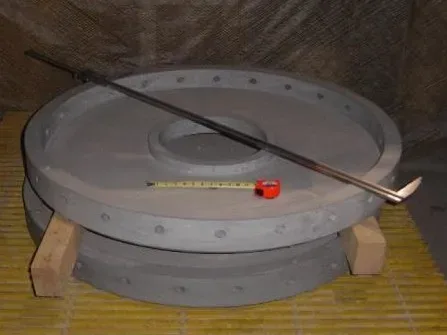
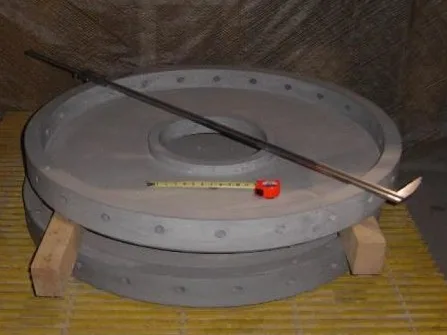
Large grey ceramic ring liner for a jet mill lying on a wooden pallet with a tape measure
In short

In jet mills and micronizers, one-piece silicon carbide liners outlast the stainless steel, thermal spray, weld overlay and tungsten carbide patches they replace, because they resist both the sliding abrasion of the spinning particles and the thermal shock of the steam. Blasch casts micronizer bowl liners, lids, feed and steam jet nozzles, vortex finders and wear rings in ALTRON, OXYTRON, NITRON and InVinCer RB. Each liner is made to fit the steam ring, so the steam and feed nozzles stay aligned.

Large ceramic micronizer ring liner with a tape measure for scale

How a micronizer wears its liner

A micronizer, or fluid energy mill, grinds by particle on particle impact. Coarse feed enters at high velocity and spins around the inside of the liner, driven by steam or air from the jet nozzles.

The particles hit each other and slide along the wall at the same time. As they get finer, often down to the micron range, they move toward the center and leave through the vortex finder.

The wall takes impact and sliding abrasion all the way around, and in steam mills it also has to cope with thermal shock. Titanium dioxide finishing is a typical example.

What the fit keeps

A liner that fits the steam ring exactly keeps every jet pointing where the mill was designed to grind, so the product stays on size until the next planned liner change.

Micronizer parts we cast

From the bowl to the nozzles, each part is cast in a silicon carbide grade chosen for its position in the mill.

Bowls and lids

One-piece liners for the grinding chamber, dropped in without joints or wear seams along the wall.

Feed and steam jet nozzles

Nozzles cast to the same tolerances as the liner, so the jets line up with the chamber every time.

Vortex finders and wear rings

The outlet at the center of the mill and the rings that protect the edges of the chamber.

Vortex finders and thimbles

From metal liners to ceramic

Micronizers often arrive from the manufacturer with stainless steel liners. As they wear, plants try thermal spray, weld overlay or tungsten carbide wear patches. Each of these works to a degree, and in severe service a ceramic liner is the step after.

A one-piece ceramic liner removes the joints where wear starts. Premature cracking from thermal shock is reduced with the choice of grade and with design details, so the replacement can be scheduled instead of forced by a failure.

The grades are ALTRON (alumina bonded silicon carbide), OXYTRON (oxide bonded), NITRON (nitride bonded) and InVinCer RB (reaction bonded). The range for micronizers also includes the oxide bonded grade OXYTRON 015XDII.

Hot tickle piping and its valves in titanium dioxide plants wear in the same way, see ceramic valve components. More parts for this industry are on heavy industrial processing, the full range on wear products.

Frequently asked

Questions about micronizer liners

Will a ceramic liner fit our existing mill?

Yes. It is cast to the dimensions of your bowl and steam ring, and the repeatable process means the next liner fits the same way as the first.

Does a ceramic liner crack from the steam?

Thermal shock is a known risk in steam mills. Grade and design are chosen to keep it low, which is why the liner is designed for your mill rather than taken from a catalogue.

Can you supply only the nozzles?

Yes. Feed nozzles, steam jet nozzles, vortex finders and wear rings are available as single parts.

Patching your micronizer
between campaigns?

Send the mill size, the material you grind and how the current liner fails. A Blasch engineer designs a one-piece liner for that mill.

Talk to an engineer Call