Self-supporting ceramic structures

Thermal storage media:
alumina balls that hold heat and carry catalyst

Ceramic balls and shapes for regenerative heat storage and for catalyst bed support in syngas plants.

A packed bed of ceramic balls takes heat from one gas stream
and gives it back to the next.

Ceramic thermal storage media balls
In short

Regenerative systems store heat in packed beds of ceramic media, most often alumina balls, because alumina combines a high heat capacity with good thermal conductivity, mechanical strength and thermal shock resistance. Hot gas flows through the bed and heats the balls; when the flow reverses, the bed heats the incoming air or gas. Blasch supplies alumina storage media for regenerative heat accumulators and air separation units, and inert alumina support balls for catalyst beds in syngas plants, in diameters from 3 to 100 mm.

How a ceramic storage bed works

Heat is stored as sensible heat: the media get hotter, without melting or changing phase. A bed of balls gives a large surface for heat exchange and leaves open space for the gas to pass.

The cycle repeats: hot exhaust gas charges the bed, then cold combustion air or process gas flows through in the other direction and leaves preheated. How much heat the bed holds depends on the mass and heat capacity of the media, how fast it takes up and releases heat depends on their surface and conductivity.

Because the media see a temperature swing at every cycle, thermal shock resistance and strength decide how long a bed lasts before balls crack and the pressure drop rises.

What the bed has to survive

A storage bed does its work by heating up and cooling down again and again, so the right media is the one that survives the cycle, not just the one that holds the most heat.

Three jobs for ceramic media

The same alumina chemistry serves three different applications.

Thermal power storage

Packed beds of alumina media store heat from solar or other sources and release it when it is needed, for example off-peak.

Regenerative heat accumulators

Steel mills use storage packing to preheat combustion air and fuel gas, so furnaces reach flame temperature for billet reheating. Air separation units use it as well.

Catalyst bed support

Inert balls carry the catalyst and spread the flow in secondary reformers, shift converters, desulfurizers, dryers and adsorbent units.

Low silica for secondary reformers

In the secondary reformer of an ammonia plant, support media sit in hot gas with a high steam partial pressure. Silica can leach out of the media under those conditions, deposit downstream and foul the catalyst bed. The BB99 grade is made of at least 99% alpha alumina with very low silica for this service. More on Blasch work for hydrogen and ammonia plants and on alumina.

Grades, sizes and packing

  • Grades by alumina content: BBR65, BB65, BB70, BB75, BB85 and BB99
  • Spheres from 3 mm to 100 mm diameter, plus cubic and cuboid shapes
  • Custom sizes made to process and equipment requirements
  • Delivered in one metric ton supersacks on pallets, or in crates

The media have a smooth surface, high mechanical strength, good thermal conductivity and heat capacity, and good thermal shock resistance.

Related parts

Thermal storage media belong to the group of self-supporting ceramic structures and ceramics that work inside hot gas. Where a furnace needs a stable wall rather than a packed bed, see the HexWall checkerwall.

Frequently asked

Questions about thermal storage media

Why alumina for storage media?

Alumina combines high heat capacity and thermal conductivity with mechanical strength and thermal shock resistance, which a bed needs for thousands of heating and cooling cycles.

What sizes are available?

Spheres from 3 to 100 mm diameter are standard, plus cubic and cuboid shapes. Other sizes are made to order.

What is the difference between storage media and support media?

Storage media hold and release heat in a regenerative system. Support media are inert balls that carry a catalyst bed and spread the gas flow through it.

Which grade for a secondary reformer?

BB99, with at least 99% alpha alumina and very low silica, because silica leaching would foul the catalyst downstream.

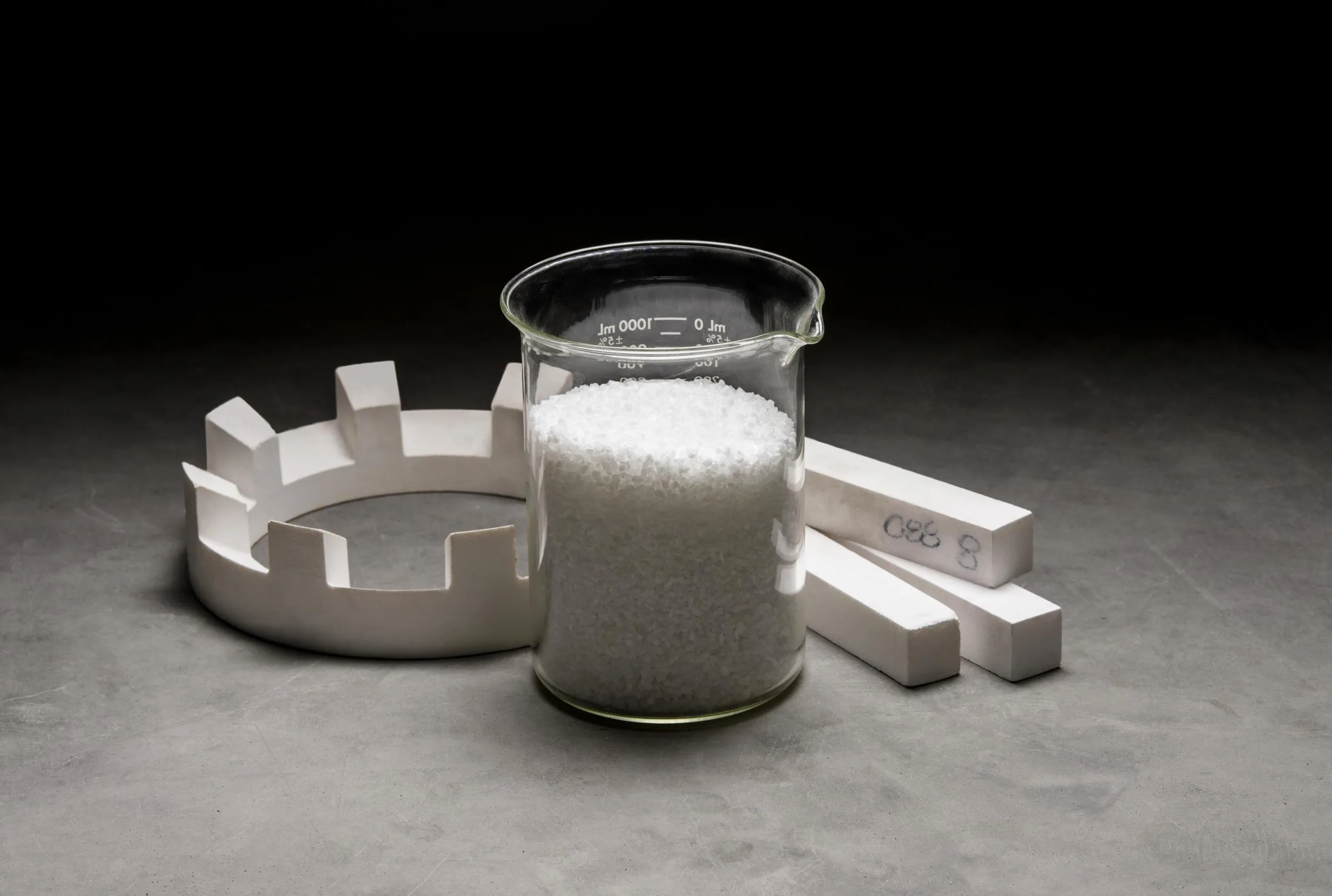
White alumina parts and a glass beaker of alumina granules

Sizing a storage bed
or a catalyst support?

Send the vessel, the temperatures and the current media. A Blasch engineer proposes grade and ball size.

Talk to an engineer Call