Technical Library

Partners in protection:
ceramic liners for parts that erode

Erosion cannot be stopped everywhere in a power plant, but the parts that wear fastest can be lined or fitted with ceramic.

You cannot protect every surface from erosion.
You can protect the ones that fail first.

End view of a ceramic lined elbow showing the liner inside the flange
In short

This Blasch article starts from a simple observation: erosion is everywhere, in streams, shorelines, roads, hillsides and power plants, and it is not practical to protect every surface from it. In a power plant the useful approach is to find the few parts that erode fastest and protect those, often by lining existing steel equipment with ceramic rather than replacing it with heavier steel.

About this paper

  • Publisher: Blasch Precision Ceramics
  • Topic: erosion protection for power plant equipment
  • Full text: available on request; the full article was not available to us, so this page uses the published summary and a published Blasch case study

Protect, do not replace

A steel part that erodes every few months is not a spare parts problem, it is a sign that the surface needs a different material on the inside.

Looking down the smooth bore of a ceramic lined pipe

Where protection pays

The fastest wear in a power plant sits where flow changes direction or speeds up: elbows in pneumatic ash and coal conveying, the tube inlets of air heaters, the cones of dust collectors, and the nozzles of coal burners and fluidized beds.

At these points a ceramic liner or insert takes the wear, and the steel around it keeps carrying pressure and load.

A published case: ash conveying

A power plant in Central America burns coal and bagasse. In its pneumatic ash conveying line, at 60 to 70 °C in continuous operation, a steel 90 degree elbow had to be replaced every 3 to 4 months. In March 2023 it was replaced by a CeraLine elbow with a 100 mm bore and a 20.7 mm ceramic liner. After 30 months, wear at the most loaded point was about 2 mm, and the bore was unchanged. That is more than eight times the service life of the steel elbow, and the liner is still in service. The full case is under CeraLine in bagasse boiler ash conveying.

How the liner is built

The ceramic lined elbow is a one piece cast ceramic liner with a smooth bore and constant wall, mortared or bonded into a steel body. It arrives as a complete part with flanges and goes in like the steel elbow it replaces.

What this means for your plant

Rank your wear parts by replacement interval. The two or three at the top are where ceramic protection pays first. The wider material question is covered in Ceramics Win the War on Erosion, and the plant view on power generation.

Frequently asked

Questions about this paper

Is a ceramic lined elbow heavier than a steel one?

The steel body stays, and the liner adds wall on the inside. Where the bore must stay the same, the steel pipe is sized up and adapted with a special flange or reducer.

How long does a lined elbow last?

It depends on medium, speed and angle. In the published ash conveying case, more than eight times the steel elbow, after 30 months and still in service.

Is this a coating?

No. The liner is a solid cast ceramic part, 20.7 mm thick in the case above.

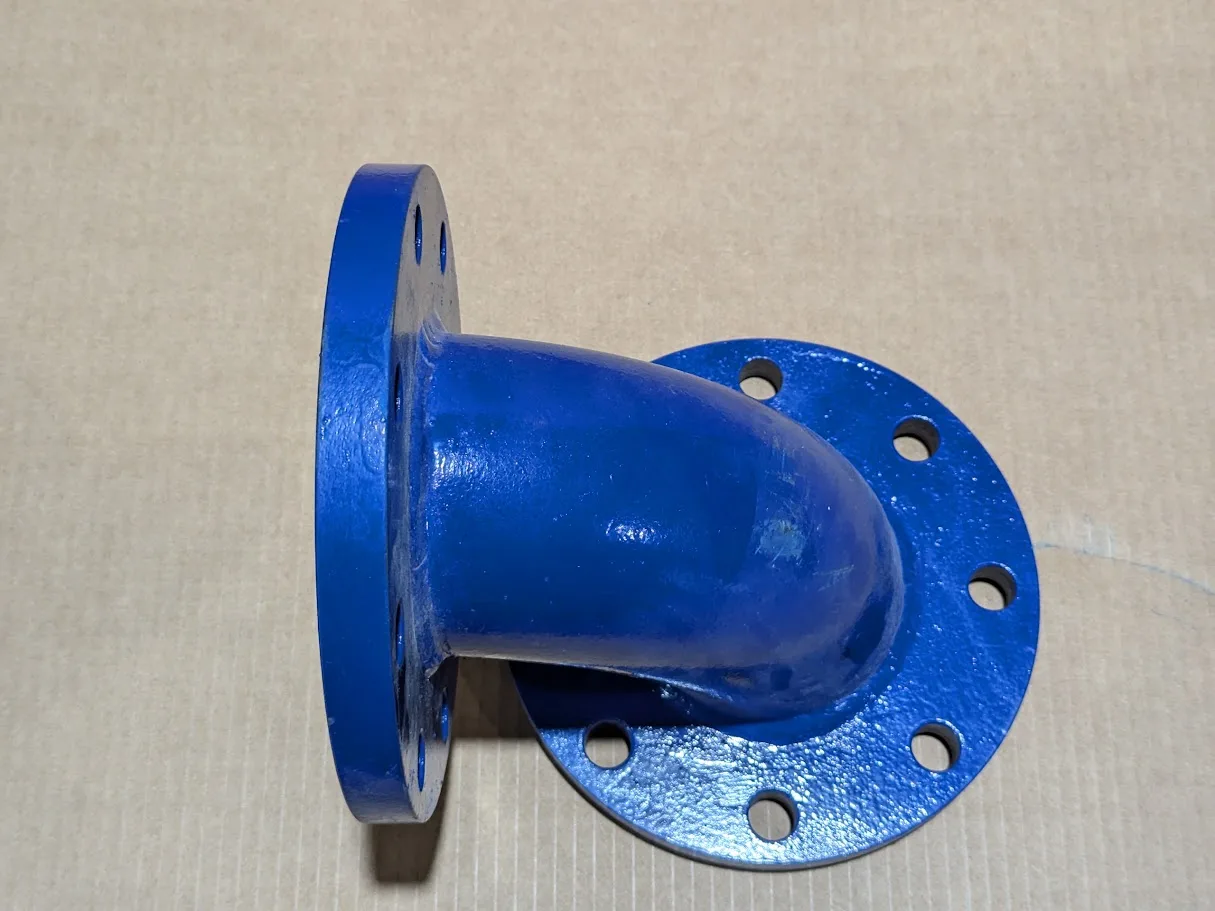
Flanged short radius elbow with a blue painted steel body

An elbow you replace
every few months?

Send the pipe size, the angle, the medium and today's replacement interval. A Blasch engineer proposes the liner.

Talk to an engineer Call