Engineering

Large ceramic parts
and complex shapes in one piece

Cast ceramic components up to 2 tons, one piece liners up to 60 in, and interlocking systems for whole structures.

Most technical ceramics stop at the size of a hand.
Blasch casts parts you lift with a crane.
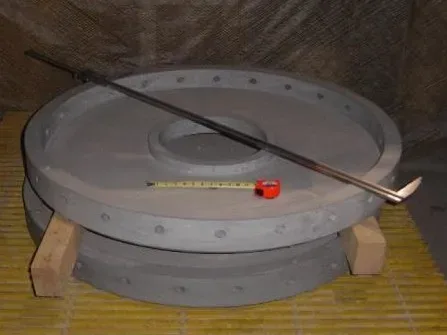
Large ceramic micronizer ring with bolt holes on a pallet
In short

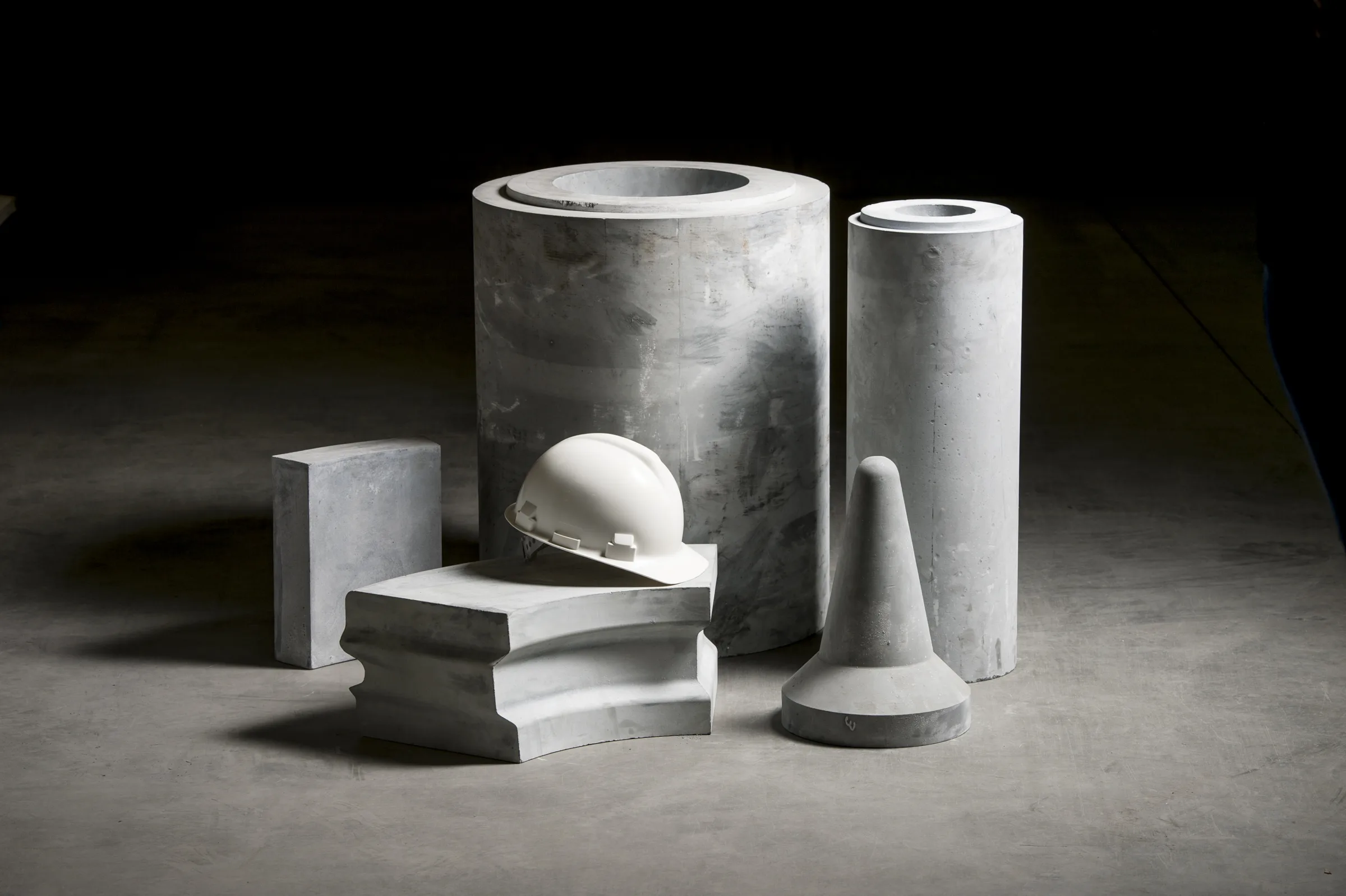
Blasch manufactures large ceramic parts up to about 2 tons and complex shapes that are hard or impossible to machine, cast near net shape in Albany, New York. Examples are one piece hydrocyclone liners up to 60 in diameter, lined pipe spools up to 7 ft long, micronizer rings, quench vessels and impingement blocks in nitride bonded silicon carbide. Where a structure is too large or too stressed for one piece, Blasch designs it as interlocking precast blocks that are set dry on site.

Impingement block and lining shapes in ceramic

What large and complex means

Large means part weights up to about 2 tons and wall thickness up to 6 in. Complex means threads, bends, tapers, internal channels and walls that change thickness, all cast in rather than machined.

Hydrocyclone cones, apexes and inlet scrolls are cast as one piece from 1 in to 60 in diameter. Lined pipe and spool liners reach 7 ft in length and 3 ft in diameter with walls up to 8 in.

For hydrometallurgy and pet coke service, flash pots, quench vessels, vent blast shrouds and impingement blocks are cast in nitride bonded silicon carbide at sizes conventional ceramic forming does not reach.

One piece or many pieces

The question for a large ceramic part is not only whether it can be cast in one piece, but whether it should be, because beyond a certain size thermal stress, not wear, decides how long it lasts.

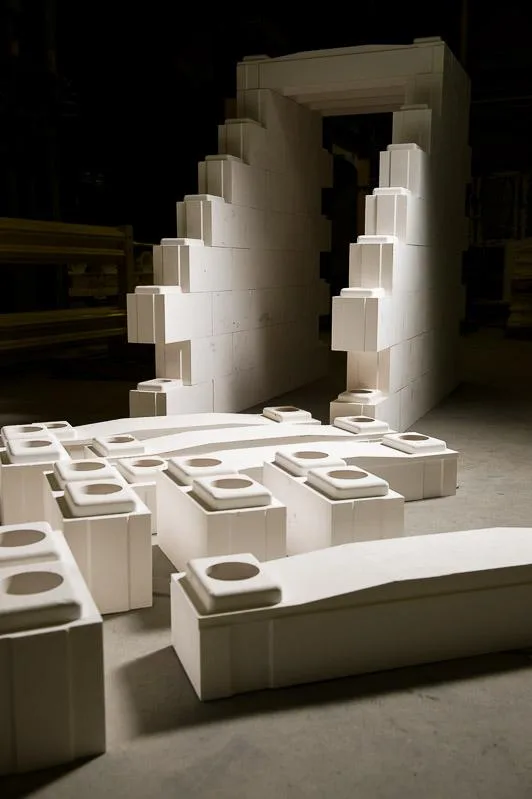
Stacked precast ceramic blocks forming an opening

When to segment a large structure

A monolithic structure heats unevenly, and the stress from a small temperature difference can be far larger than its own weight. In a published finite element analysis of a reformer tunnel lid at 1,900 °F, a top to bottom difference of 10 °F caused 1,500 psi, against about 10 psi from the lid's own weight.

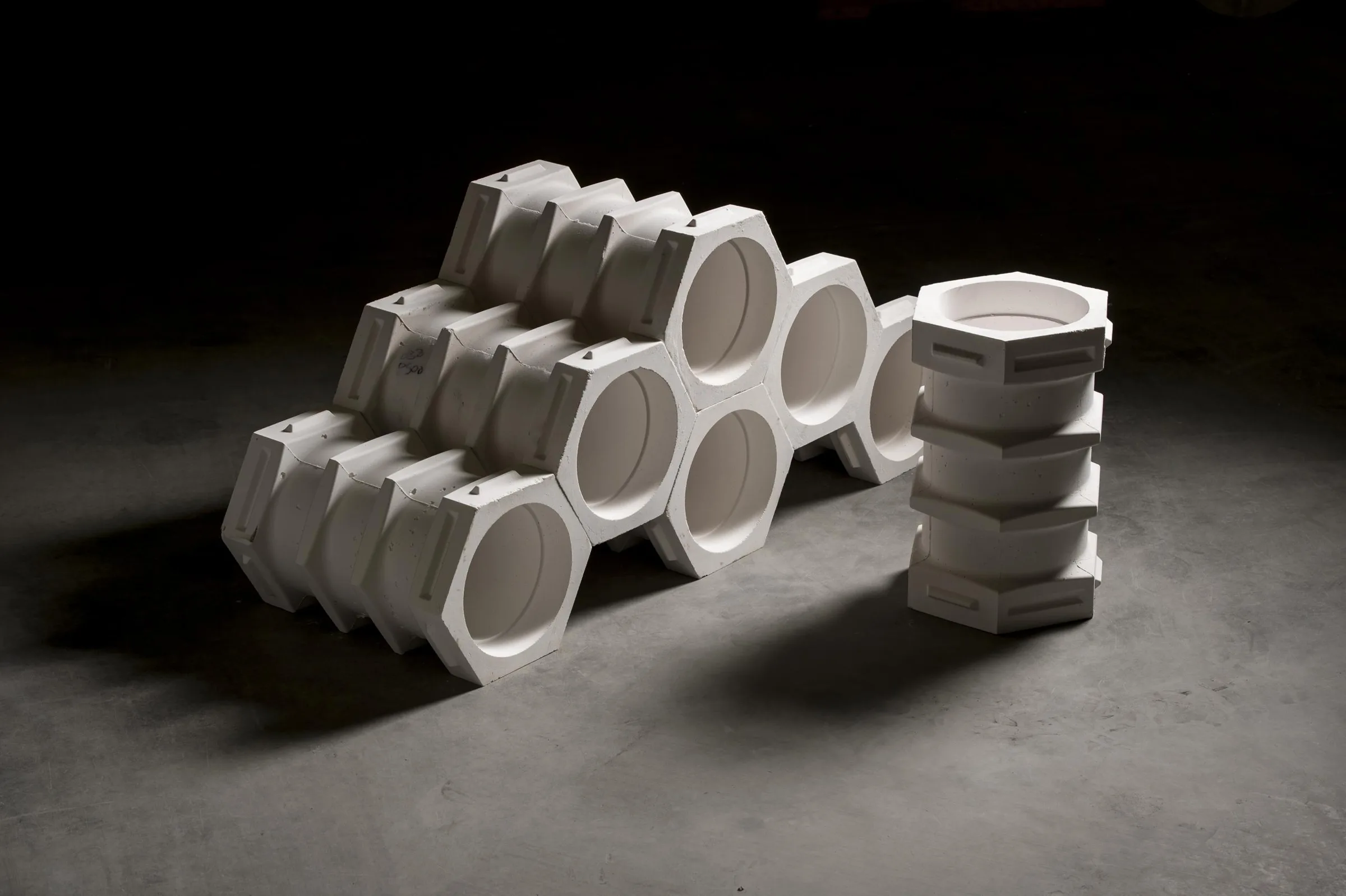
So large structures are often better built from interlocking shapes with designed expansion gaps. StaBlox flue gas tunnels, HexWall checkerwalls and the InterLok crucible lining all work this way.

Each block stays light enough to handle. A StaBlox wall block, 18 by 9 in, replaces about six bricks and weighs under 50 lb.

Assemblies, not just parts

Large components often arrive as assemblies: ceramic mortared into fired subassemblies, or fitted into a steel, alloy or titanium shell and bonded or bolted. CeraLine elbows and spools, for example, come as a cast ceramic sleeve set into a flanged steel body, ready to bolt in.

Blasch also takes assemblies apart and rebuilds them, which matters for parts that are relined rather than replaced.

Where large shapes are used

Reformer floors and Claus furnace checkerwalls in refining and chemical plants. Cyclone liners and autoclave linings in mining. Crucible linings for furnaces up to 15,000 lb in melt shops. Micronizer rings and reactor linings in titanium dioxide and pet coke plants.

How a large part is engineered

The design starts from the dimensions of the existing part and the loads it sees: weight, temperature gradients, abrasion and the way it is lifted and installed. Stress and heat transfer are checked with FEA and CFD before the mold is made. CFD, FEA and in-house testing

Frequently asked

Questions about large ceramic parts

What is the largest part Blasch can make?

Single castings reach about 2 tons. Larger structures are designed as interlocking blocks or as assemblies of several castings.

Are large ceramic parts more likely to crack?

They see higher thermal stress, which is why large parts are designed with the temperature profile in mind, and segmented where one piece would be overstressed.

Can Blasch make one large part, or only series?

Both. Orders range from a single part to about a thousand, and large one-off parts are made with the same process as small series parts.

Interlocking hexagonal ceramic checkerwall blocks

A part too large
for your current supplier?

Tell us how big it is and what it has to withstand. A Blasch engineer tells you whether it is cast in one piece or as a system.

Talk to an engineer Call