Engineering

CFD, FEA and refractory testing
before a part is cast

How Blasch checks flow, heat and stress in the design, and tests the ceramic for thermal shock, abrasion, creep and corrosion.

A ceramic part that fails in the furnace is an expensive test.
So the testing happens before it is cast.

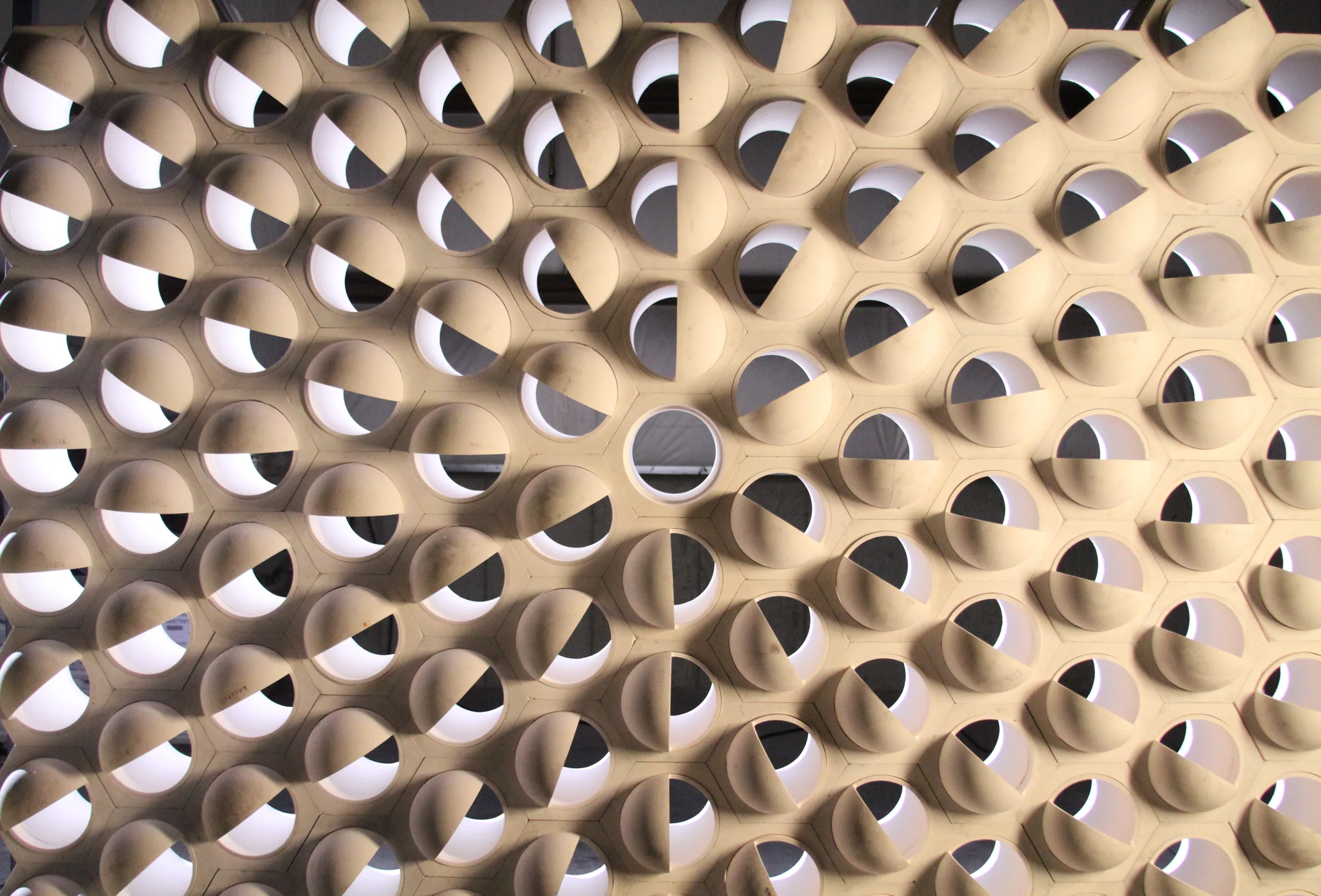
Close view of angled tiles set into a ceramic checkerwall
In short

Refractory testing at Blasch checks the ceramic itself: thermal shock, abrasion to ASTM C704, acid resistance, creep, cup brick corrosion, strength, flame resistance and particle size, in the company's own lab. Modeling checks the design: CFD for gas flow, mixing and heat transfer, and FEA for stress and strain under the temperature profile the part will see. Together they answer two questions before a mold is made: will this material survive the duty, and will this shape do what the process needs?

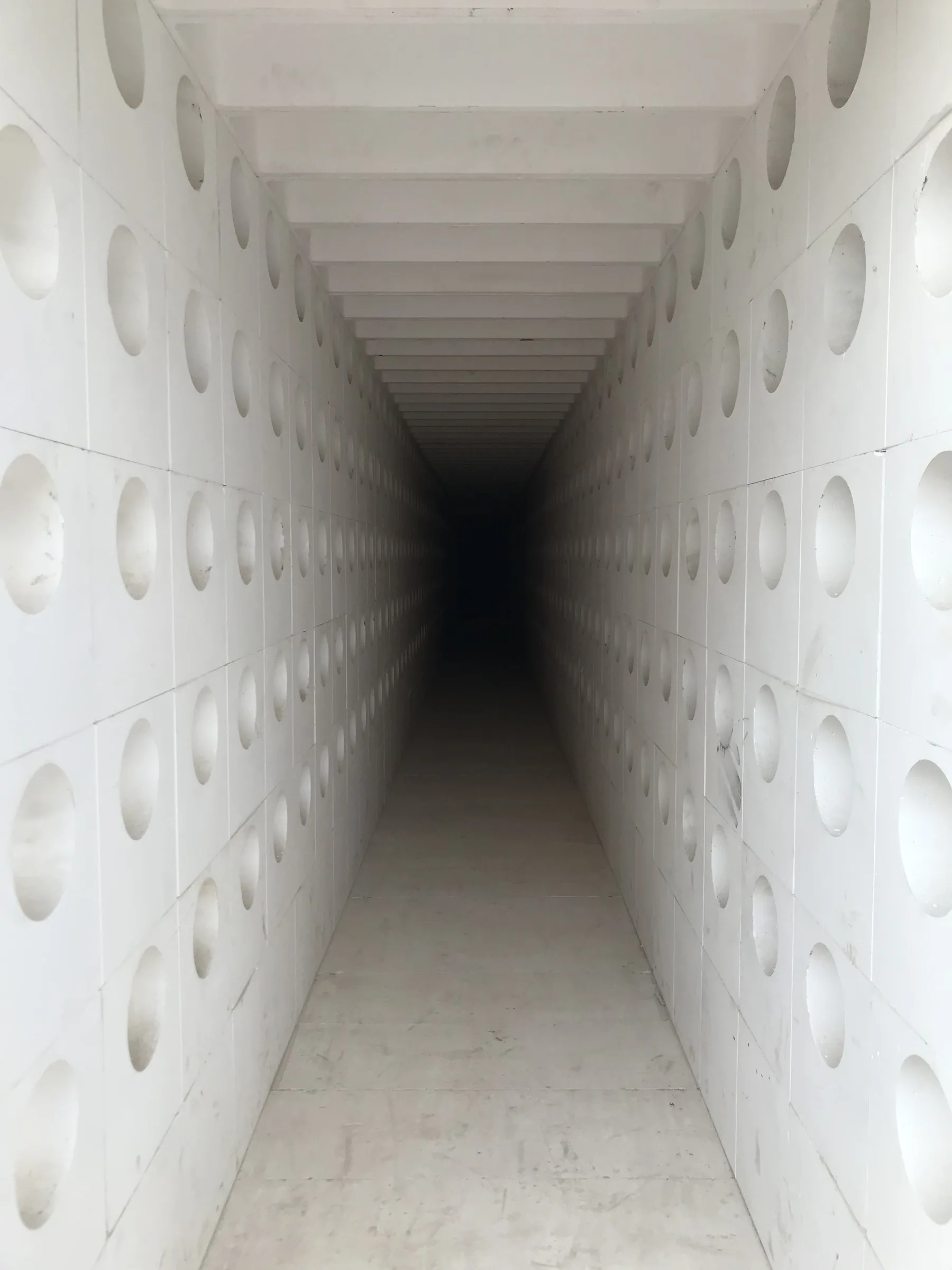
Inside a finished precast flue gas tunnel with rows of round side openings

Flow modeling with CFD

Many Blasch parts exist to change a flow: tunnels that draw flue gas evenly, checkerwalls that mix gas, ferrules that guide it into boiler tubes.

In a published CFD comparison for a Claus reaction furnace, 22.5% of the flow did not reach the residence time needed for ammonia destruction above 1,250 °C with a choke ring. With a VectorWall mixing checkerwall, the whole flow from zone 1 did, and the pressure drop was about 900 Pa lower.

For StaBlox tunnels, the orifice size of every opening comes from a furnace model developed with BD Energy Systems.

Where cracks start

Most ceramic parts in hot service do not fail from heat alone but from uneven heat, and that is something a model can see long before a crack can.

Precast tunnel wall being built block by block in a furnace

Stress analysis with FEA

Finite element analysis shows where a shape will be stressed by its own weight, by the load above it and by temperature differences across it.

Thermal stress usually dominates. In a published FEA of a brick tunnel wall, the mortared wall reached stresses above the hot strength of the mortar, while the same wall built from individual dry set blocks stayed below 4.5 bar.

That is why Blasch designs large structures with expansion gaps and hollow sections, and why the shape is changed before the material is. Designing large and complex shapes

In-house testing

Test What it tells you
Thermal shock How the ceramic survives fast heating and cooling
Abrasion, ASTM C704 Volume lost under a standard particle blast
Acid testing Resistance to acid gas and condensate
Creep resistance Deformation under load at temperature
Cup brick corrosion Attack by slag, melt or alkali
Strength Modulus of rupture, cold and hot
Flame resistance Behavior in direct flame
Particle analysis Size distribution of raw materials

Every production batch is also checked for strength, thermal shock behavior and dimensions.

Testing a shape, not just a material

Some tests are about geometry. In a laboratory test with air at room temperature, a ferrule with sharp edged inlet and outlet caused more than 35% more total pressure drop than one with a tapered inlet and chamfered outlet. That is why Blasch hex head ferrules carry a profiled inlet.

Published values

For the mullite bonded high alumina used in StaBlox, published creep tests show 1.11% deflection at 1,649 °C, against 7.86% for super duty firebrick tested at only 1,427 °C.

Frequently asked

Questions about refractory testing

What is refractory testing?

Measuring how a refractory or ceramic material behaves under the conditions it will see: heat, thermal shock, abrasion, chemical attack and load at temperature. Standard methods such as ASTM C704 make results comparable.

Can Blasch test a material from my plant?

Ask your Blasch engineer. Comparative tests of an existing part or material against a proposed grade are part of many projects.

Does Blasch model my whole furnace or unit?

Blasch models the flow and stress around its components. Where a licensor or EPC holds the process model, Blasch works with them and their data.

Which software does Blasch use?

SolidWorks for design, with flow modeling and finite element analysis for flow, heat transfer and stress.

Full checkerwall with angled openings

Want to know why
your part cracks?

Send the part, the conditions and a photo of the failure. A Blasch engineer looks at the heat, the flow and the material.

Talk to an engineer Call