Videos

Thermal shock test:
why stiff ceramics crack and how to keep them whole

A short video on thermal shock, the sudden temperature change that cracks stiff and brittle materials.

Heat a ceramic slowly and it expands.
Heat or cool it suddenly and it may crack.

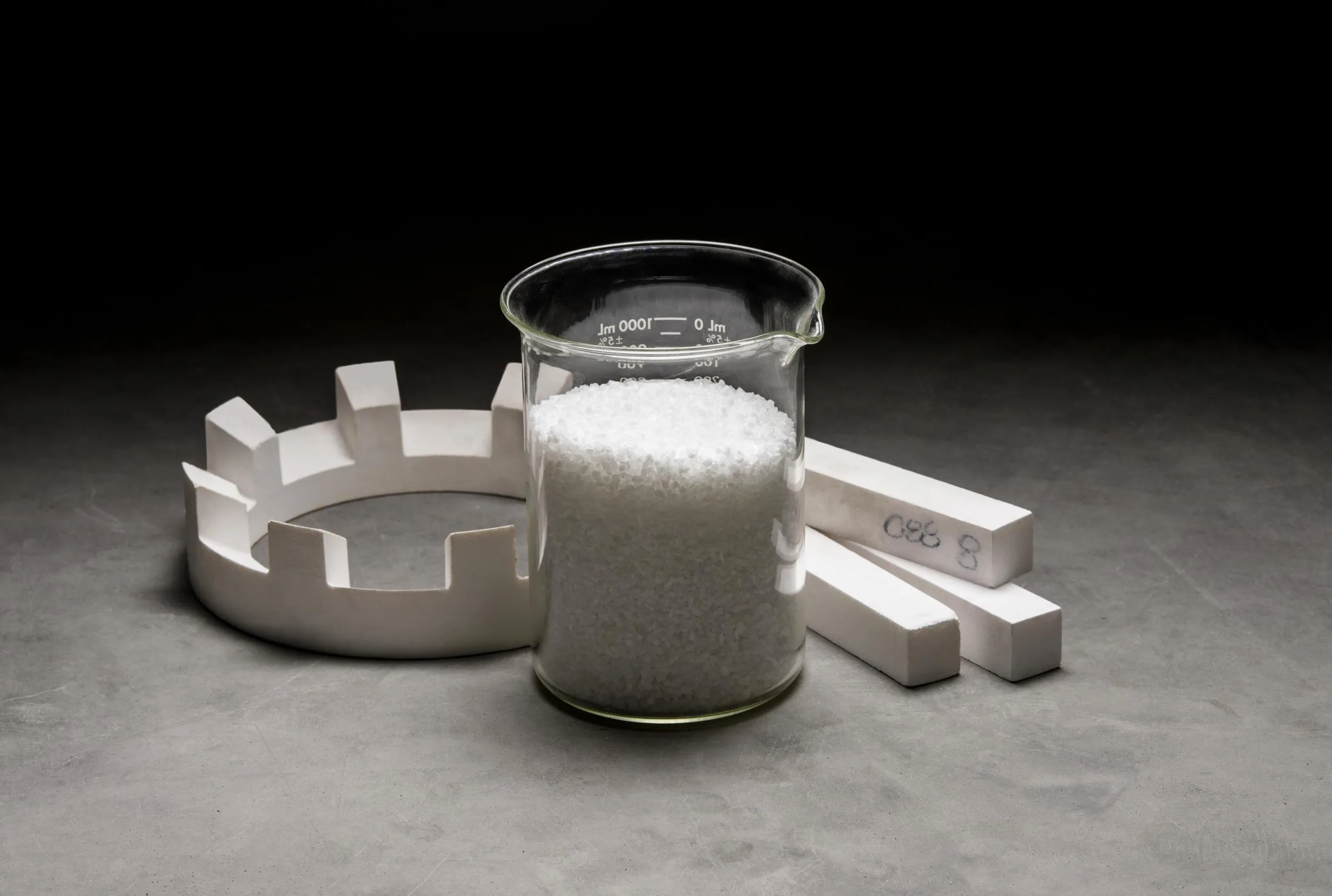
White alumina parts and alumina powder in a glass beaker
In short

Thermal shock is the cracking of a material when its surface heats or cools much faster than its interior, so that the two parts try to expand by different amounts. Stiff and brittle materials, which includes most dense ceramics, are the most prone to it. The Blasch video shows a thermal shock test of Blasch ceramics and explains why the structure of the cast part matters as much as its composition.

What the video shows

Ceramic parts are brought to temperature and then exposed to a sudden change, the way a furnace part sees it at a trip, a restart or when cold air or liquid reaches a hot surface. The video then compares the condition of the parts after the shock.

Why some ceramics crack and others do not

When the surface cools faster than the core, it tries to shrink while the core holds it back. The stress that builds up depends on how much the material expands with heat, how stiff it is and how quickly heat moves through it. A stiff, brittle part cannot give way, so the stress goes straight into a crack.

Blasch improves thermal shock resistance through the structure of the part rather than only the choice of grade:

  • engineered particle packing, so the grains support each other evenly through the part
  • a binder system of its own, set by freezing rather than burned out, which leaves very little shrinkage
  • a continuous network of fine, interconnected pores, a few microns across, that stops a crack from running through the whole part

How it is tested

Thermal shock is one of the tests Blasch runs in its own laboratory in Albany, alongside strength, abrasion, acid resistance, creep, corrosion and flame resistance. Every batch is checked for strength, thermal shock and dimensions.

Structure before chemistry

Two parts with the same composition can behave completely differently in a thermal shock, because what decides it is how the grains and pores are arranged, and that is set when the part is cast.

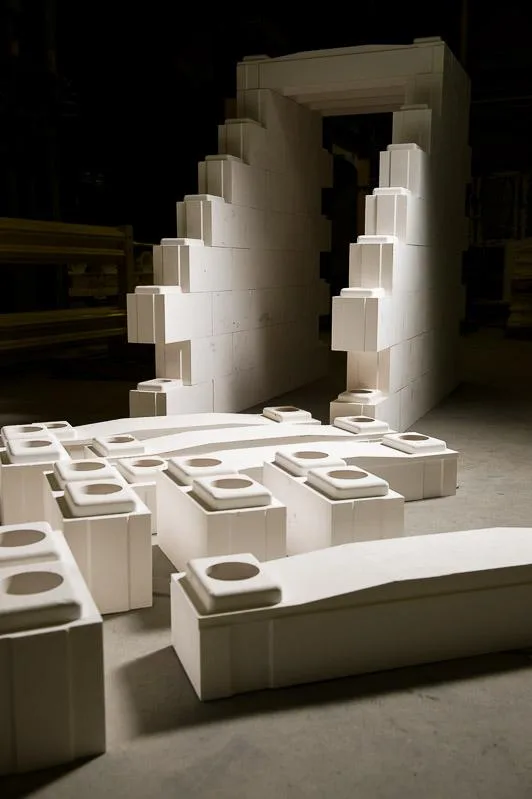
Interlocking white ceramic blocks with a doorway shaped wall behind them

What you take away

If a ceramic part in your plant cracks at trips or restarts while its material data look fine, thermal shock is the likely cause. Ask for the thermal shock behavior of the actual cast part, not only the data sheet of the grade.

How Blasch tests and models parts is described on the page for CFD, FEA and in-house testing, and the casting method on the page for the Blasch net shape forming process. The materials themselves are listed under engineered ceramic materials, and a test on ferrules is shown in the ultra high alumina thermal test.

Frequently asked

Questions about thermal shock

What is thermal shock?

Cracking caused by a sudden temperature change, when the surface and the interior of a part expand or contract by different amounts at the same time.

Which ceramics are most prone?

Stiff, brittle and dense materials. Their structure cannot absorb the stress between a hot core and a cooled surface, so it releases as a crack.

Can thermal shock resistance be improved?

Yes, through the structure of the part: particle packing, the binder system and a network of fine interconnected pores all reduce the risk of a through crack.

White alumina parts and alumina powder in a glass beaker

Parts cracking
at every trip?

Describe the part, the temperatures and how fast they change. A Blasch engineer suggests a grade and a shape.

Talk to an engineer Call