Videos

Ultra high alumina ferrules
in a thermal shock test

A short test video on how ultra high alumina ferrules take a sudden temperature change.

A waste heat boiler trips, the gas side stays hot, the water side does not.
This test shows what the ferrule goes through.

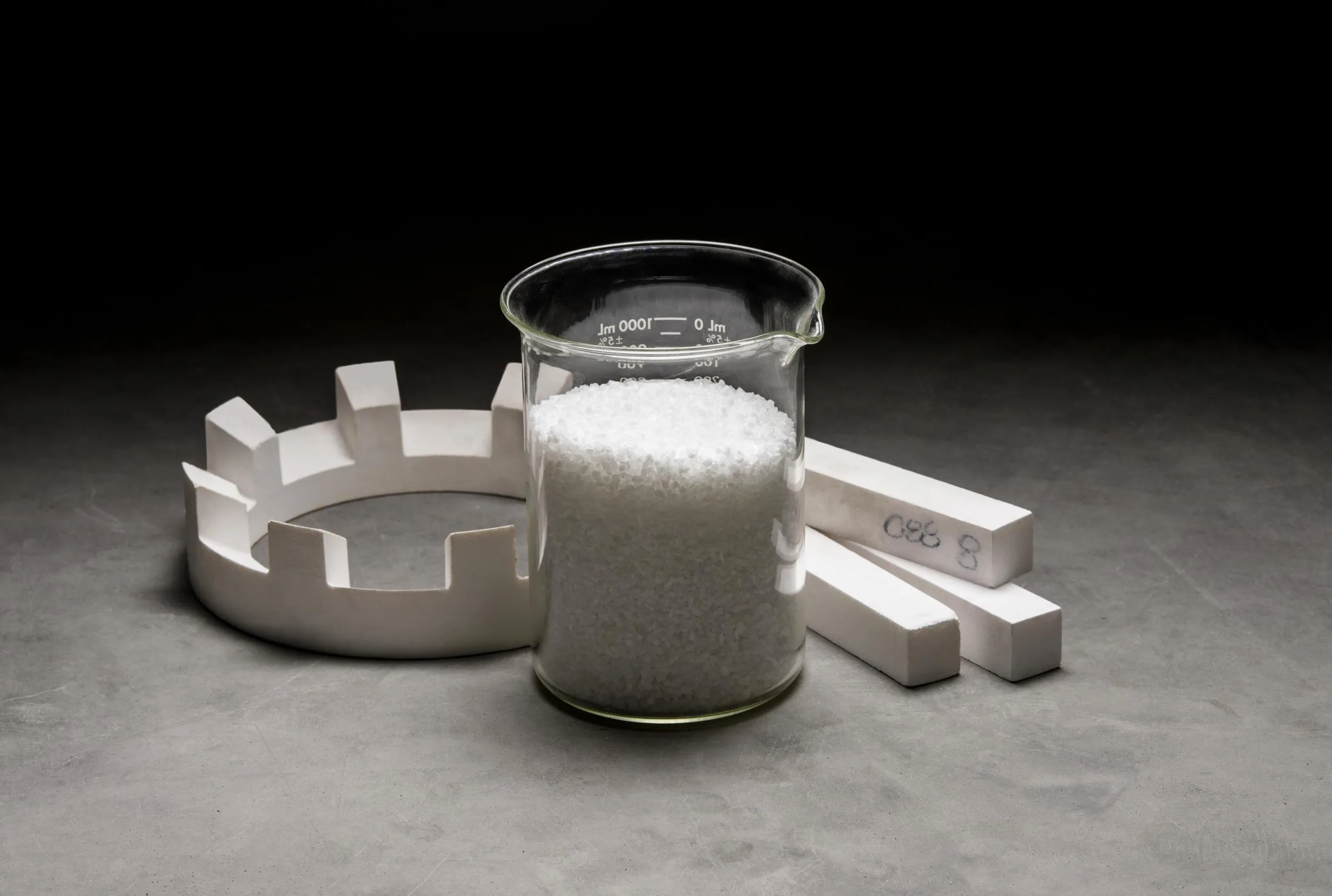
White alumina parts and alumina powder in a glass beaker
In short

The ultra high alumina thermal test shows Blasch ferrules made of 99.7% alumina going through a sudden temperature change, the load a ferrule sees at every start, stop and trip of a waste heat boiler. Dense, high purity alumina is chosen for its resistance to hot, corrosive process gas, and the test is there to show that the Blasch grade also survives thermal shock, the property that pure alumina is usually weakest in.

What the video shows

Ultra high alumina ferrules are heated and then exposed to a rapid change in temperature, and the camera shows the parts after the shock. The point of the test is simple: a ferrule that cracks under thermal shock lets hot gas reach the tube inlet and the tubesheet behind it.

Why purity and thermal shock pull in different directions

High alumina content gives a ferrule its resistance to corrosion and its high service temperature, which matters in sulfur recovery, sulfuric acid and other boilers that run near 3,000 °F with oxygen enrichment. But dense, stiff ceramics are prone to crack when the surface heats or cools faster than the core.

The Blasch process addresses that with three things: engineered particle packing, a binder system of its own, and a continuous network of fine, interconnected pores. That structure lets a crack start without running through the part, and it is cast to shape without the shrinkage of a burned out binder.

The property that breaks

Most alumina parts are chosen for what the gas does to them over years, but they fail in the few seconds when the temperature jumps.

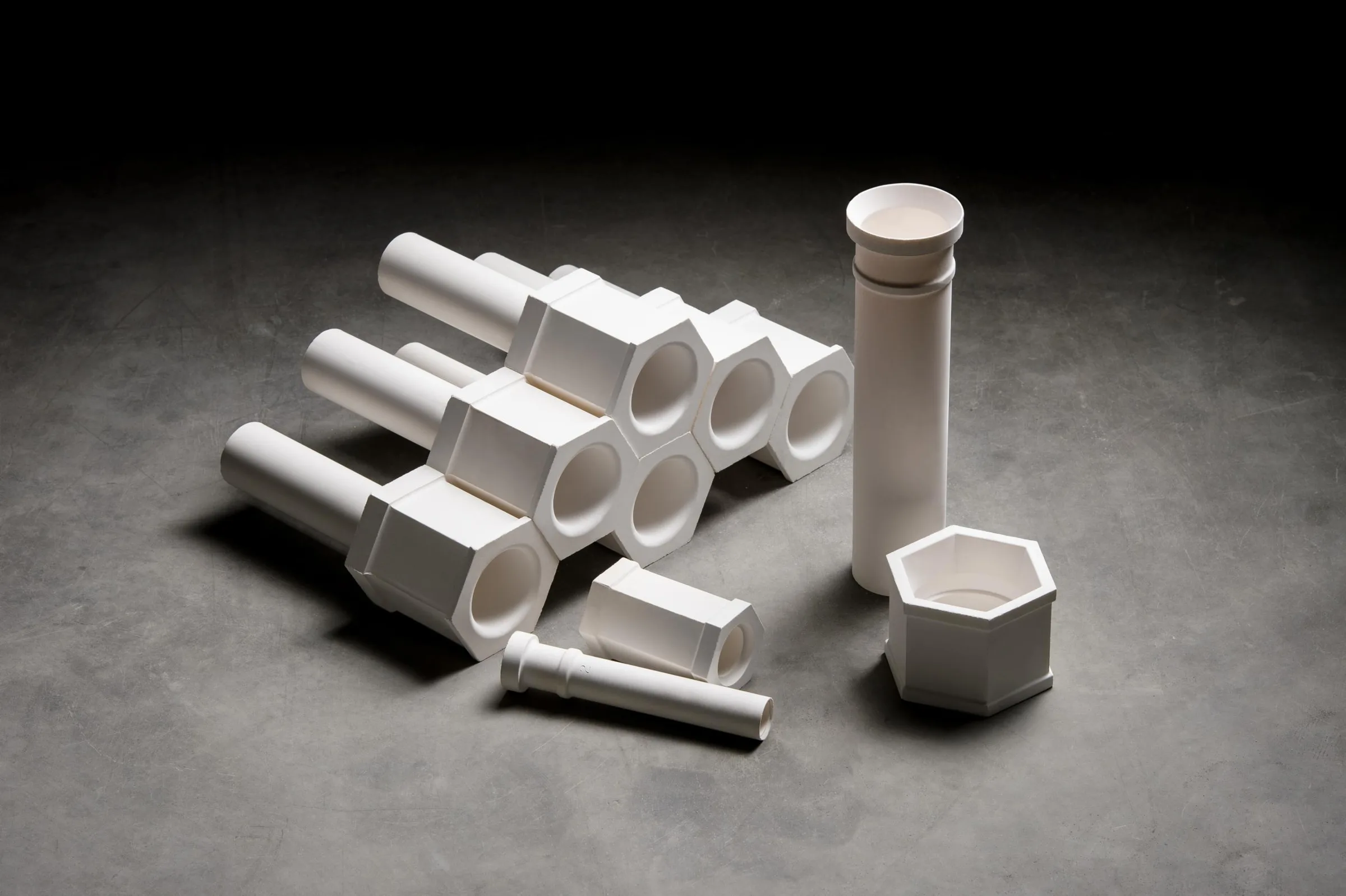
Hex head ceramic ferrules and tube shapes

What you take away

When you compare ferrules, ask for both: the alumina content for corrosion, and evidence of thermal shock resistance for trips and restarts. A grade that only meets one of them moves the failure from one cause to the other.

The ferrule designs are described on the page for one and two piece ceramic ferrules, the material on the page for alumina ceramics. The general test method is shown in the Blasch thermal shock test.

Frequently asked

Questions about the test

Why does a ferrule see thermal shock?

At every start, stop or trip of the boiler, the hot process gas side and the water cooled tube change temperature at different rates, and the ferrule sits between them.

What alumina content do Blasch ferrules have?

The ferrules in this test are ultra high alumina at 99.7%. Other grades are chosen for the gas, temperature and abrasion in each boiler.

Does high purity alumina always crack more easily?

Dense alumina is sensitive to thermal shock, but the pore structure from the Blasch casting process improves that resistance without lowering the alumina content.

White alumina parts and alumina powder in a glass beaker

Ferrules cracking
after trips?

Send the tube dimensions, the gas and the temperatures, and how often the boiler trips. A Blasch engineer suggests grade and design.

Talk to an engineer Call