Technical Library

Filling the gap:
refractory work with fewer skilled hours

How mortar-free precast ceramic structures cut the skilled labor a turnaround needs, with a CO boiler wall built in five days instead of three weeks.

Fewer refractory masons every year.
The same amount of turnaround work.

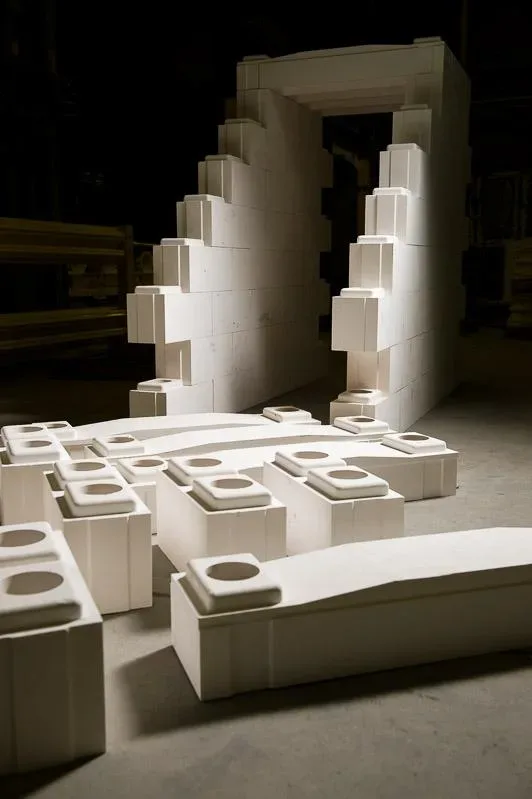
Interlocking white ceramic blocks with a doorway shaped wall behind them
In short

This Blasch article looks at the shortage of skilled refractory labor and what it does to turnarounds: operators extend outages or leave planned work undone. Its answer is to move skill from the furnace floor into the part, with precast ceramic blocks that interlock and stand without mortar. A refinery CO boiler wall built this way took five days instead of the three weeks a brick wall would have needed.

About this paper

  • Authors: Heather Higgins, Will Russell and Uday Parekh, Blasch Precision Ceramics
  • Publication: trade journal article, about 2018 (journal not named in our copy)
  • Topic: skilled labor in refractory installation, self-supporting ceramic structures
  • Full text: available on request

The skill moves into the part

When each block carries its own locking features, the wall needs someone who can stack, not someone who can lay brick and mortar to a tolerance.

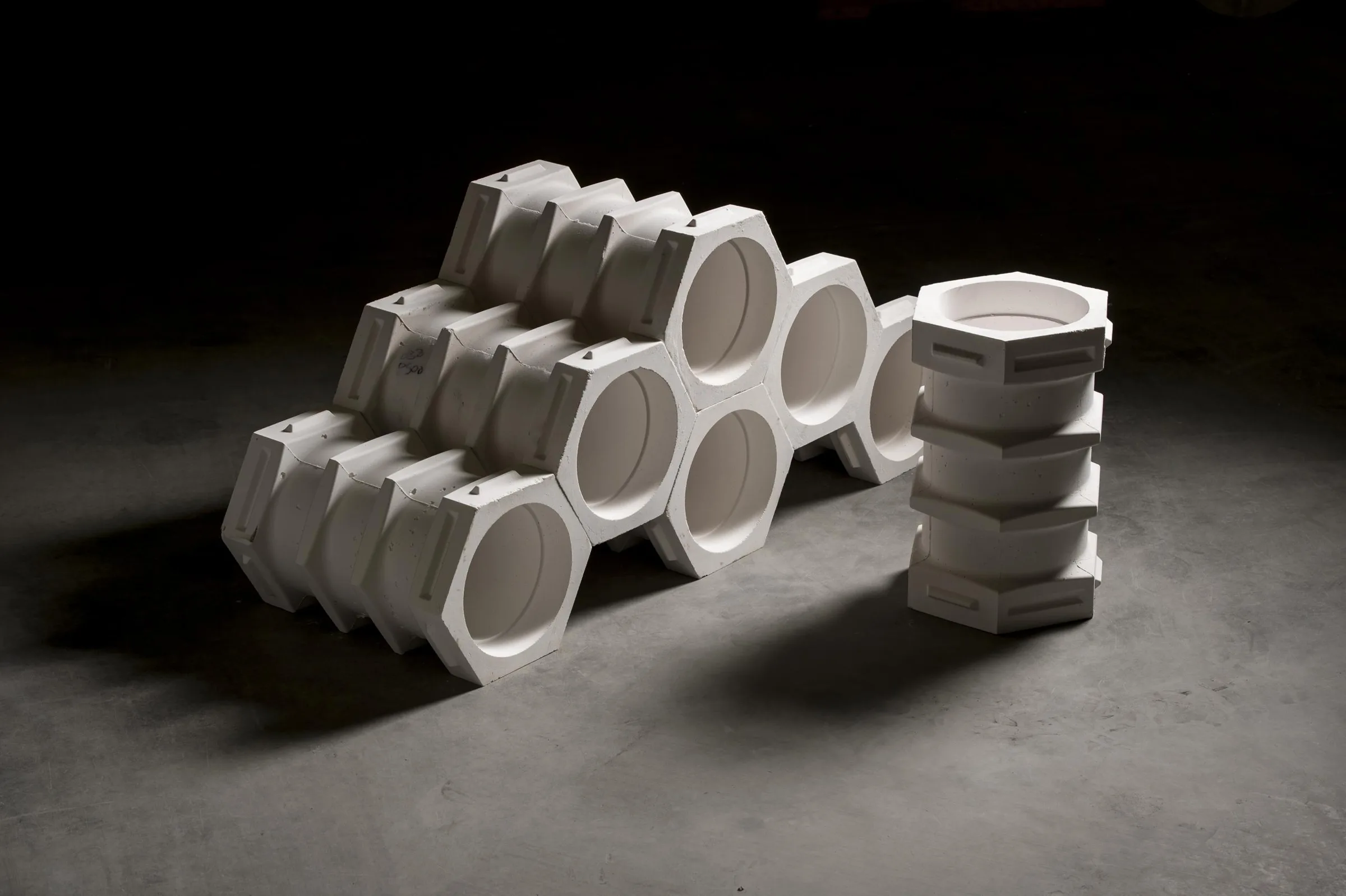
Interlocking hexagonal ceramic checkerwall blocks

How big the gap is

The article cites a Certificate of Qualification in brick and stone masonry, often required for refractory work, at about 4,300 hours of apprenticeship plus a written exam. It also cites the US Department of Labor: registered apprentices in the US fell from 488,000 in 2003 to 287,000 in 2013. These figures are the article's own and are now more than ten years old.

The consequence for plants is the one you know: outages run longer than planned, or work is cut from the scope.

Self-supporting structural ceramic systems

Blasch groups its mortar-free structures as Self-Supporting Structural Ceramic Systems (S3CS). Each block has precast interlocking features that hold its neighbors, so the structure is built by stacking. The article names three families:

HexWall and VectorWall: six-sided checkerwall blocks with alternating tabs and slots for Claus and sulfuric acid furnaces. See the self-supporting structures overview.

Ferrules: sized for each boiler, wrapped with their fiber insulation, with no castable between the ferrules and only a narrow ring at the edge, which saves installation and cure time.

StaBlox tunnels: each block is about six times the size of a firebrick and weighs under 50 lb, with no field-built expansion joints. More on the StaBlox flue gas tunnel system.

The CO boiler wall

A refinery CO boiler, a rectangular furnace with six large burners through the wall, had a brick wall that had degraded badly. Blasch designed square blocks plus six sets of ring segments around the burners, with holes for burner tubes and pluggable openings to adjust airflow. The parts fit by tongue and groove. A brick wall of that size would have taken three weeks; the precast wall took five days and stood as a freestanding structure. The custom shapes case study describes it in more detail.

What this means for your turnaround

Count skilled hours, not only parts. Where a wall, a tunnel or a tubesheet lining is rebuilt every outage, a precast refractory shape can take those hours off the critical path.

Frequently asked

Questions about this paper

Do these systems need refractory masons to install?

The article's point is that they need far fewer skilled hours, because the blocks lock together without mortar.

Why should structures not be cemented together?

Mortar cracks under repeated thermal cycling. Parts that can move and grow relieve stress, which the authors give as the reason for longer refractory life.

Are the labor statistics current?

No. They date from 2012 and 2013 and are quoted as the article published them.

Precast tunnel wall being built block by block in a furnace

Too few hands
for your next outage?

Tell us which refractory job runs longest in your turnaround. A Blasch engineer checks whether a precast design can shorten it.

Talk to an engineer Call