Case study

A CO boiler burner wall
in five days instead of three weeks

A refinery rebuilt the burner wall of its CO boiler from precast tongue and groove shapes instead of brick.

Six large burners through one wall, and the brick around them worn out.
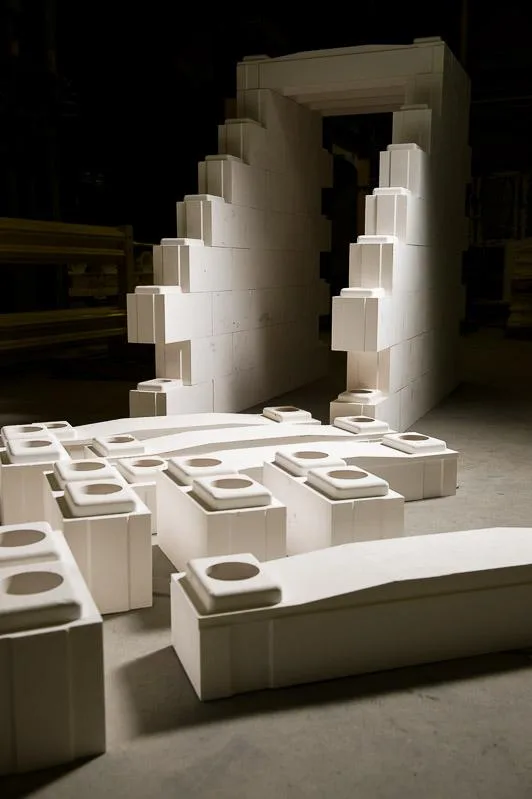
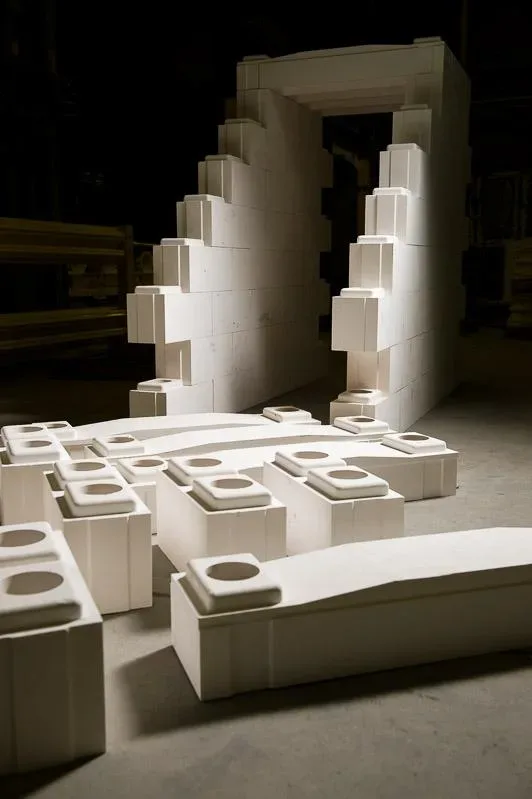
The new wall came as a kit of precast shapes
Stacked precast ceramic blocks forming an opening
In short

At an oil refinery, the burner wall of a CO boiler had degraded badly after years in service. Blasch designed a replacement of precast square blocks and six sets of ring segments around the burners, all joined by tongue and groove, and the refractory contractor built the wall in five days. The same wall in brick and mortar would have taken three weeks.

Stacked precast ceramic blocks forming an opening

The wall around the burners

A CO boiler burns the carbon monoxide rich waste gas from refinery units, mostly the FCC regenerator, and recovers its heat. This boiler has a rectangular furnace with six large burners protruding through a ceramic wall.

The original wall was built from refractory brick and had suffered severe degradation over the years. Rebuilding it the same way meant three weeks of skilled masonry inside the boiler.

Why the wall was designed to move

A wall that is cemented into one piece cracks as it cycles, so this one was built from shapes that lock together mechanically and still have room to grow.

What was installed

Blasch worked with the refinery on a set of precast shapes:

  • square blocks for the main wall, with tongue and groove joints
  • six sets of ring segments to surround the burners
  • holes in the ring segments for additional tubes coming off the burners
  • pluggable holes, so the airflow can be changed when needed

Changing the airflow through the rings gives tighter control of temperature and adds turbulence for better mixing. Once assembled, the wall stands free and fully supported in the furnace, without mortar holding it together.

Results

What Brick and mortar Precast shapes
Time to build the wall about three weeks five days
Structure mortared brick freestanding, mechanically locked shapes

What the refinery gets

Two weeks of boiler outage saved on the wall alone, and a design that does not depend on the shrinking number of refractory masons. A Certificate of Qualification in brick and stone masonry takes about 4,300 hours of apprenticeship, and US registered apprentices fell from 488,000 in 2003 to 287,000 in 2013, according to the US Department of Labor figures cited in the article.

Related pages

Custom engineered shapes

Precast refractory shapes made to the dimensions of the part they replace.

Custom shapes

Precast refractory shapes

Why fired shapes install faster and last longer than brick and castable.

Precast shapes

Tunnels without masons

Precast reformer tunnels set by a general crew at two US ammonia plants.

StaBlox installation case
Frequently asked

Questions about this CO boiler

Do precast shapes need skilled masons?

No. The shapes lock together with tongue and groove joints and are stacked by a refractory crew without mortar.

Can the airflow be changed after installation?

Yes. The ring segments around the burners have pluggable holes, so airflow can be adjusted when operation requires it.

What makes a precast wall last longer than brick?

Repeated thermal cycling cracks the mortar that holds brick together, and collapse often follows. Mechanically locked shapes can move with the heat cycle without cracking.

A burner wall
due for a rebuild?

Send the wall dimensions, the burner positions and photos of the current state. A Blasch engineer designs the shapes for your boiler.

Talk to an engineer Call