Case study

A tubesheet in half a shift:
the first hex head ferrules at a US refinery

Where the hex head ferrule came from: a Claus boiler at a US Gulf Coast refinery, a reliability engineer and a tubesheet without castable.

Several boiler failures, then a question from the plant: does the tubesheet need castable at all?
The answer became the hex head ferrule

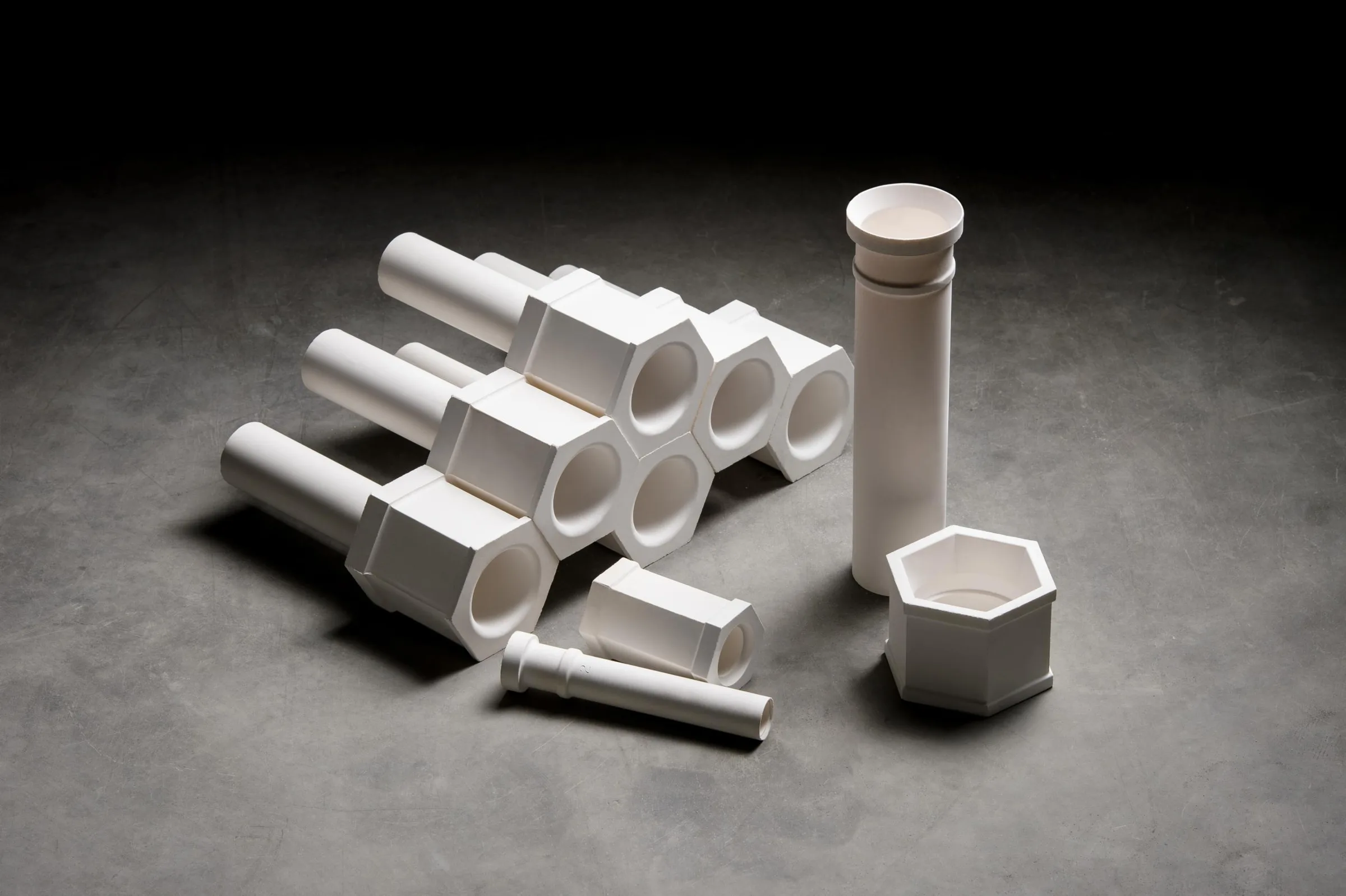
Hex head ceramic ferrules and tube shapes
In short

At a refinery on the US Gulf Coast, the first hex head ferrules from Blasch went into the waste heat boiler of a Claus sulfur recovery unit in September 1996. A full set took half a shift to install instead of the 2 days of the conventional ferrules in castable, the installer saved 2.5 to 3 days on that turnaround, and after 10 months the ferrules were in like new condition with no gas penetration to the tubesheet.

Hex head ceramic ferrules and tube shapes

A tubesheet that kept cracking

The conventional design in Claus waste heat boilers puts round high alumina ferrules into the tube ends, about 4 inches proud of the tubesheet, and buries them in castable or plastic refractory. On large boilers that takes the better part of two days, plus a couple more days of cure out.

Monolithic refractory cracks over time from the stresses of heat up and cool down. Anchors expand more than the refractory around them and corrode. Once a crack opens a path to the tubesheet, hot sulfur gas attacks tubes and welds. The refinery had replaced its whole tubesheet refractory after several boiler failures, and its reliability engineer asked Blasch for a ferrule system that needed no monolithic refractory at all.

The idea behind the design

Instead of fighting the expansion of the tubesheet face, the hex head ferrule uses it: each ferrule floats in its own tube, and the heads grow together into a closed face only when the boiler is hot.

What was developed and installed

Blasch and the refinery went through several keyed and stepped designs before settling on a simple hexagonal head. Two details made it work: the ferrules are cast accurately enough to close at the planned operating temperature, and a groove around each head holds a compressed high alumina fiber seal that does not block the closing. The design was later granted a US patent.

The first two sets went in in September 1996, installed by a maintenance contractor. The ferrules arrived prefired with all fiber applied. Only a thin band of castable around the ferrule field needed curing.

Results

What Conventional ferrules in castable Hex head ferrules
Installation of a full set about 2 days, plus cure out half a shift
Time saved on the turnaround 2.5 to 3 days, reported by the installer
Condition after 10 months like new, no gas penetration to the tubesheet
Tubesheet cleaning hydroblasting brushing only

When something went wrong

A later outage was caused by massive liquid carryover into the combustion chamber, which destroyed the bottom rows of ferrules and led to tube joint failures. The ferrules above the high water mark survived with some surface cracking and came out by hand. After inspection the whole tubesheet was refitted in less than half a shift, and the unit restarted without a long cure out.

What it meant for the refinery

Shorter turnarounds, a tubesheet that can be inspected ferrule by ferrule, and a hot face that recovers from an upset in hours. The ferrules were designed for a 3 to 5 year life, confirmed in later installations.

Related pages

Round and hex head ferrules

Today's one piece ferrules for Claus and sulfuric acid boiler tubesheets.

Hex head ferrules

Retubing in Australia

Hex head ferrules in a sulfuric acid plant boiler retubed in a three week shutdown.

Retubing case

Refining and chemical processing

Ceramic parts for sulfur recovery, FCC units and reformers.

Refining and chemicals
Frequently asked

Questions about this installation

Why do the ferrules have to float?

If they were mortared together, the face would behave like a monolithic refractory layer and crack. Each ferrule is affected only by its six neighbors.

Can single ferrules be pulled for inspection?

Yes. This installation showed that individual ferrules come out by hand, without breaking up the hot face.

How hot do these boilers run at the inlet?

Temperatures at Claus waste heat boiler inlets range up to nearly 3,000 °F, higher with oxygen enrichment.

Hex head ceramic ferrules

Losing days
to tubesheet castable and cure out?

Send the tube outside diameter, the pitch, the tubesheet thickness and the inlet temperature. A Blasch engineer sizes the ferrules for your boiler.

Talk to an engineer Call