What the video explains
Why conventional walls fail: brick walls with mortar, matrix walls and stacked cylinders sit in an intense, high temperature, chemically laden gas stream. Mortar cracks under thermal cycling, and the walls collapse, which disrupts throughput and forces unplanned work.
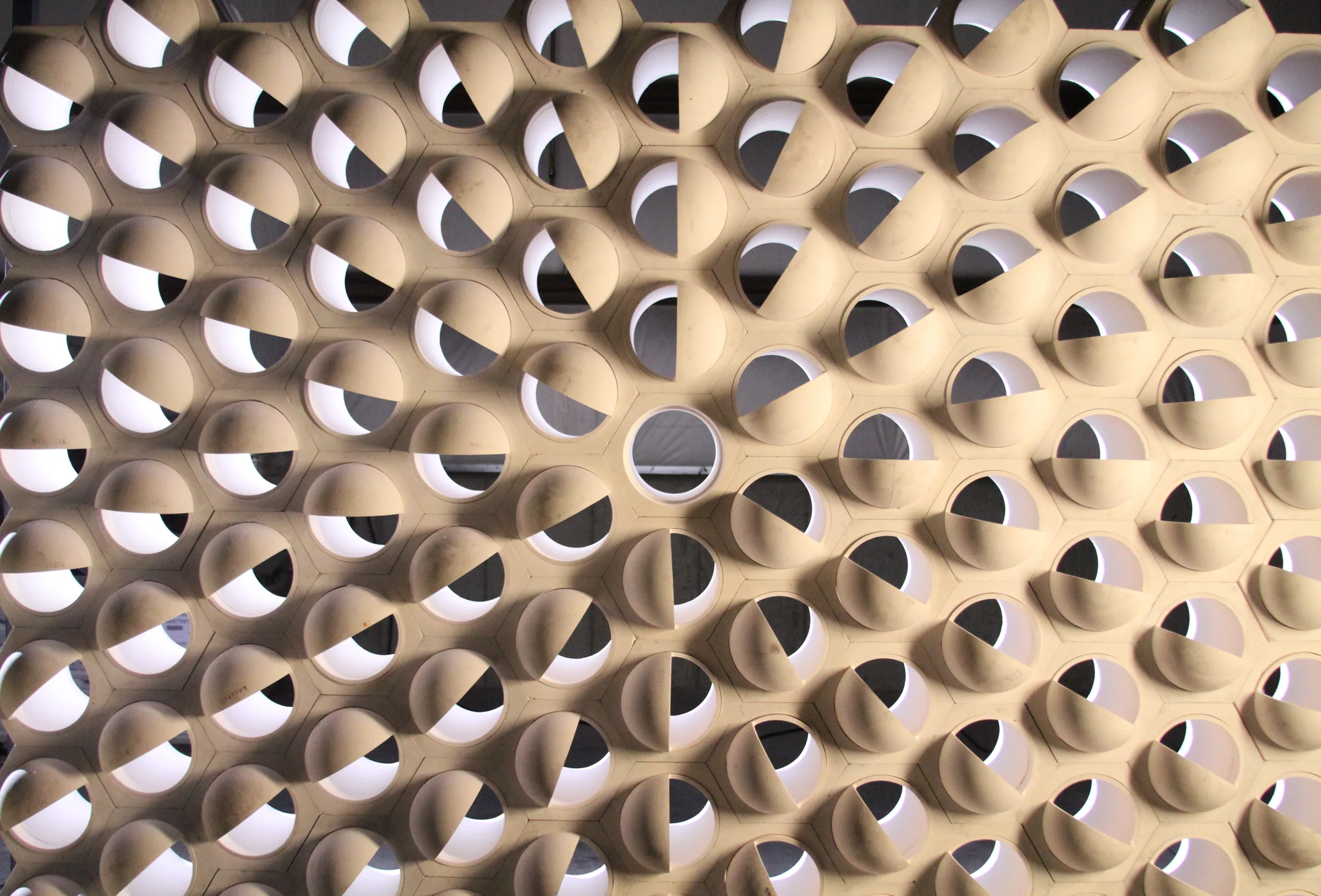
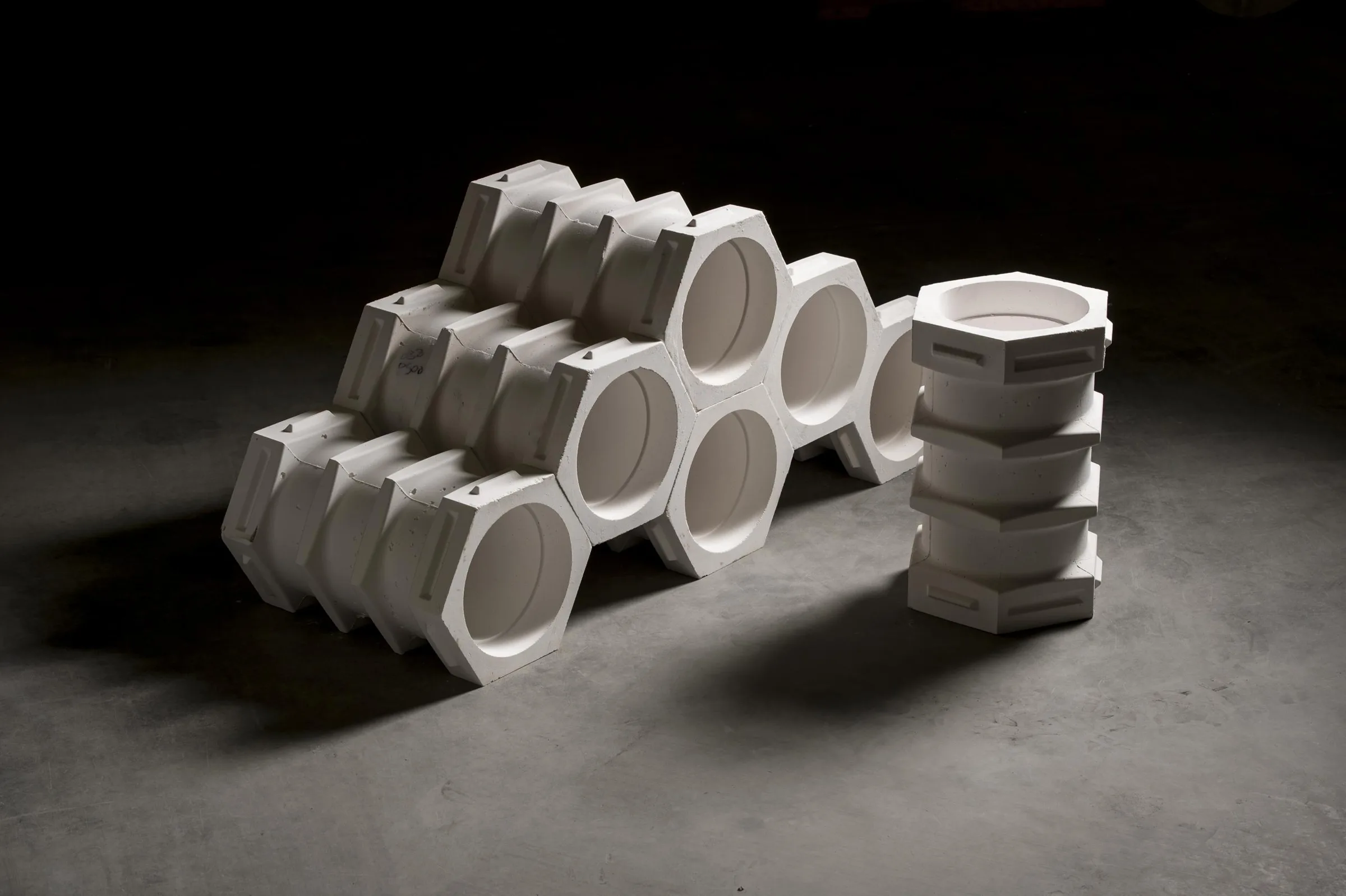
The HexWall step: hexagonal blocks interlock on every side and are stacked without mortar, so the wall can expand and contract without collapsing. The round openings make the unsupported part of each block an arch, loaded in compression rather than tension.
The VectorWall step: a vectoring hood set into each opening turns the gas as it leaves the wall. Where a conventional checkerwall hardly affects the flow behind it, the hoods can create different patterns: a single helix that keeps mixed phases together, a dual helix for mixing across the whole chamber, or hoods that alternate row by row for a high shear rate.
How the flow is designed
Blasch has worked with Rensselaer Polytechnic Institute on computational fluid dynamics and reaction kinetics, run on a university supercomputer, to predict how a given wall layout changes a Claus furnace. The aim is a wall configuration chosen for each furnace rather than one standard pattern.
The design rule behind it is the old one for combustion: time, temperature and turbulence. A rotating flow gives the gas a longer path and a narrower spread of residence times, close to a plug flow reactor.