Videos

VectorWall installation:
a checkerwall stacked without mortar

The instructional video on how a VectorWall goes into a Claus or acid plant furnace, block by block.

The blocks are standard parts.
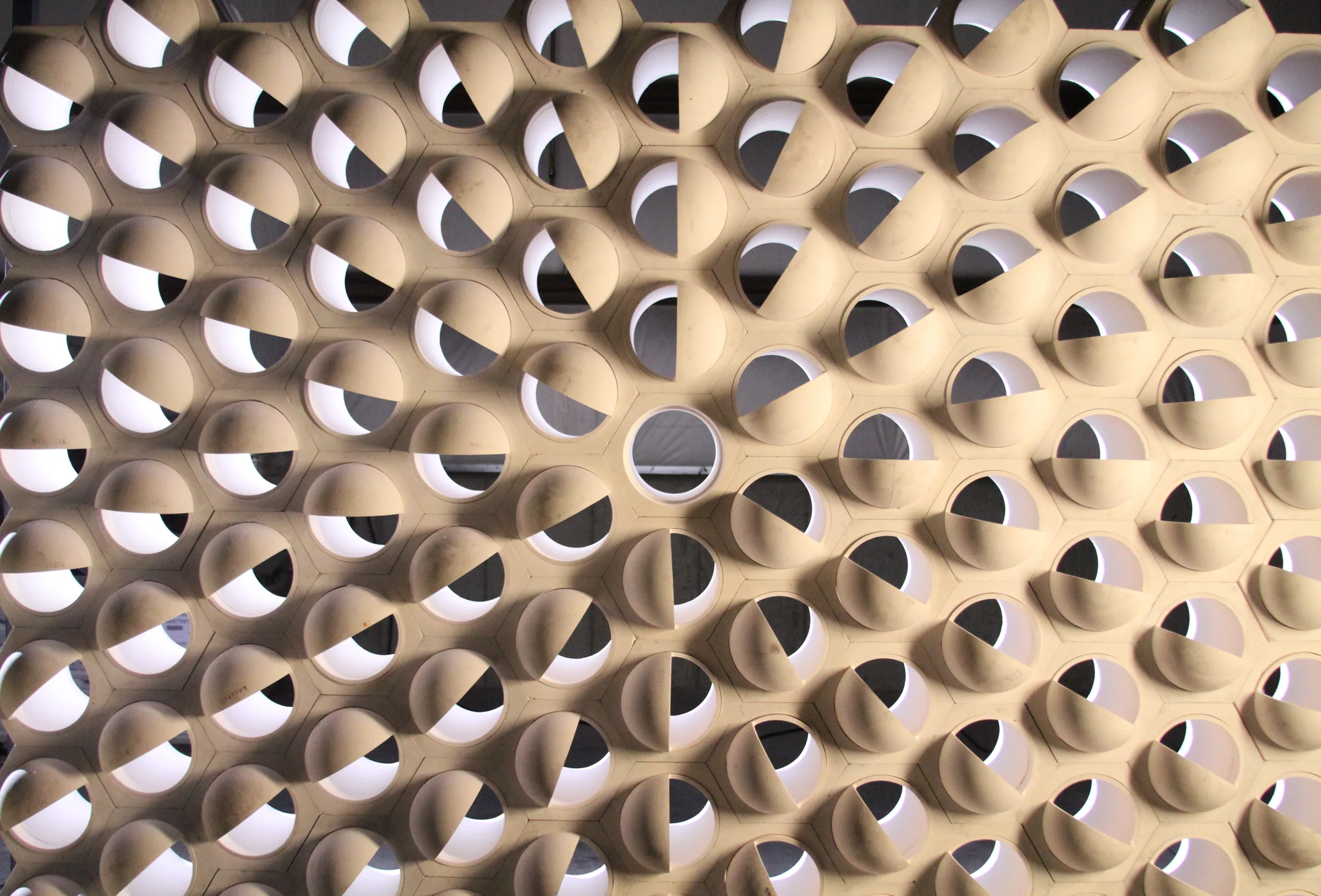
The pattern of the hoods is what makes the wall yours.

Interlocking hexagonal checkerwall blocks
In short

The VectorWall instructional video shows how the checkerwall is installed: hexagonal blocks are stacked dry and lock together with tabs and slots, so the wall needs no mortar between blocks, and the vectoring hoods are set into the openings in the pattern designed for the furnace. Installing a HexWall based wall takes about one third of the time of a brick baffle wall, which shortens the turnaround and keeps the blocks reusable.

What the video shows

The wall goes into the furnace in one of two ways: into a groove in the refractory lining, or against the hot face brick with one course of brick in front and one behind. Rows of blocks are stacked on each other, each block keyed to its neighbors, and the round openings line up through the full wall.

The vectoring hoods, also called vector tiles, are then fitted into the openings. They are the only part that is cemented. A manway can be built into the wall.

The blocks in numbers

  • Three block widths: 9, 13.5 and 18 inches (230, 345 and 460 mm). The largest walls, over 5 m across, use 18 inch blocks.
  • Mullite bonded alumina, resistant to creep, for continuous use above 3,000 °F.
  • Standard blocks from stock, mortar free, and they can be taken down and set up again.

Why no mortar matters

A mortared wall is weakest along every joint, while a dry stacked wall has joints that are designed to move, so the wall that went up fastest is also the one that lasts the campaign.

Close view of angled tiles set into a ceramic checkerwall

What you take away

For turnaround planning, the video shows that a VectorWall does not need masons skilled in arches and mortar. A refractory crew sets the blocks in rows, and the hood pattern comes with the design. In a sulfuric acid plant that lifted a complete new furnace into place in 2013, the HexWalls stayed stable during the lift.

The wall layout and flow patterns are on the page for the VectorWall mixing checkerwall. Why the hoods are there is explained in the science behind VectorWall, and the plants that use it are listed under sulfur recovery.

Frequently asked

Questions about installation

Is any mortar used in a VectorWall?

Not between the blocks. Only the vectoring hoods are cemented into the openings, and the wall is set into the lining with ordinary brick.

How long does installation take?

About one third of the time of a brick baffle wall, based on HexWall installations in sulfuric acid furnaces.

Can the blocks be reused?

Yes. The blocks are mortar free and can be taken down and set up again, for example during a later revamp.

Full checkerwall with angled openings

A checkerwall due
in your next turnaround?

Send the furnace diameter and the current wall type. A Blasch engineer plans the blocks and the hood pattern.

Talk to an engineer Call