Technical Library

Rethinking refractory design:
why segmented linings last longer

Why monolithic refractory cracks under thermal cycling, and how a lining of precast segments avoids carrying the stress across the whole body.

A refractory lining is not a wall.
It grows and shrinks with every cycle.

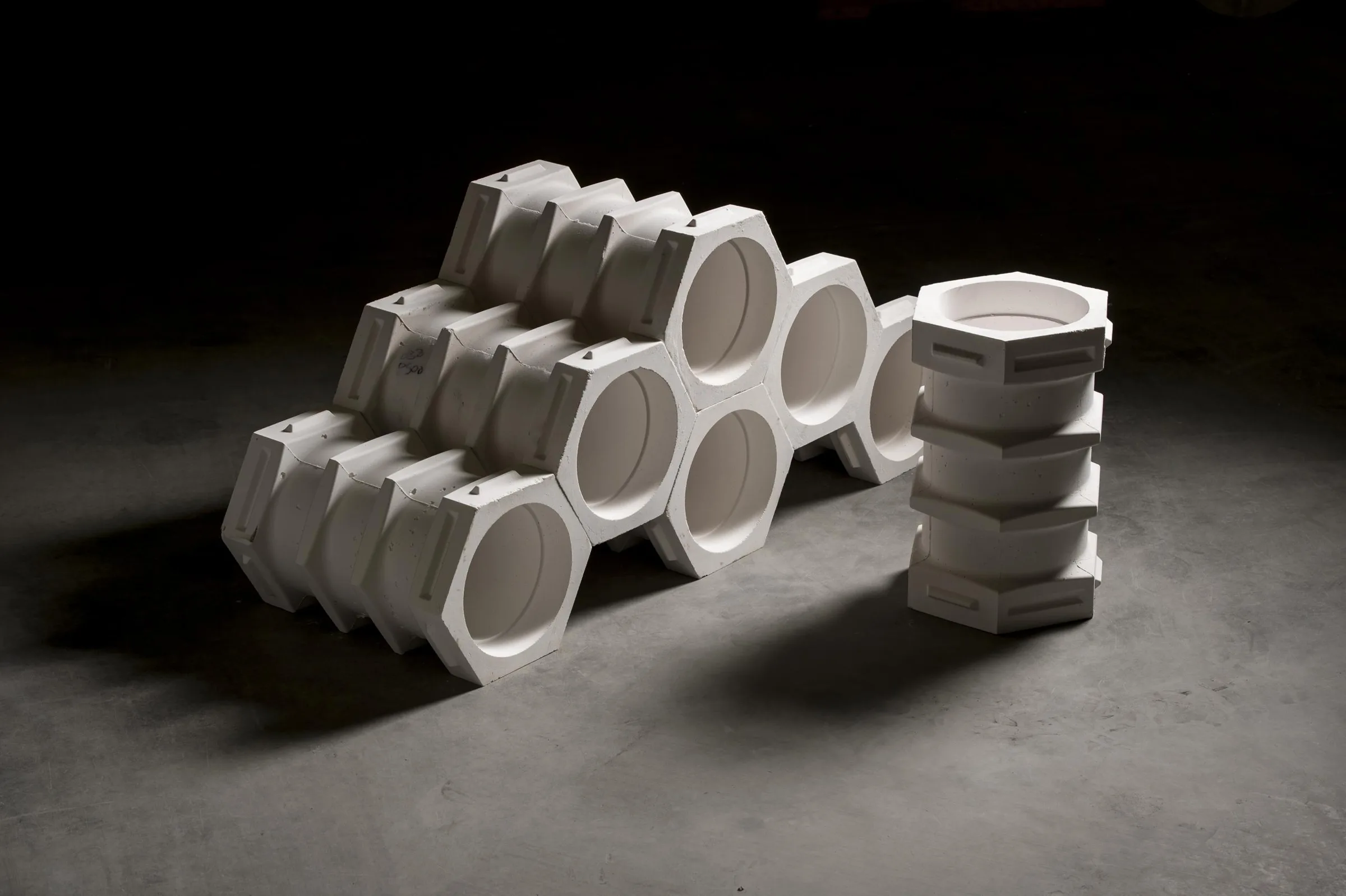
Hex head ceramic ferrules lying side by side
In short

This Blasch article explains why some refractory linings perform much better and last much longer than others. The short answer is that a lining is a dynamic body: it expands and contracts with every temperature swing. Large monolithic castable linings, held by metal anchors, collect that stress and crack. Linings made of precast segments expand into a closed face when hot and return to separate parts when cold, so the stress never builds across the whole lining.

About this paper

  • Publisher: Blasch Precision Ceramics
  • Topic: refractory design for longer service life
  • Full text: available on request; the full article was not available to us, so this page draws on an earlier Blasch article in Hydrocarbon Processing (March 2007) by Jeffrey Bolebruch on the same argument

The sidewalk has expansion joints

A sidewalk sees maybe a hundred degrees of swing and still needs joints, so a lining that swings by a thousand cannot be cast as one piece.

Interlocking hexagonal ceramic checkerwall blocks

Why monolithic linings crack

Most process vessels are lined with one or two layers of castable, held to the shell by welded metal anchors. Metal expands nearly twice as much as the ceramic around it, so hot anchors push the castable apart. Where corrosive gas reaches the anchors, they swell and the cracking gets worse.

Higher temperatures, longer campaigns and oxygen enrichment make it harder. Oxygen enriched processes can run less steadily, and every swing is another expansion cycle.

What segmenting changes

A segmented lining is built from smaller precast shapes with small gaps between them. At operating temperature they expand and close into one face. On cooling they separate again, so stress does not travel across the whole body.

Three further effects follow from precast, prefired parts:

Fiber insulation behind the face: fiber cannot take the moisture of a fresh castable, but it can sit behind prefired parts, which gives a thinner lining with more insulating value and less mass to heat.

No cure-out: prefired parts need no days of drying after installation.

Inspection: parts can be removed and set again without breaking out the whole lining.

The clearest example is the hex head ferrule at a waste heat boiler tubesheet, see ferrules. The engineering behind such parts is described on precast refractory shapes.

What this means for your vessel

If a lining fails by cracking rather than by wear, the design is the lever, not the castable grade. Related reading: Ceramics: Build or Bust? and Filling the Gap.

Frequently asked

Questions about this paper

Why do metal anchors crack castable?

Steel expands nearly twice as much as the refractory at the same temperature, and anchors close to the hot face push the castable apart.

Does a segmented lining leak at the joints?

At operating temperature the segments expand and close the gaps. Fiber seals in the joints keep gas off the cold side.

Is precast always better than castable?

Castable is cheap and adapts to any shape without tooling. Precast pays where cracking, cure time or inspection access cost more than the part.

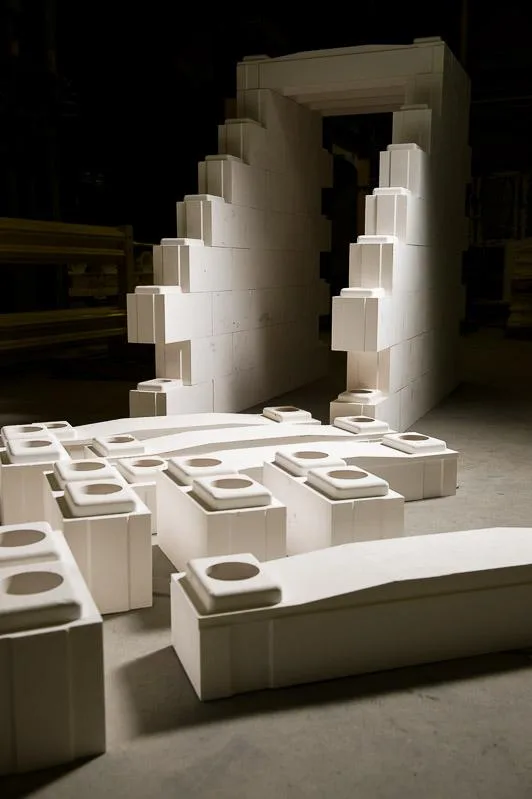
Interlocking white ceramic blocks with a doorway shaped wall behind them

A lining that cracks
every campaign?

Tell us the vessel, the temperatures and where the lining fails. A Blasch engineer checks whether a segmented design fits.

Talk to an engineer Call