Technical library

A new kind of tunnel vision:
tube temperatures before and after

A summary of the 2020 World Fertilizer article with operating data from an ammonia reformer.

Six months of plant data from one reformer.
The tube temperature spread was cut roughly in half.

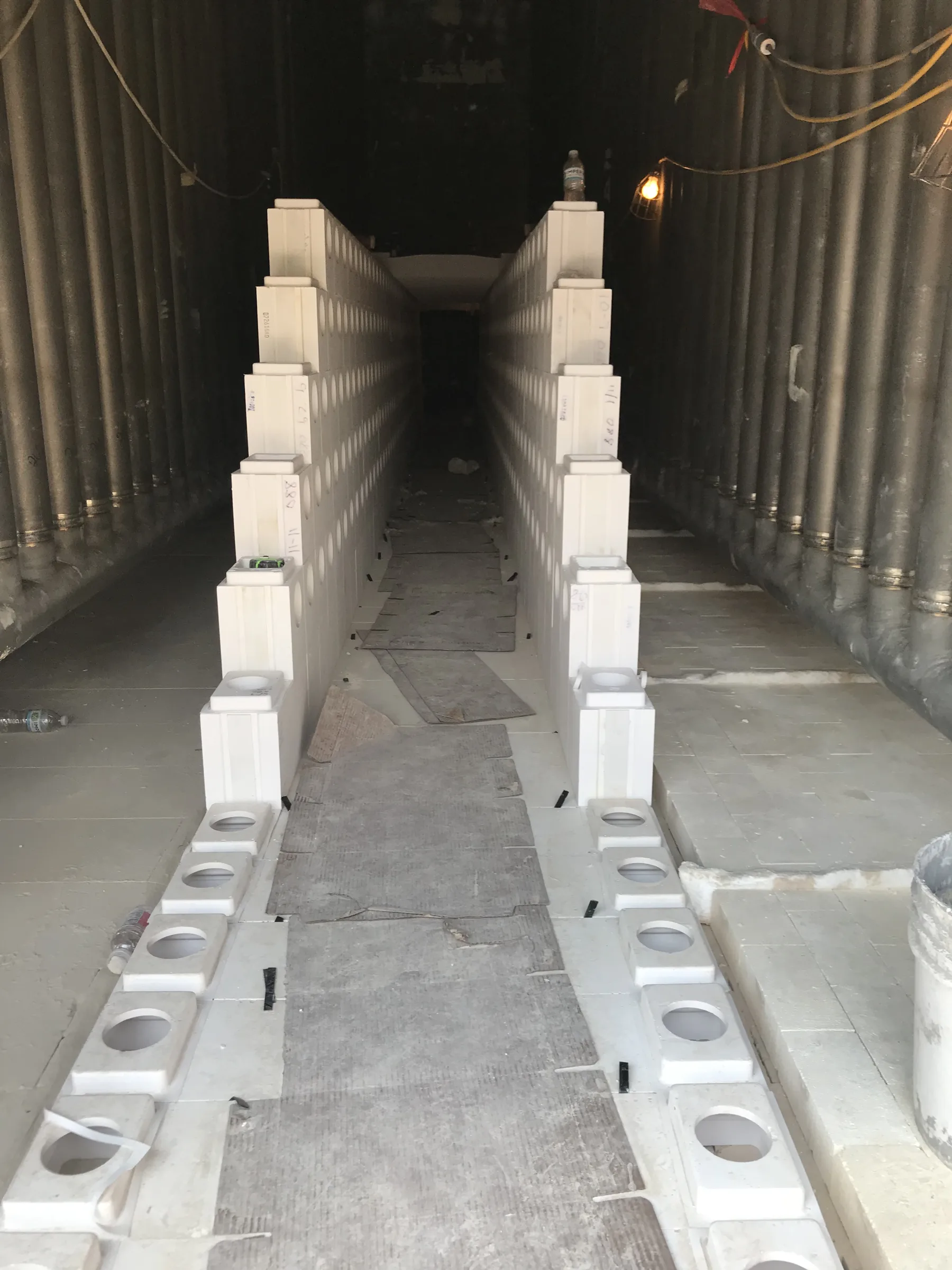
Inside a finished precast flue gas tunnel with rows of round side openings
In short

New flue gas tunnels with sized openings made the catalyst tubes of an ammonia reformer heat far more evenly. Over 2.5 months before and 3.5 months after the 2018 replacement, the standard deviation of tube metal temperature fell from 42 °F to 21 °F and the spread from coolest to hottest tube from 222 °F to 116 °F. The plant used the margin to raise its outlet temperature, which lowered methane slip from 9.94% to 6.94% and raised production by 3.3%.

About this article

Publication World Fertilizer, January and February 2020 (reprint)
Title A new kind of tunnel vision
Author Daniel Znidersic, BD Energy Systems
Topic Operating data after replacing brick tunnels with the TOP design built from StaBlox blocks

The problem the article starts from

Brick tunnels get their openings by leaving out half bricks of one size. Flow is controlled by the number of openings per stretch of wall, so the open area changes in steps. Buttresses narrow the tunnel and raise the pressure drop, and neither buttresses nor expansion joints can hold openings. The no-flow zones push flue gas across the bottom of the tubes, exactly where tube metal is already hottest.

Uneven convective heating shows up as early tube failures from local overheating, while other regions of the furnace run below design heat and yield less.

The design and the plant

BD Energy Systems laid out the Tunnel Optimal Performance design, built with mortar-free StaBlox blocks of mullite bonded high alumina. Every block has openings for orifice plates, so the open area changes gradually both along the tunnel and from bottom to top. Matching floor and roof parts expand at the same rate, and the hollow parts give about 60% less mass than brick.

The reformer in the article has 7 rows of 24 catalyst tubes and 8 flue gas tunnels. After the floor was leveled and the bases set, the crew completed on average three tunnels per 12 hour shift.

Why the spread matters

A reformer runs to the limit of its hottest tube, so narrowing the spread is what turns more even heating into more production.

View along the top of a precast tunnel wall

What the operating data showed

Measured value Before After
Mean tube metal temperature 1,556 °F (847 °C) 1,545 °F (841 °C)
Standard deviation 42 °F (23.3 °C) 21 °F (11.7 °C)
Spread, coolest to hottest 222 °F (123 °C) 116 °F (64 °C)
Methane slip 9.94% 6.94%
Production +3.3%
Production to feed ratio +3.7%

Both the average and the peak tube temperature came down. With the hottest tubes further from their limit, operators raised the process outlet temperature safely, and the lower methane slip followed from that.

The author calls the 3.3% gain relatively high for a reformer of 168 tubes and expects 1.3 to 1.8% for larger units.

What it means for your reformer

If your tube metal temperatures spread widely and your firing is set by a few hot tubes, the tunnels are a likely cause worth checking. The gain does not come from hotter firing, but from moving the limit.

The same plant is written up as the case study StaBlox halves tube temperature spread. The tunnel blocks are described on the StaBlox flue gas tunnel system page, and the installation of the first two tunnel sets is covered in the 2019 report.

Frequently asked

Questions about this article

How long was the plant monitored?

The comparison covers six months of operation, two and a half before the change and three and a half after it.

Why did methane slip go down?

More even heating and a lower peak tube temperature let operators raise the reformer outlet temperature without exceeding the allowable tube temperature.

Will a larger reformer see the same production gain?

The author expects 1.3 to 1.8% for larger units, less than the 3.3% of this 168 tube reformer.

Can the opening pattern be changed later?

Yes. Without mortar, the orifice plates can be swapped during a later shutdown if operating conditions change.

Two precast tunnel walls standing on the floor of a reformer furnace

Is one hot tube
setting your firing rate?

Send your tube metal temperature survey and tunnel layout. A Blasch engineer will look at what the tunnels contribute.

Talk to an engineer Call