Case study

Half the tube temperature spread
in an ammonia reformer

Operating data from a 168 tube reformer before and after its brick tunnels were replaced with StaBlox and orifice inserts sized by BD Energy Systems.

The new tunnels went in during a 2018 outage.
The tube thermocouples showed the difference within weeks

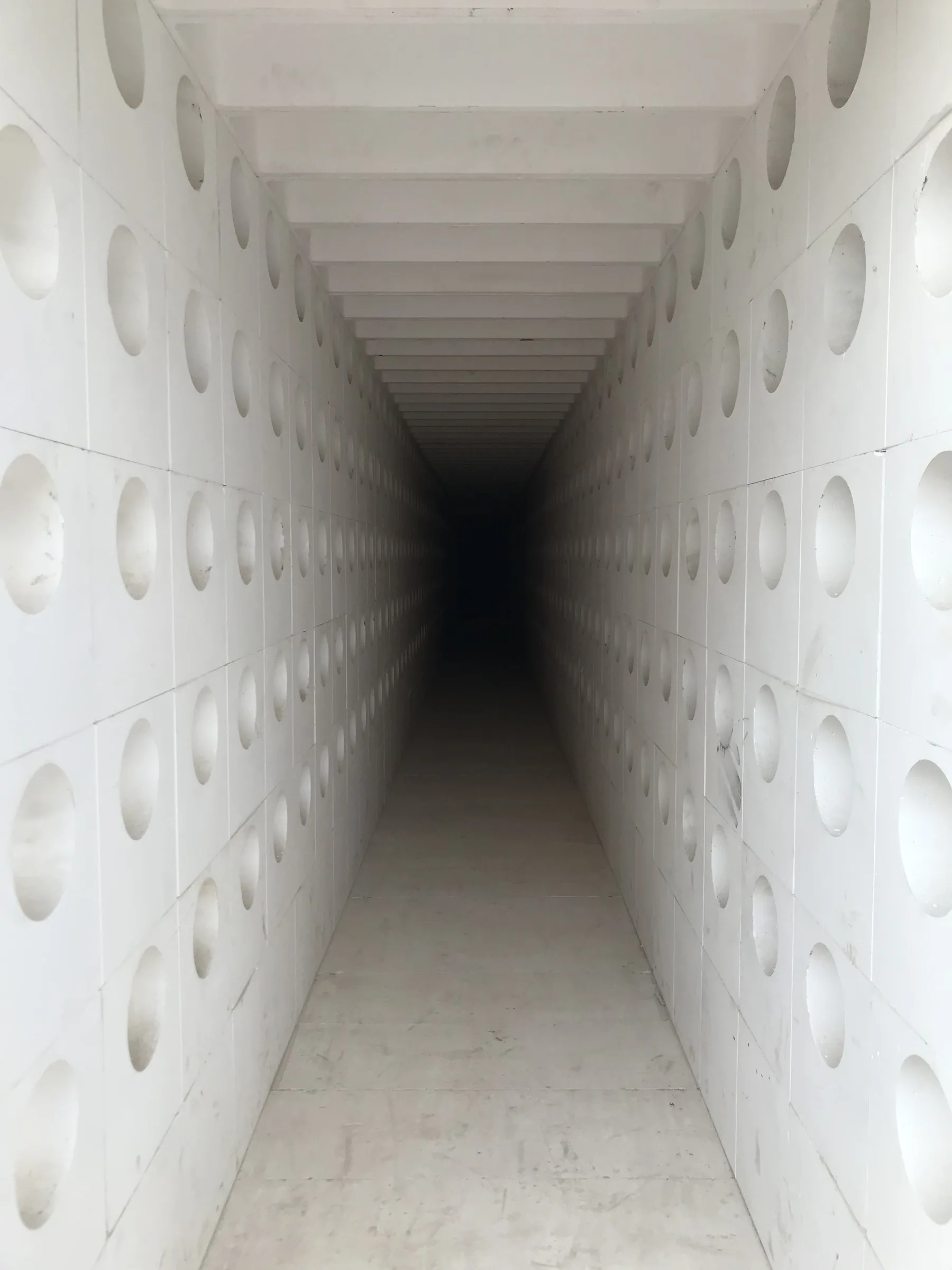
Inside a finished precast flue gas tunnel with rows of round side openings
In short

In an ammonia plant reformer with 168 catalyst tubes and eight flue gas tunnels, replacing the brick tunnels with StaBlox in 2018 cut the standard deviation of tube metal temperatures from 42 °F to 21 °F and the spread between coolest and hottest tube from 222 °F to 116 °F. With the hot tubes closer to the average, the plant raised its reformer outlet temperature, methane slip fell from 9.94% to 6.94%, and production rose by 3.3%, comparing 2.5 months before with 3.5 months after the installation.

Inside a finished precast flue gas tunnel with rows of round side openings

Why the old tunnels heated the tubes unevenly

The reformer is down-fired, with seven rows of 24 catalyst tubes. Flue gas leaves the radiant box through openings in eight tunnels on the furnace floor.

In the brick tunnels, every opening was a half brick of the same size. The only way to change the open area along a tunnel was to leave out openings, so the flow changed in steps instead of gradually. Buttresses and expansion joints left stretches with no openings at all. Flue gas then crossed over near the bottom of the tubes, where tube metal is already at its hottest.

What the operators did with the margin

Once the hottest tube was no longer far above the rest, the plant could fire the whole reformer harder without crossing its tube metal limit, and that margin is where the extra production came from.

What was installed

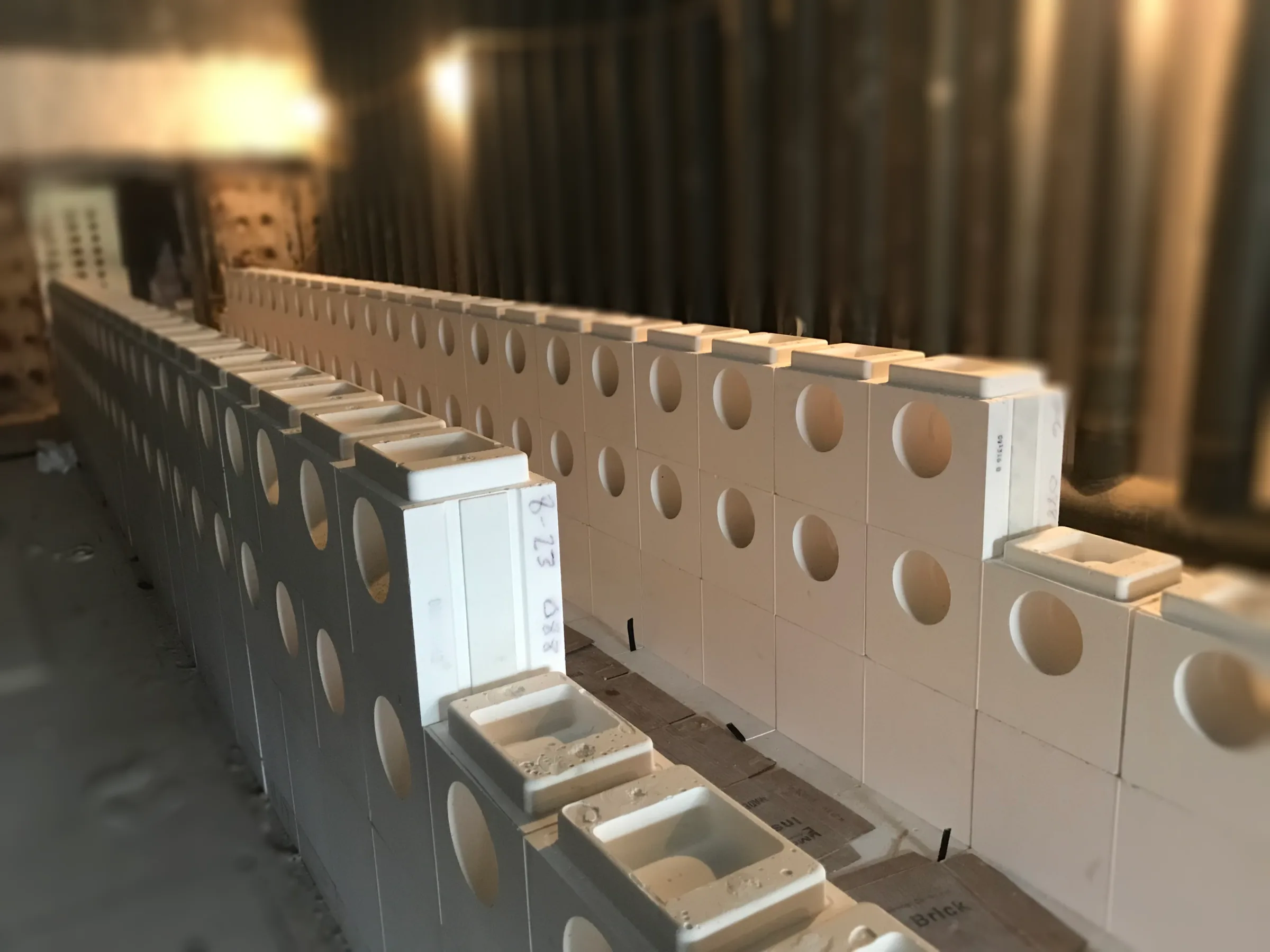
The tunnels were rebuilt with StaBlox, interlocking hollow blocks of mullite bonded high alumina set without mortar. The design needs no buttresses and no discrete expansion joints, so there are no blind stretches in the walls. Every block carries openings for orifice inserts. BD Energy Systems modeled the furnace and assigned an insert diameter to each opening, varying both along the tunnel and from top to bottom. On average the crew completed three tunnels per 12 hour shift.

Results

Measured value 2.5 months before 3.5 months after
Average tube metal temperature 1,556 °F (847 °C) 1,545 °F (841 °C)
Standard deviation 42 °F (23.3 °C) 21 °F (11.7 °C)
Coolest to hottest tube 222 °F (123 °C) 116 °F (64 °C)
Methane slip 9.94% 6.94%
Production +3.3%
Production to feed ratio +3.7%

The author, from BD Energy Systems, calls the 3.3% relatively high for this size and estimates 1.3 to 1.8% for larger reformers.

What the plant gets

A narrower band of tube temperatures protects the tubes that used to run hottest, and those tubes set the limit for the whole furnace. The same reformer now makes more ammonia from the same feed. If the firing pattern changes later, the inserts can be swapped at a shutdown without touching the walls.

Related pages

StaBlox flue gas tunnel system

Interlocking precast tunnels with an orifice insert in every opening.

StaBlox tunnels

Steam methane reforming

How the reformer works and where its refractory decides tube life.

Steam methane reformers

The first two installations

How crews at two US ammonia plants built the tunnels in 2018.

Installation case
Frequently asked

Questions about the operating data

How long was the comparison period?

Operating data from 2.5 months before the new tunnels was compared with 3.5 months after them.

Did the average tube temperature drop much?

Only by 11 °F. The gain is in the spread: the hottest tubes came down toward the average, which is what limits the firing.

Would a larger reformer see the same production gain?

The author expects less, about 1.3 to 1.8% for larger units, and calls the 3.3% of this 168 tube reformer relatively high.

Where was the data published?

In World Fertilizer, January and February 2020, in an article by BD Energy Systems.

Long precast tunnel wall inside a reformer furnace

Tube temperatures
spread wider than they should?

Send the tube metal temperatures, the tunnel layout and the firing pattern. A Blasch engineer and BD Energy Systems look at what new tunnels could change in your reformer.

Talk to an engineer Call