Technical Library

Fueling the future with ceramic arrays
mortarless ferrules in fertilizer plants

How arrays of mortarless ceramic ferrules protect waste heat boiler tubesheets as fertilizer plants move toward hydrogen fuel.

Hundreds of ferrules, one tubesheet.
The array works only if every ferrule can move on its own.

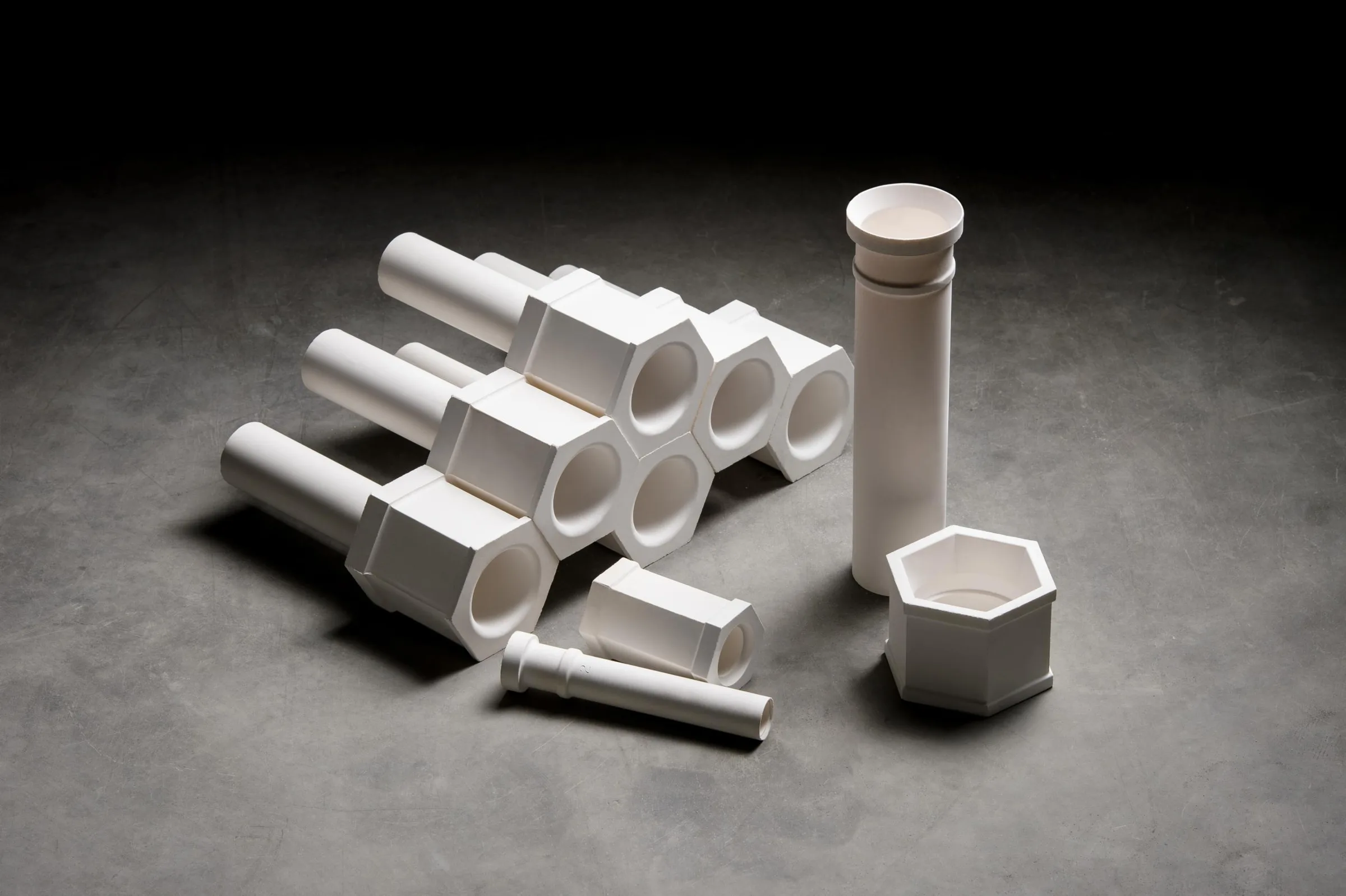
Hex head ceramic ferrules lying side by side
In short

This Blasch white paper examines how advanced ceramics and mortarless ferrule designs improve the reliability and efficiency of fertilizer plants as they transition to hydrogen fuel. The focus is the ferrule array at the waste heat boiler tubesheet, where hot process gas from the reformer meets the boiler. Ferrules that sit individually, without castable between them, tolerate the thermal cycling that cracks a cast in lining.

About this paper

  • Publisher: Blasch Precision Ceramics
  • Format: white paper
  • Topic: ceramic ferrule arrays in fertilizer and hydrogen plants
  • Full text: available on request; the white paper itself was not available to us, so this page uses the published summary and Blasch ferrule product information

An array, not a slab

When each ferrule is free in its own tube, a crack stops at one ferrule instead of running across the tubesheet.

Ceramic ferrule heads and stems on a stone floor

Where the ferrules sit

In ammonia plants the secondary reformer is followed by a waste heat boiler. The hot process gas enters the boiler tubes at the tubesheet, and ferrules protect the tube inlets and the tubesheet from the heat. The tubesheet sees a temperature difference of more than 1,000 °C between gas side and boiler side.

The conventional design sets ferrules in castable held by metal anchors. The castable cracks with thermal cycling, the anchors corrode, and gas reaches the tubesheet.

Mortarless ferrule designs

Hex head ferrules: the six sided heads sit side by side and close into one surface at operating temperature. A fiber gasket in a groove seals each head. No castable goes between the ferrules, only a narrow ring at the edge, and each ferrule is affected by at most six neighbors. See round and hex ferrules.

Two piece ferrules: head and stem are separate, which removes the stress point where they join in a one piece design. The ProLok version locks the stem with a twist so it cannot work its way out under vibration. See ProLok twist lock ferrules.

Hybrid ferrules: for the secondary reformer boiler, a metal ferrule carries a prefabricated ceramic head instead of refractory cast on site. See hybrid ferrules.

The hydrogen question

The white paper places these designs in the context of fertilizer plants moving toward hydrogen fuel. Its detailed findings on that transition were not available to us, and this page does not add figures of its own. The industry view is on hydrogen and ammonia.

What this means for your plant

If your boiler inlet is relined at every turnaround, the array design is the first thing to check, before the castable grade.

Frequently asked

Questions about this paper

Why are the ferrules not mortared together?

A mortared array behaves like one slab and cracks under thermal cycling. Separate ferrules expand and contract on their own.

What does Blasch need to design a ferrule array?

Tube outside diameter, material and wall, pitch, tolerances of the tube centers, operating and peak temperatures, gas composition, the tube to tubesheet weld and tubesheet thickness.

Are hybrid ferrules ceramic or metal?

Both. A metal ferrule carries a precast ceramic head, which replaces refractory cast in place.

Ceramic ferrules with collars for waste heat boilers

Relining the boiler inlet
every turnaround?

Send the tube data and how the current lining fails. A Blasch engineer designs the ferrule array.

Talk to an engineer Call