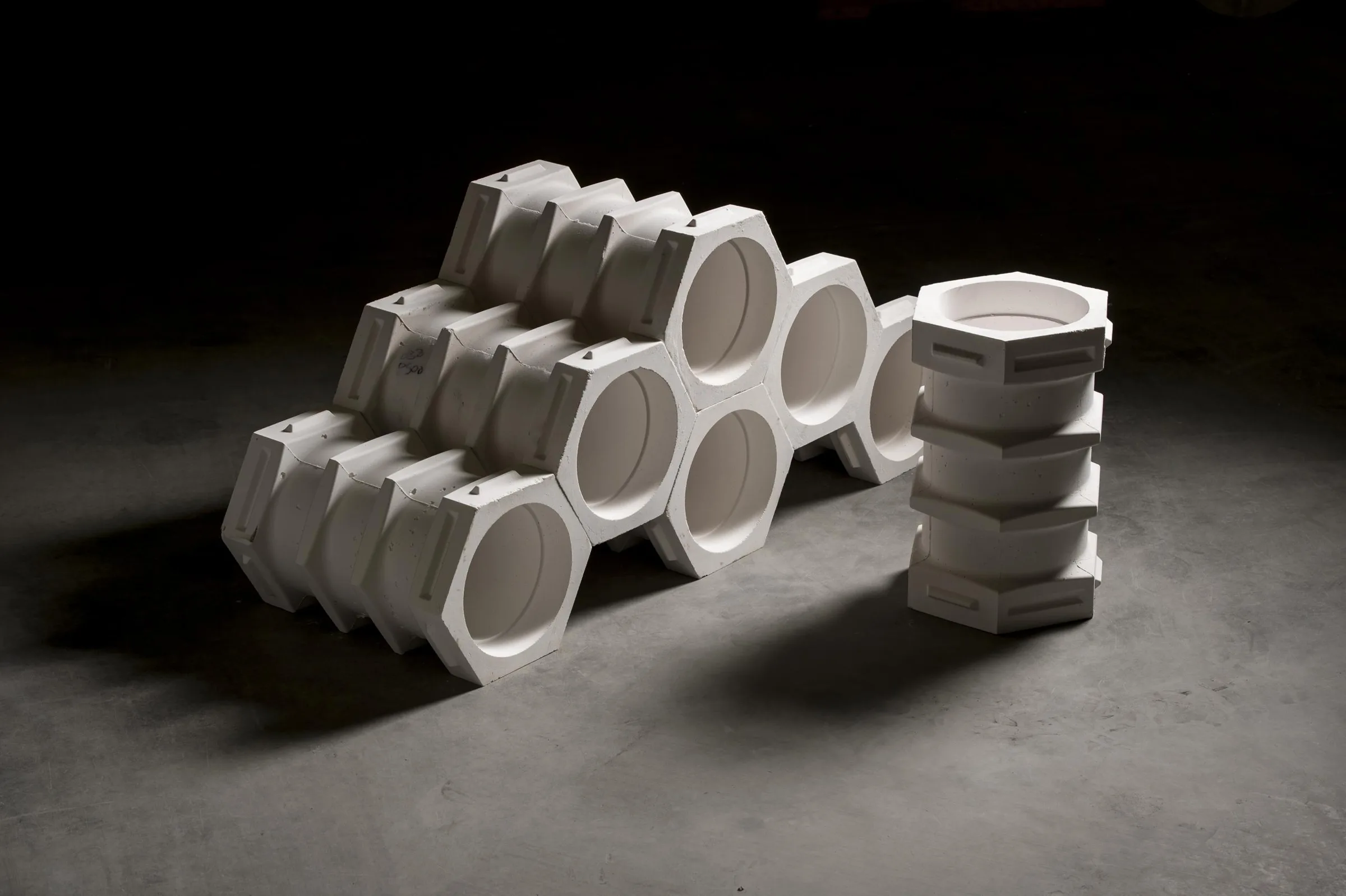
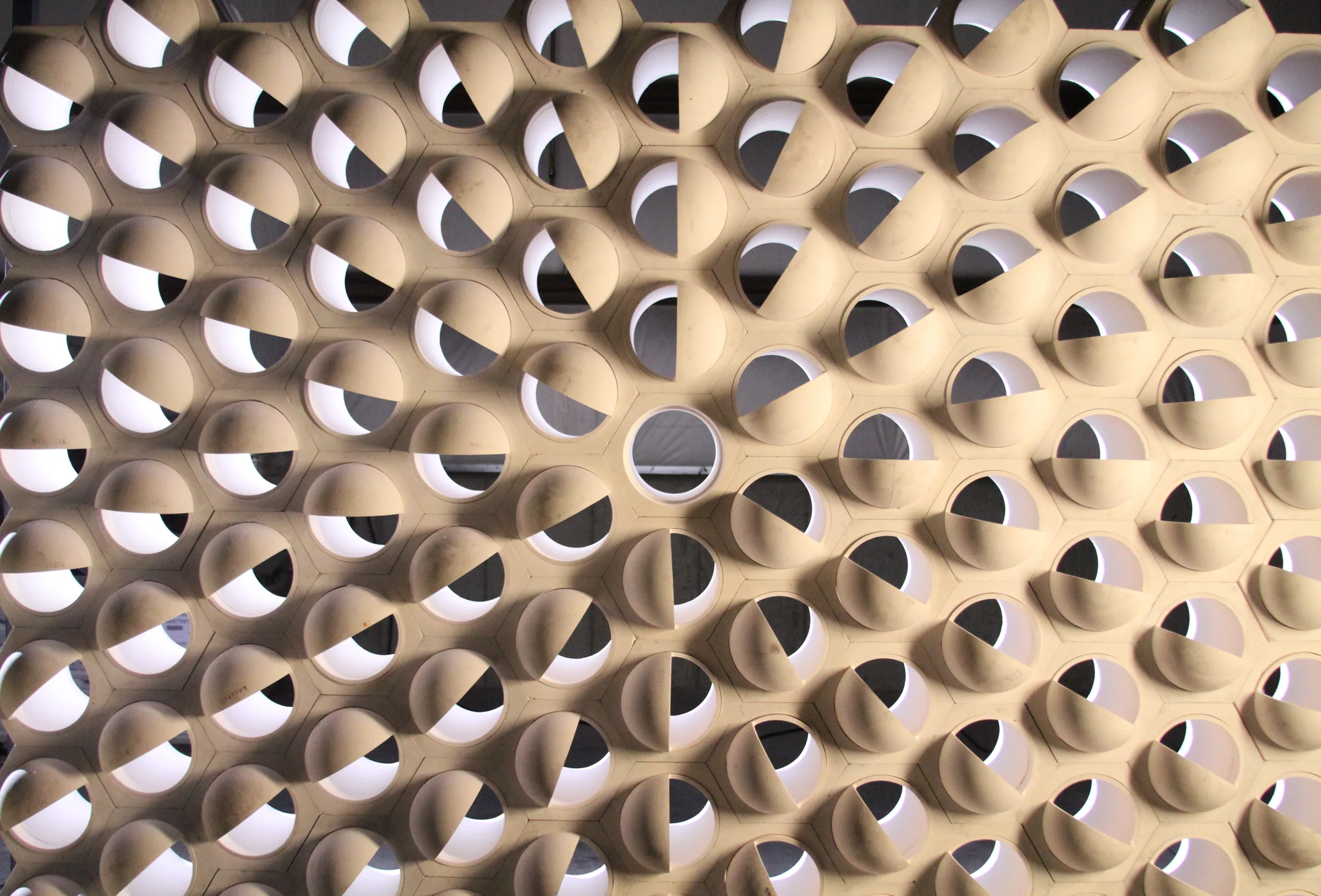
From stable wall to mixing wall
Blasch then fitted a vectoring hood, the Vector Tile, into the outlet of each block. Each tile redirects its share of the flow, and together they create a vortex with a long path length and a tight residence time distribution. That version is the VectorWall mixing checkerwall. At the time of writing, nearly two dozen VectorWalls and about 100 HexWalls were in service.
What the refinery measured
The second case is a Claus reaction furnace in an Asian refinery SRU, 2.1 m inside diameter and about 9 m long, processing amine acid gas and sour water stripper gas with ammonia. Before the revamp, a damaged 9 in. brick wall caused heavy vibration at high throughput, zone 1 could not be run hot, and ammonium salts deposited downstream.
The furnace was relined and fitted with a VectorWall in May 2012. Afterwards zone 1 ran at about 1,400 °C, zone 2 dropped by about 200 °C to below 1,000 °C, the sour water stripper gas processed rose by about 30% to 2,000 m³/h, and the vibration stopped. The authors link the hotter zone 1 to better ammonia destruction. The same plant is described as a case study on furnace vibration.
Limits the authors name
The flow design was based on simplified cold flow modeling, without burner configuration, temperature effects or reaction kinetics. The field data support the direction of the model, and the authors say so without claiming more.
What this means for your SRU
If your checkerwall or choke ring is rebuilt every turnaround, or your zone 1 runs too cold for ammonia destruction, the wall is a design variable, not only a maintenance item. The Claus reaction furnace page explains where the wall sits and what it changes.