The sulfur recovery end
About two thirds of the sulfur conversion happens in the thermal stage, and the reaction furnace also has to destroy hydrocarbons, ammonia and BTEX. It needs residence time, temperature and turbulence, the three Ts of combustion.
Brick checkerwalls, cylindrical or matrix style with mortar, fail through thermal cycling, mortar failure and vibration. A choke ring reflects part of the flow back, but much of it jets through the center and leaves before the minimum residence time is reached.
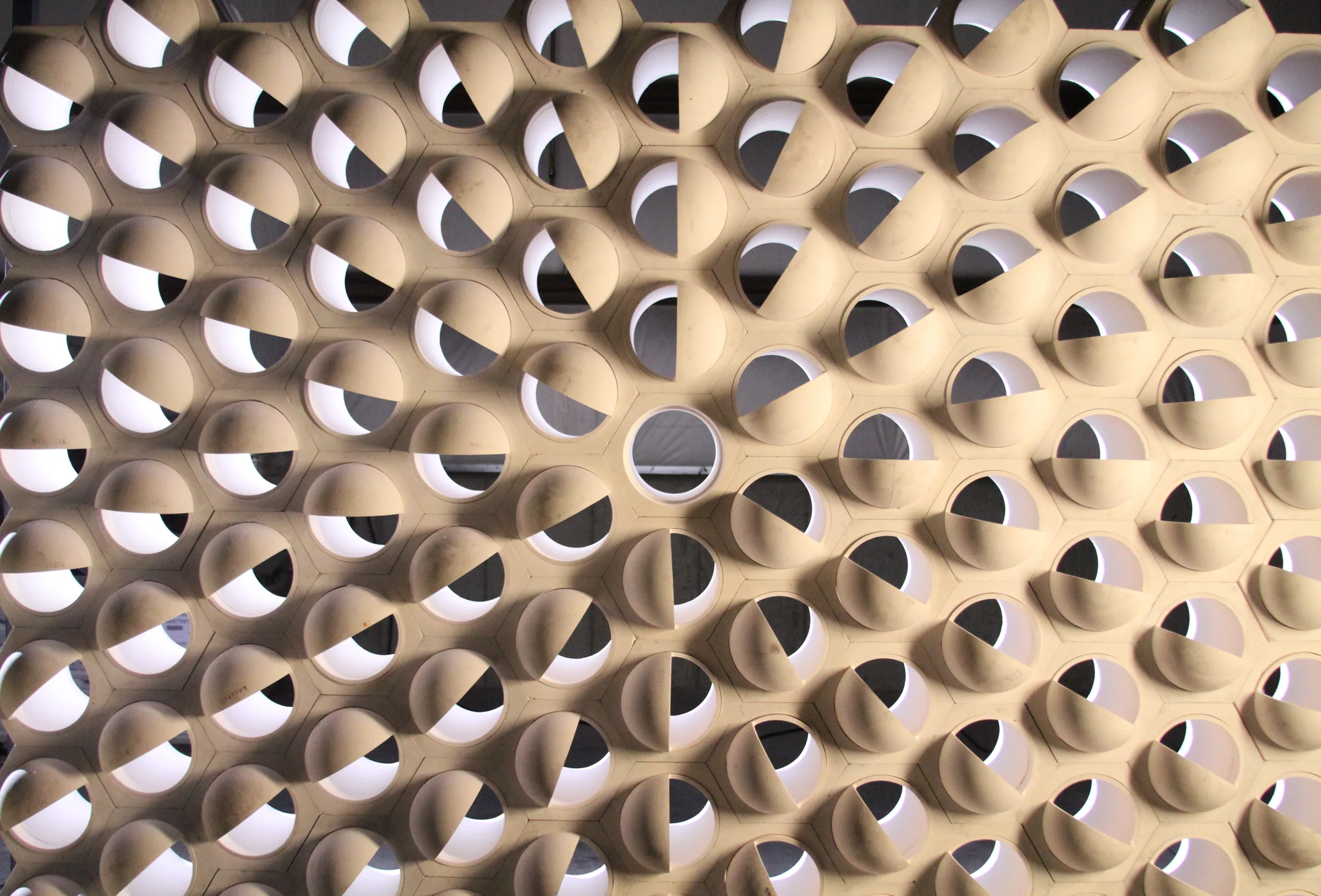
The article traces the development from the HexWall checkerwall, with dry stacked blocks 9 to 18 inches deep held by tabs and slots, to the VectorWall, where hoods at the block outlets direct the flow into a long path with a narrow residence time distribution. By 2018 more than 100 of these systems were installed, including in SRUs above 1,000 tpd.
Field result: a refinery with ammonia destruction problems replaced its checkerwall with a VectorWall. Zone 1 ran about 100 °C hotter, sour water stripper gas feed rose by about 30%, and the furnace stopped vibrating.
CFD result: Porter McGuffie Inc. modeled an Asian refinery SRU before and after a choke ring was replaced. With the choke ring, 22.5% of the flow missed the residence time needed for ammonia destruction. With the VectorWall, all zone 1 flow met it, and the pressure drop was about 900 Pa lower.
Energy: for a 500 tpd SRU with lean feed and fuel gas at 3 USD per million Btu, the author estimates savings above 250,000 USD a year from less co-firing for BTEX destruction at about 1,050 to 1,100 °C.