Case study

Hotter zone 1, more sour water gas:
a VectorWall revamp in an Asian refinery

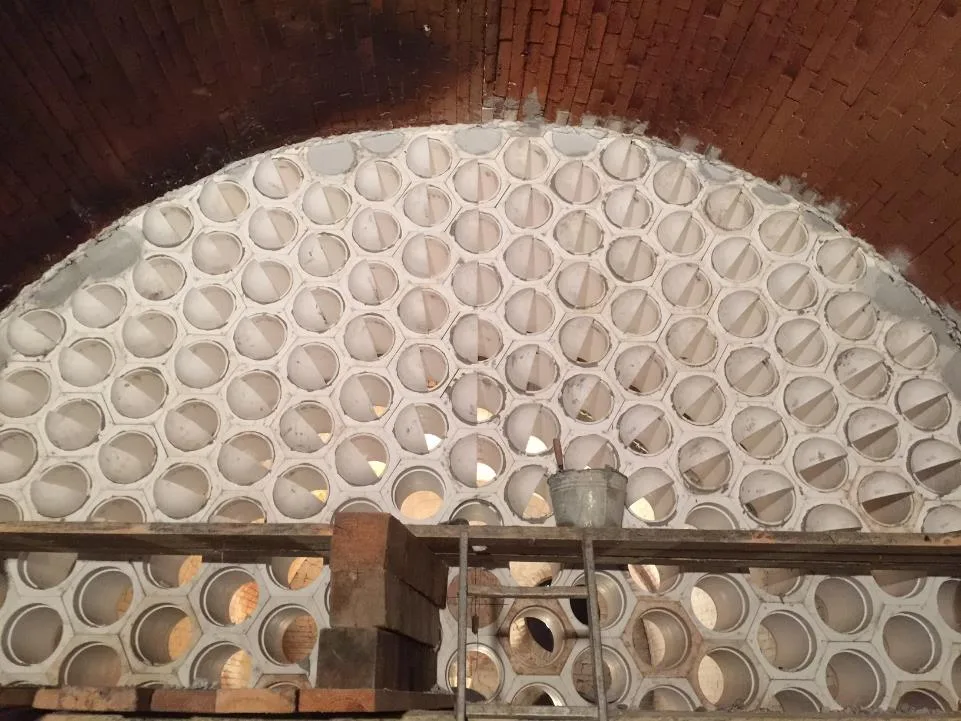
A refinery Claus furnace that could not run hot enough to destroy ammonia, before and after a VectorWall in 2012.

Ammonia salts downstream and a furnace that shook at high rates.
The unit could not take more sour water gas

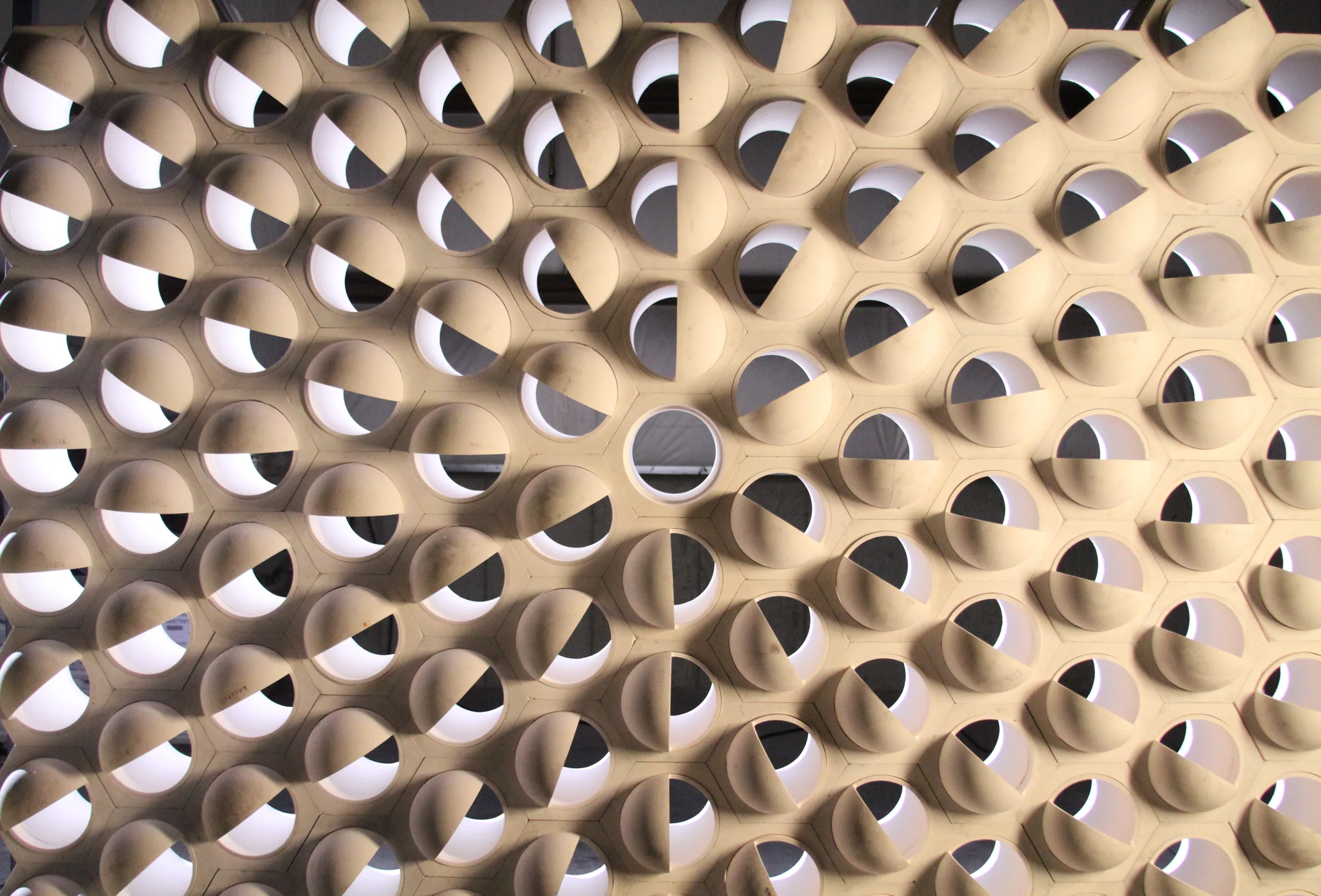
Full checkerwall of hexagonal blocks with angled openings
In short

At a refinery in Asia, the reaction furnace of a Claus sulfur recovery unit got a VectorWall in place of its brick checker wall in May 2012. Afterwards zone 1 ran at about 1,400 °C, zone 2 about 200 °C cooler at below 1,000 °C, the unit took about 30% more sour water stripper gas, up to 2,000 m³/h, and the furnace vibration stopped, as reported in PTQ in 2014.

Full checkerwall of hexagonal blocks with angled openings

A two zone furnace with an ammonia problem

The furnace is the heart of one of the refinery's sulfur recovery units: refractory lined, 2.1 m inside diameter and about 9 m long. It takes two acid gas streams from the hydrodesulfurization plant. One is clean sour gas from amine regeneration, mostly hydrogen sulfide. The other is sour water stripper gas, with roughly equal parts ammonia, hydrogen sulfide and water vapor.

A standard 9 inch brick checker wall split the furnace into two zones, with acid gas fed at the burner and again just behind the wall. At high throughput the furnace vibrated and roared, believed to come from the damaged wall. Zone 1 could not be run hot, ammonia was not fully destroyed, and ammonium sulfate and bisulfate built up in downstream equipment.

What zone 1 needed

Ammonia has to be destroyed in the first zone or it turns up as salt further down the train, so a wall that sends more heat back into zone 1 decides how much sour water gas the unit can accept.

What was installed

In the May 2012 revamp the whole furnace got new insulating refractory, and the brick checker wall was replaced with a VectorWall. The wall was built against the insulating layer, with high alumina bricks as foundation wedges and castable backfill. Its blocks interlock without mortar. Vectoring tiles in the block outlets turn the flow into a swirl and reflect radiant heat back into zone 1.

Results

Measured value Before the revamp After the revamp
Zone 1 temperature limited by vibration about 1,400 °C
Zone 2 temperature about 200 °C lower, below 1,000 °C
Sour water stripper gas processed about 30% more, 2,000 m³/h
Furnace vibration severe at high throughput none observed

The authors explain the cooler zone 2 by more ammonia being converted to nitrogen in zone 1, so less of it was left to burn behind the wall.

What the refinery gets

More sour water gas through the same furnace, fewer ammonium salt deposits to clean out of the train, and a furnace that no longer limits itself by shaking.

Related pages

VectorWall mixing checkerwall

The wall used in this revamp, for Claus furnaces, incinerators and sulfuric acid plants.

VectorWall

Ammonia and BTEX destruction

Why the front zone of a Claus furnace has to be hot and well mixed. Ammonia and BTEX destruction

Furnace vibration

How a CFD study traced reaction furnace vibration to the choke ring.

Vibration case
Frequently asked

Questions about this revamp

When was the VectorWall installed?

In May 2012, together with new insulating refractory for the whole furnace.

Why did zone 2 get cooler?

More ammonia was destroyed in the hotter zone 1, so less was left to react in zone 2.

What should the two zones do with sour water gas?

Zone 1 should run hot with some back mixing so ammonia is destroyed early. Zone 2 should run cooler with a narrow residence time distribution, which keeps NOx formation down.

Was the wall built with mortar?

No. The blocks interlock and are stacked dry. Only the foundation wedges and backfill against the lining use brick and castable.

Checkerwall of hexagonal ceramic blocks installed in a furnace

Ammonium salts
in your sulfur train?

Send the furnace dimensions, the acid gas streams and the current internals. A Blasch engineer looks at what a VectorWall could change in your zone 1.

Talk to an engineer Call