Case study

Lower NOx and more acid
from the same spent acid furnace

How DuPont MECS used VectorWall internals to stage combustion inside an existing furnace instead of building a second one.

More capacity and lower NOx, with no room and no budget for a second furnace.
The staging had to happen inside the one already there

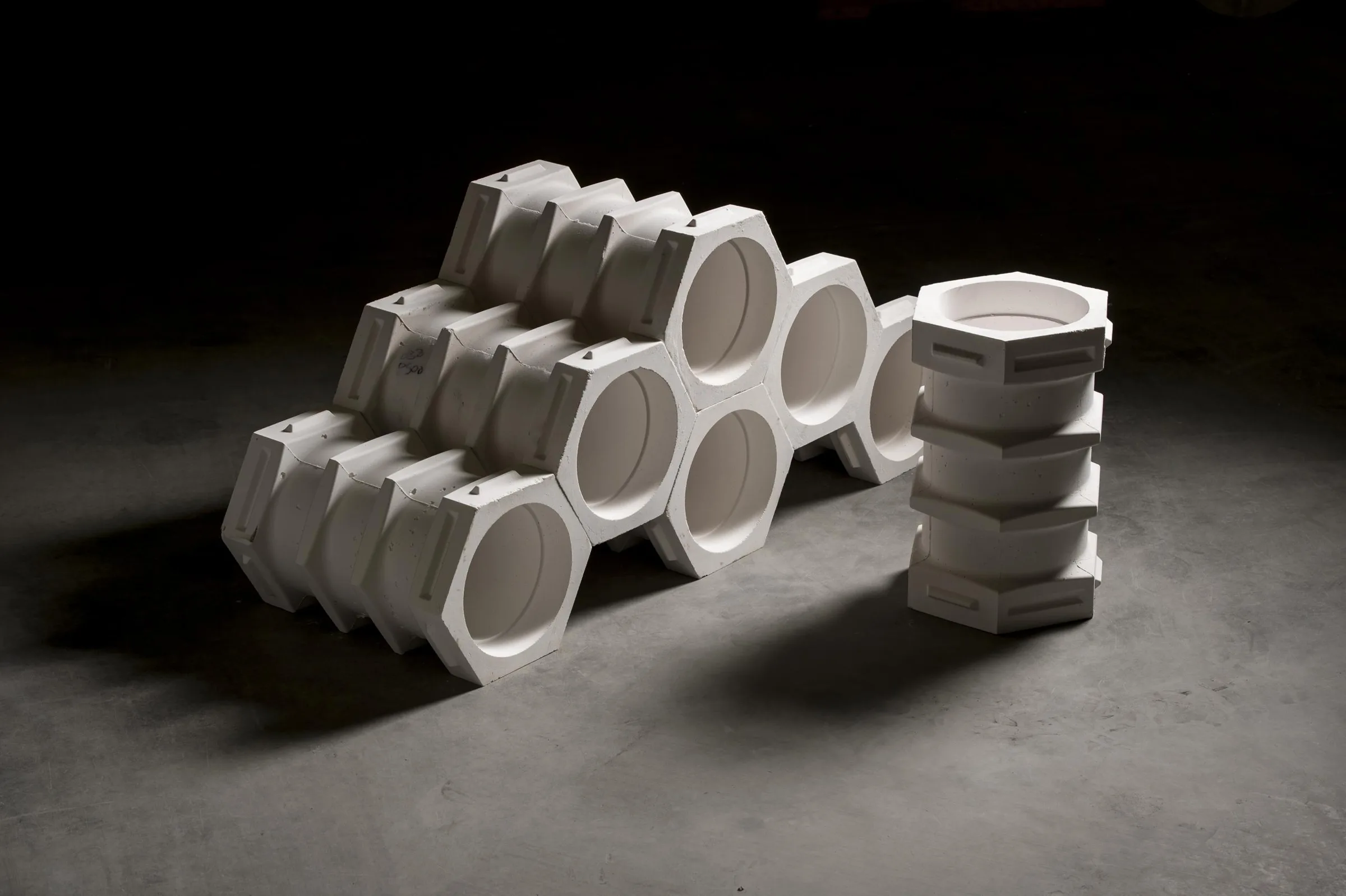
Interlocking hexagonal checkerwall blocks
In short

In 2015, a spent sulfuric acid regeneration plant needed to raise acid production from 900 t/d to 1,076 t/d while bringing stack NOx down from 120 to 150 mg/Nm³ to 100 mg/Nm³. DuPont MECS converted the existing furnace to staged combustion with oxygen enrichment, using VectorWall internals to divide and mix the flow, and the plant reached both its production and its emissions targets.

Interlocking hexagonal checkerwall blocks

Two goals that usually pull apart

A spent acid regeneration furnace decomposes used sulfuric acid at high temperature. More throughput usually means hotter combustion, and hotter combustion means more NOx.

Staged combustion breaks that link: a reducing zone first, then an oxidizing zone. The textbook way is two separate furnaces. This plant had neither the footprint nor the budget for that, so the stages had to be built into the furnace it already had.

What the internals had to do

In a single furnace, staged combustion works only if the wall between the stages forces the secondary air down into the gas and then mixes it completely, so the wall became the part that decided whether the project was possible.

How the solution was found

DuPont MECS ran combustion and CFD modeling together with a burner specialist. The models compared baffle configurations by the oxygen and SO₂ distribution at the furnace exit. A poorly arranged wall would leave pockets of low oxygen, incomplete combustion, more NOx and even sulfur precipitation in the furnace.

The optimized design used VectorWall internals of hexagonal blocks stacked without mortar and supported on all six sides:

  • a first wall partly blocked, so the staged air is pushed down into the bulk gas
  • vector tiles in the lower part of the wall that create a mixing vortex in the second chamber

Results

Measured value Before the revamp Target and outcome
Stack NOx 120 to 150 mg/Nm³ 100 mg/Nm³, met
Acid production 900 t/d 1,076 t/d, met

Field data from the plant confirmed the modeling.

What the plant gets

About 20% more acid from the same furnace, within a tighter NOx limit, without a second furnace and without a larger footprint.

Related pages

VectorWall mixing checkerwall

Supplied to sulfuric acid plants through DuPont MECS as MECS VectorWall.

VectorWall

HexWall checkerwall

Interlocking blocks for baffle walls that must stay standing, installed in about a third of the time of brick.

HexWall

Spent acid regeneration

How spent acid furnaces work and where their internals matter. Spent acid regeneration

Frequently asked

Questions about this furnace

Who designed the revamp?

DuPont MECS, which supplies sulfuric acid process technology and sells the walls as MECS VectorWall and MECS HexWall, with Blasch as the maker of the ceramic internals.

Why not build a separate reducing furnace?

Footprint and budget did not allow it. The modeling showed that both stages could be built into the existing furnace.

What is the risk of a poorly designed wall in staged combustion?

Incomplete combustion, NOx formation, sulfur precipitation in the furnace and even equipment damage. That is why the wall layout was modeled before it was built.

Close view of vectoring tiles in a checkerwall

A NOx limit
and a capacity target at the same time?

Send the furnace layout, the current baffles and your targets. A Blasch engineer works with your licensor on the internals for your furnace.

Talk to an engineer Call