Case study

A ceramic lined piping system
for an abrasive, caustic chemical process

A US chemical manufacturer replaced failing alloy piping with a complete CeraLine system, delivered ahead of its turnaround.

Abrasion and chemical attack at once, through several floors of a plant.
High grade alloy was not enough, and the turnaround date was fixed

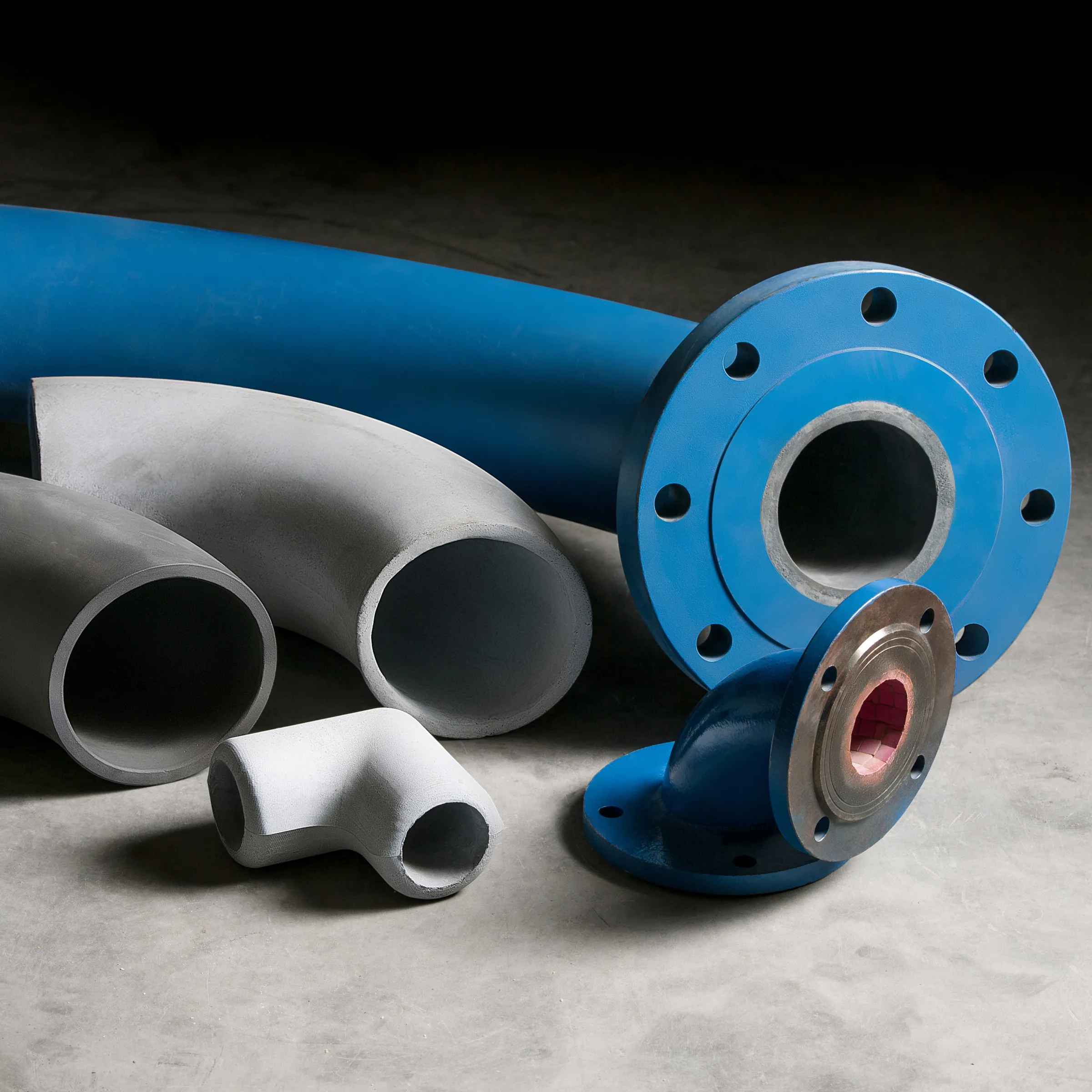
Ceramic lined elbows and tees with blue and gray steel shells
In short

A chemical manufacturer in the US conveys a proprietary process material pneumatically through a multi story plant, and the material wore out high grade alloy piping through abrasion and chemical attack at the same time. Blasch engineers, the plant's industrial architect and its maintenance team developed a complete CeraLine piping system for the most failure prone sections, with elbows, pipes, tees and reducers, manufactured on an expedited schedule and delivered ahead of the planned turnaround.

Ceramic lined elbows and tees with blue and gray steel shells

Piping that operators had to keep away from

The conveyed material is both abrasive and caustic, a combination that is hard on any metal. The plant's high grade alloy piping failed early, which meant frequent pipe replacement, unplanned downtime and rising maintenance cost.

Safety was a concern too. Operators had to avoid the areas where a pipe might fail, which cut their access to equipment in those parts of the plant.

Why single parts were not enough

When every section of a line fails for the same two reasons, replacing the worst elbow only moves the failure to the next fitting, so the plant asked for the whole system at once.

How the system was engineered

The new piping had to fit within the existing space, route around critical equipment, and keep the flow rates and operating pressures the process needs. Blasch specified, for each component:

  • the ceramic liner material for the combined abrasion and chemical load
  • the mortar that bonds liner and steel
  • the alloy of the steel body
  • the flange design for connection to the existing line

The system covers ceramic lined elbows, straight pipes, tees and reducers, each with a one piece cast liner in a steel body.

Results

What Result
Scope complete CeraLine system for the most failure prone sections
Schedule manufactured on an expedited schedule, delivered ahead of the planned turnaround

What the plant gets

Fewer pipe changes and less unplanned downtime, and operators who can work near the line again. The system was built to fit around the plant, not the other way around.

Related pages

CeraLine ceramic lined pipe

Elbows, spools, tees, wyes and reducers with one piece cast liners.

CeraLine system

Refining and chemical processing

Wear, heat and corrosion parts for chemical plants and refineries.

Refining and chemicals

Corrosive conveying in battery production

CeraLine elbows and spools that outlast stainless steel by months.

Battery production case
Frequently asked

Questions about this system

Can a ceramic lined system keep the original bore?

Yes. Where the liner would reduce the inner diameter, the steel body is made larger and a custom flange or reducer avoids a step in the flow path.

Does Blasch need a drawing of the line?

No. Blasch engineers worked out the routing with the plant's architect and maintenance team from the existing layout and the space available.

Which components can be lined?

Elbows, straight pipe, tees, wyes, laterals, reducers and transitions, each with a one piece cast liner.

Ceramic lined elbows on display

Alloy pipe failing
in an abrasive, corrosive line?

Tell us what the line carries, the layout and when your next turnaround is. A Blasch engineer scopes the sections and the schedule with your team.

Talk to an engineer Call