Quality and certifications

Quality you can trace
from the mix to the fired part

ISO 9001:2015 at both US sites, an in-house materials lab, and patents on the systems we designed.

The quality system covers both US sites.
The lab tests the properties that decide how long a part lasts in your process.

White alumina parts and powder in a glass beaker
In short

Blasch Precision Ceramics is certified to ISO 9001:2015, the current version of the international standard for quality management systems, at its headquarters in Albany, New York, and at its site in Beaufort, South Carolina. Both sites were certified on August 13, 2018, after an audit by the registrar NQA; the Albany site has held ISO 9001 certification since 1998. Materials are tested in the company's own lab, and the systems Blasch developed are protected by patents.

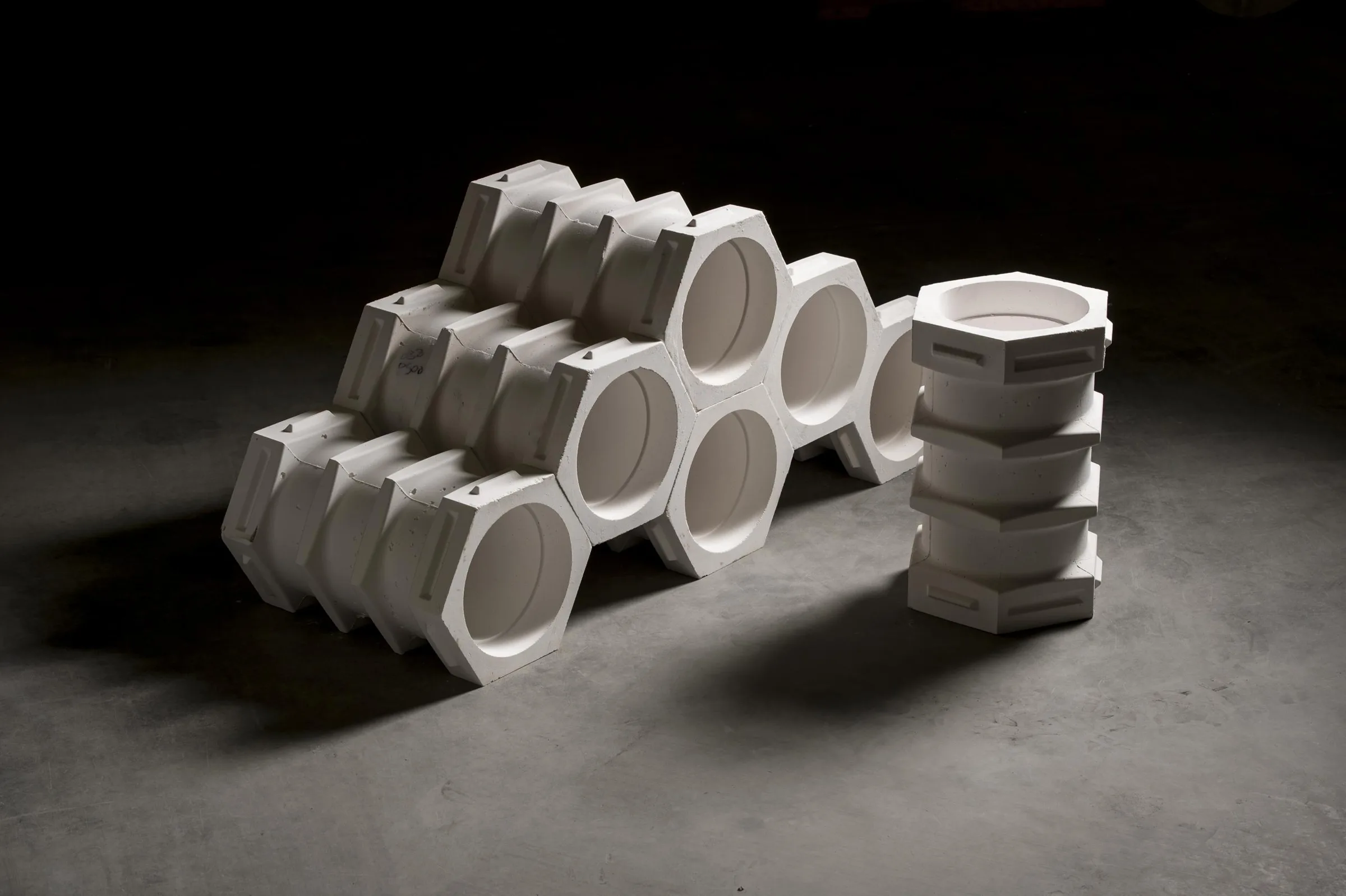
Interlocking hexagonal checkerwall blocks

ISO 9001:2015
at both US sites

ISO 9001 sets the requirements for a quality management system: an organization shows that it can consistently deliver products that meet customer and regulatory requirements. The version from September 2015 is the current one, and Blasch is certified against it.

When Blasch moved to the 2015 version, it rebuilt its system instead of patching the old one and brought the Beaufort site under the same certificate. The result is a risk management system, procedures that support it, and work instructions that employees also use for training. Internal and external audits run every year.

What the lab
tests in Albany

The tests mirror the ways a part fails in service. Which ones a part goes through depends on the application.

Thermal shock and creep

How a material handles fast temperature changes, and how far it deforms under load at temperature, the failure that makes brick walls lean.

Abrasion

Erosion loss to ASTM C704. OXYTRON 015XDII, an oxide bonded silicon carbide for nonferrous metal, loses less than 2.4 cc in this test.

Corrosion and acid

Acid testing and cup brick corrosion tests show how a grade holds up against the chemistry of the melt, the slag or the process gas.

Strength and particles

Strength testing, flame resistance and particle analysis of the raw materials, so each batch matches the grade it was designed as.

What a certificate | cannot show

A certificate says the process is under control; the lab data says how long your part will last in your process, and you get both.

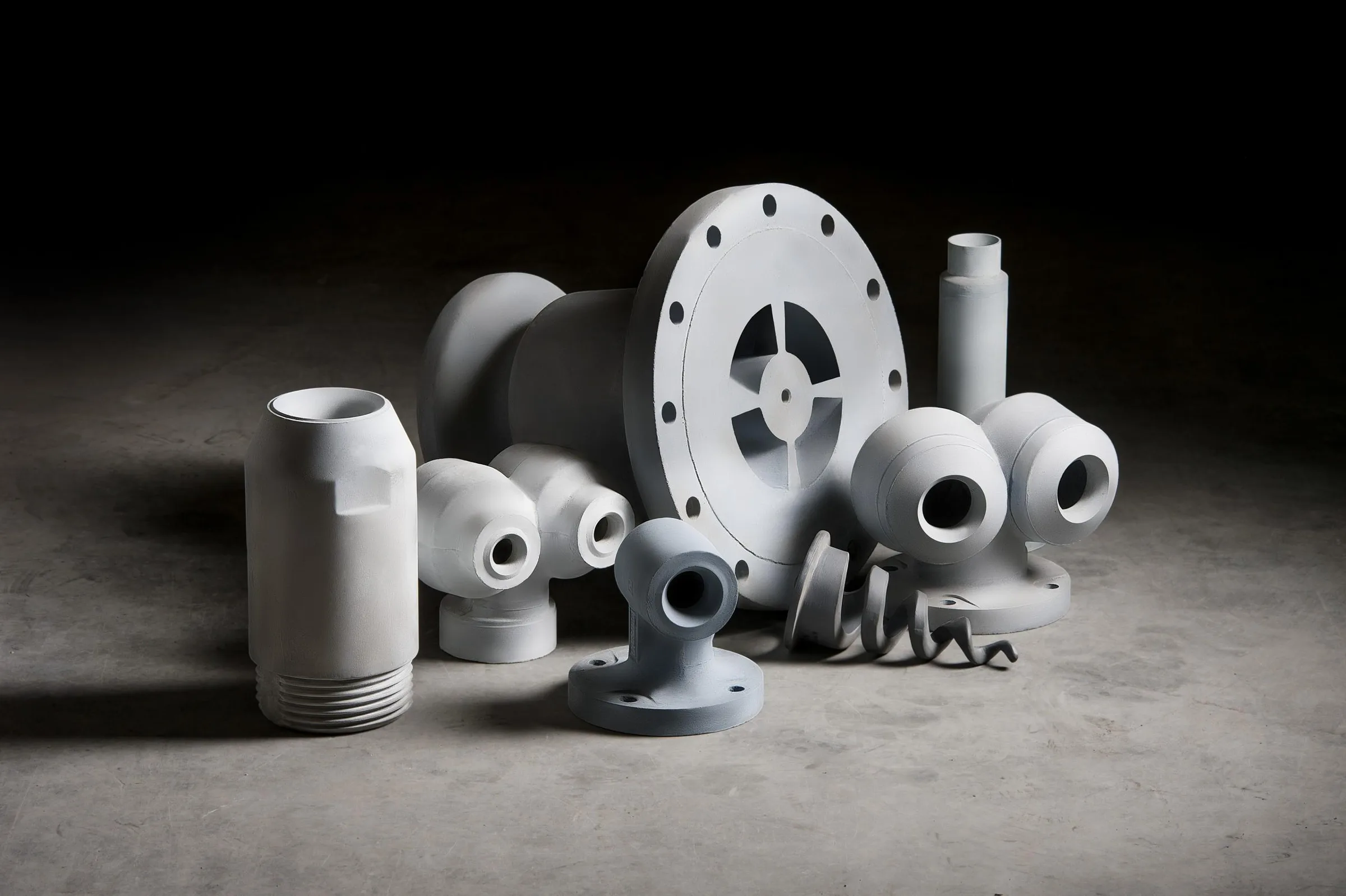
Ceramic spray nozzles and fittings for flue gas desulfurization

Memberships
in the industry

Blasch is a member of four industry organizations: the American Ceramic Society (ACerS), the American Foundry Society (AFS), the Investment Casting Institute (ICI) and the Metal Powder Industries Federation (MPIF).

Phil Geers, Director of Global Business Development for molten metals, serves on the ICI Board of Directors as an affiliate membership representative.

Patents

Over four decades, Blasch has built up know-how on difficult industrial problems, from its own forming process and from work with vetted manufacturing partners. Where the result is a new system, it is protected by patents, and the rest stays as undisclosed know-how.

The StaBlox flue gas tunnel system is patented. In 2020, US Patent No. 10,605,456 was issued for its insert technology: inserts that set the size of each flue gas port along the tunnel wall, so the flue gas distribution in the reformer can be adjusted later.

The HexWall checkerwall with its interlocking six-sided blocks and the ProLok twist lock ferrule with its bayonet lock between head and stem are patented designs as well.

Frequently asked

Questions about quality at Blasch

Is Blasch ISO 9001 certified?

Yes. Blasch Precision Ceramics is certified to ISO 9001:2015 at both US sites, Albany, New York, and Beaufort, South Carolina. The Albany site has been ISO 9001 certified since 1998.

Who audits the Blasch quality system?

The certification audit for ISO 9001:2015 was carried out by the registrar NQA. Blasch runs internal and external audits every year.

Can Blasch test a material for my application?

Yes. The lab in Albany tests for thermal shock, abrasion to ASTM C704, creep, acid and cup brick corrosion, strength and flame resistance. Which tests make sense depends on how your part fails.

Which industry organizations is Blasch a member of?

The American Ceramic Society, the American Foundry Society, the Investment Casting Institute and the Metal Powder Industries Federation.

End view of a ceramic lined elbow showing the liner inside the flange

Ask for the data
behind the part

Tell us what the part runs in. A Blasch engineer answers with the material and the test results that fit your application.

Talk to an engineer Call