Videos

StaBlox drop test:
why the tunnel lid is the part to test

A compilation of drop tests on StaBlox parts, with slow motion footage, aimed at the most common failure point of a reformer tunnel.

Most reformer tunnels fail at the top first.
So the test starts there.

View along the top of a precast tunnel wall
In short

The StaBlox drop test compilation shows StaBlox tunnel parts under impact, partly in slow motion. It addresses the most common failure mode of a steam methane reformer flue gas tunnel, the lid: tunnel lids crack from thermal stress, and large pieces of refractory from higher up in the furnace can land on them. The video lets you see how the precast lid and its joints take a hit.

What the video shows

The compilation brings together several drop tests on StaBlox components, with a slow motion sequence that makes the moment of impact visible. The focus is on the lid, the hollow cover that closes the tunnel and ties the wall tops together.

Why the lid fails first

A finite element analysis of a conventional lid at a constant 1,900 °F shows only about 10 psi from its own weight. A temperature difference of just 10 °F between top and bottom raises that to about 1,500 psi, more than the hot strength of many refractories. Lids break from thermal stress, not from their span, and a cracked lid is then much easier to break with a falling load.

How the StaBlox lid is built

  • Hollow, so it carries less mass and a smaller temperature difference.
  • A shiplap joint against gas bypass, which also lets neighboring lids move independently.
  • Made of mullite bonded high alumina, with a hot modulus of rupture of 1,700 psi in published data, against under 600 psi for super duty brick.
  • Built in support for walkways during maintenance.

What a falling chunk finds

A lid that is already cracked from heat will break under almost any load, so the drop test only means something together with a lid that does not crack in the first place.

Two workers setting precast tunnel blocks inside a reformer furnace

What you take away

When you assess a tunnel design, ask two questions about the lid: how it handles the temperature difference across its thickness, and what happens when debris falls on it. The video answers the second, the published lid analysis the first.

Material values and design are on the page for the StaBlox flue gas tunnel system. If a lid has already failed, a tunnel can be rebuilt on its own, as shown in the StaBlox installation video. Why brick tunnels fail in the first place is explained in the paper on flue gas tunnel reliability.

Frequently asked

Questions about the drop test

Why are tunnel lids the weak point?

They see a temperature difference between top and bottom that creates far more stress than their own weight. In a published analysis, 10 °F of difference produced about 1,500 psi.

Where does falling refractory come from?

From parts of the furnace above the tunnels that break off during operation or turnarounds, and from damaged lids themselves.

Can only the lids be replaced?

Yes. StaBlox lids can be fitted on their own, and a damaged tunnel can be taken apart and rebuilt.

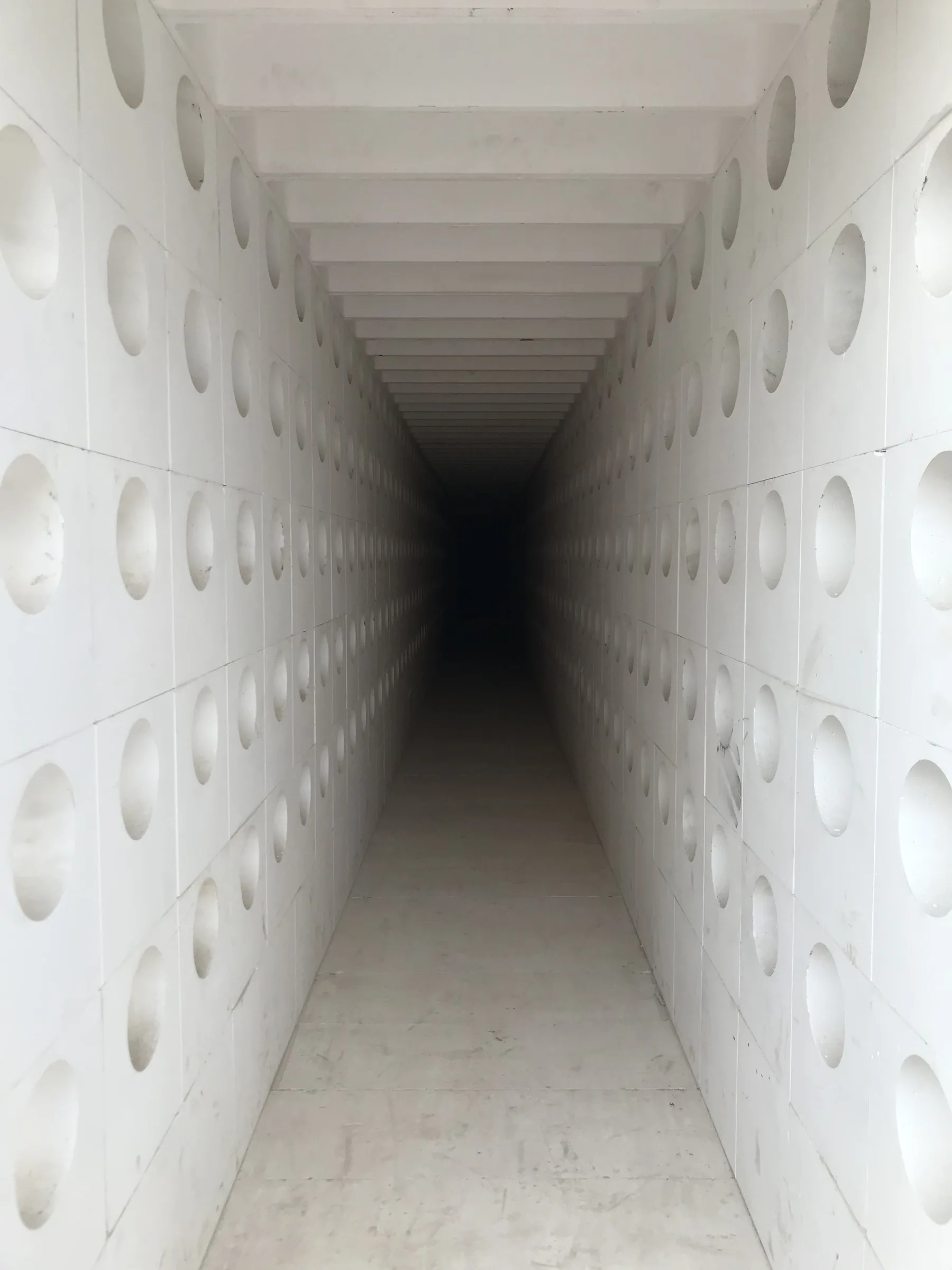
Inside a finished precast flue gas tunnel with rows of round side openings

Lids cracking
in your tunnels?

Send photos or a description of the damage and the tunnel dimensions. A Blasch engineer checks what can be replaced.

Talk to an engineer Call